

From My Service in Korea, I learned…
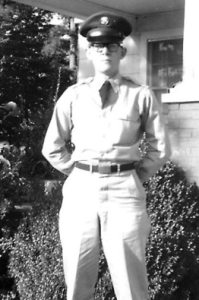
Stan Fisher
I have been to Korea three times. The first was as a surprised and reluctant U.S. Army enlistee.
I left 18 months later frustrated by my Eurocentric education, determined to fill some of my knowledge gaps, and filled with admiration for the resilience and perseverance of the Korean people. Soon afterward, I enrolled in a master’s program with an emphasis on U.S. foreign relations with East Asia. The scarcity of reliable source materials in English on Korean history meant that China and Japan got the primary emphasis. I’ve worked over the past 61 years to fill in some of the gaps as more materials on Korea have become available in English.
My second trip was almost 50 years to the day from my departure in 1963. This time I was accompanied by my adult son adopted from Korea. My emphasis was mainly on revisiting some of my old haunts and doing some exploring with the help of the parents of some Korean children I had mentored in the U.S. The Korea I left was mostly gone. The traditional-style house we rented had become so rare that we were awakened one morning by chattering schoolchildren touring the area to see how their grandparents lived. Little of my remembered quaintness of Myeongdong’s alleys remained. I don’t recall a single working traffic signal in Seoul when I left. Now there were wide streets, wide pedestrian crosswalks, and enough cars to make pedestrians wary. Not a single jam-packed made-over Jeep was in sight, made redundant by an integrated and efficient bus and subway system heavily used by a well-dressed clientele. A road trip from Daegu to historic Gyeongju was in a Korean-built Hyundai sedan traveling on modern expressways across a countryside that lacked the laborers and thatched roofs of a half-century earlier. Hillsides and mountains that were bare when I was there are now heavily wooded.
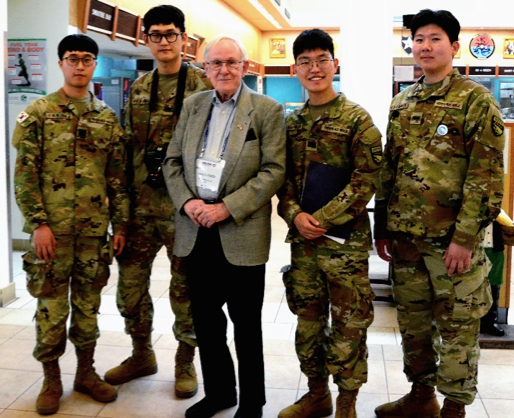
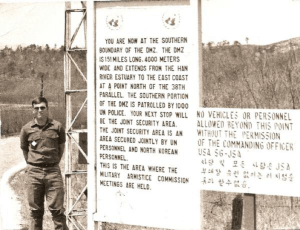
In 2023, a decade later, I was fortunate to be selected for the 2023 Revisit Program of the Republic of Korea’s Ministry of Patriots and Veterans Affairs. The six-day program (two are mostly spent on arrival and departure logistics) is open to veterans and a companion from the UN countries as a “thank you” for service in wartime and in peacetime. The program emphasizes the close collaboration between the armed forces of the Republic of Korea and the UN member nations. It included visits to Osan Air Base, Camp Humphreys, the Korean Military Academy, Seoul National Cemetery, and the DMZ, which is the bleakest place I’ve ever been. I came away with a strong impression of close collaboration and cooperation between the ROK and U.S. armed forces and a sense of partnership instead of the Big Brother-Little Brother relationship that prevailed during my first visit. The accommodations for our group of about 90 persons—veterans and companions—were first class in Gangnam, the upscale section of Seoul. The food in the hotel was outstanding, with a stupefying number of selections. Some of the dinner meals on the road were mostly Korean, but I think anyone could find something tasty with advice from the tour guides. All meals were cafeteria style except for one box lunch on the road. (There’s an International House of Pancakes on a lower level of the hotel we used and a Burger King is a couple of blocks away.) Forget about currency exchange rates. My American Express was accepted everywhere with no additional fees. And this particular hotel, through some magic, made converters unnecessary for phone chargers.
We were divided into three groups and each group assigned to one of three buses that were bedecked with banners identifying us a revisit participants and driven by drivers who apparently can back the buses through a keyhole. Each bus had a tour guide fluent in English and knowledgeable of Korean history and current affairs. For example, we learned that modern Korea has a problem filling its “3D jobs”—difficult, dangerous, and dirty. And then there were the volunteers—mostly actors between gigs, we were told—who attended to our needs and watched out for our safety, from ubiquitous hand sanitizers to water bottles to checking that all seat belts were fastened.
I was accompanied again by my son because all the family, including my wife, agreed that my wife’s back problems with chronic pain and limited mobility made the trip risky for her, especially the long flights back and forth. As a result of her decision, I was particularly attentive to the obstacles that might confront persons in my age group. (Oh, to be even 75 again!) My guess is that none of the veterans was younger than 40, and a few appeared to be in their 80s. One veteran in my group used a wheelchair when off the bus. His companion or one of the volunteers pushed him at each of the outings, and he seemed to fare just fine. A nurse also accompanied the group. She needed her skills when one member of the group injured his hand. My verdict on accessibility is this: If you do not have chronic pain, have a companion who can assist you with your personal needs in the hotel, and you can cope with the airport before and after the trip, fill out the application, and pray to be selected. Every veteran deserves at least five days of being pampered and catered to.
As for me, I obviously long ago embraced the catch phrase we heard everywhere from the U.S.
military in Korea: 같이 갑시다! “We go together”
 What did you learn from serving in Korea? Let us know –
Sharing your experiences from serving in Korea can be a powerful way to connect with others who have had similar experiences. By sharing your story, you may be able to help others who are currently serving in Korea or who are preparing to do so. You can share insights about the culture, the people, and the challenges you faced while serving. Your story can also help to shed light on the sacrifices that service members and their families make in order to protect our freedoms. So, if you have a story to share, we encourage you to take the time to put it down in writing and send it to KDVA.MyServiceInKorea@gmail.com along with any photos that help to tell your story.
READ MORE STORIES HERE.












 Upon returning to the United States, I found myself working in Pittsburgh, Pennsylvania, where I had the pleasure of meeting a Korean gentleman who was a former two-time Korean Judo Champion, Mr. Kim. Our friendship blossomed as we shared stories and bonded over our shared experiences. It was during these gatherings that I would often use Korean words and join Mr. Kim in singing “ARIRANG.” Despite moving on to different projects, our friendship endured for over 50 years.