From My Service in Korea, I Learned – Samuel Perryc

From My Service in Korea, I Learned – By Samuel Perry

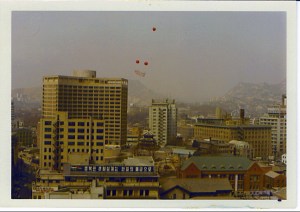
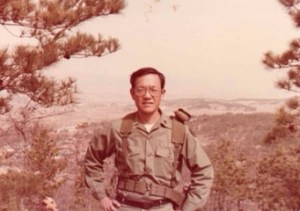
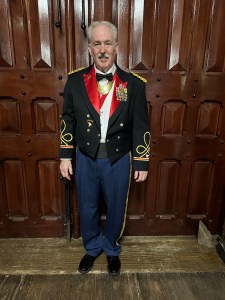
I was working as a teacher in a small rural school in southcentral Kentucky when I received my invitation to serve in the American armed forces. Although I could have obtained a deferment from the draft board because of my job, I did not, preferring to serve my country instead as a citizen soldier. I reported for duty in September 1962 and received Basic Combat Training at Fort Knox, Kentucky followed by eight more weeks at the Military Police School in Fort Gordon, Georgia. Following graduation, I received orders for Korea. 

On February 5, 1963, I boarded the troop transport, Gen. Hugh J. Gaffey, and embarked for Inchon, Korea with stops enroute at Pearl Harbor, Yokohama, and Taiwan. On February 26, 1963, after 21 days at sea, the ship entered Inchon harbor in the middle of a ferocious and blinding blizzard and was struck midship by a South Korean freighter. Chaos ensued as the hundreds of troops on board were hastily evacuated onto landing craft. The freezing temperature, blowing snow, and confusion during the landing made my arrival in country an event that seared into my memory and is something I have never forgotten. I shiver just thinking about it. At the Army Support Command (ASCOM), we were fed and given as much hot coffee as we wanted and bedded down for the night. The next day, we were dispersed by rail to our temporary duty stations. Mine was at Camp Humphreys, a dirty little Army post located outside the town of Pyeongtaek. There, I spent three days before being trucked in the back of a deuce-and-a-half to Camp Huston, a Nike-Hercules air defense missile site some four miles west of the town of Yeoju on the Han River. Camp Huston was under construction and was the HQ of Delta Battery, 4th Missile Battalion, 44th Artillery. Military Policemen provided security.

Although my MOS was 951 and I had been trained as a Military Policeman, my duty as such ended when the 1st Sergeant learned that I was a college graduate and knew my way around a typewriter. Soon, I found myself sitting at a desk in a warm Quonset hut, out of the fierce Manchurian wind, pecking out numbers on the Morning Report and typing up letters from the Battery Commander. a physical fitness fanatic named Capt. Cole B. Whaley.  However, my desk job did not exempt me from those arduous runs and endless side-straddle-hops he ordered for all personnel.

Capt. Whaley rotated back to the States and was replaced by Capt. Leo P. Hobbs, a West Point graduate and Army Ranger. Although now deceased after a long career in the Army, Capt.  Hobbs, became, and remains, one of my heroes and I will be forever grateful to him for serving as a role model at a time when I most needed one.

In June, Captain Hobbs asked me if I would like to get out of the office for a few hours each day and teach school again. The new commander of Eighth Army was revisiting an old Army program to improve relations between the Army and local communities and needed soldiers of exemplary standing to serve as boots on the ground. I jumped at the chance and following a crash course in the Korean language, soon found myself on the faculty of Yeoju Primary School. Another soldier was being sent to a similar school in I’chon, two miles east of Camp Huston. His name was Sgt. Dale Perkins, who was later KIA in Vietnam. 

My mentor, and South Korean counterpart at Yeoju Primary School, was Mr. Park Kyong Sik, and I learned much from him about Korean culture, student behavior, and the rigid code of conduct that governed the children. I must have done a good job in the classroom because as the new school term began again in September, I was asked to move up to the high school level. I then started teaching at Yeoju Girl’s Home Economical High School, under the supervision of Principal Yun Suk Je. I taught there until I rotated back to the States in February 1964, serving in that capacity while also continuing to work as Battery Clerk. 

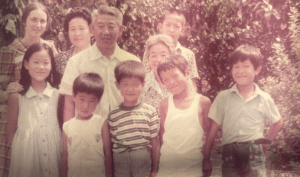
My work in the Korean school system required not only classroom instruction, but participation in teacher meetings. There, I got to know my fellow teachers personally and learn of the challenges they faced in restoring the educational framework that had been demolished by the war. As a Seonsaeng Nim (Honored Teacher), I also got invited to social functions and celebrations. Through these, I learned to appreciate the rich Korean heritage, the spicy cuisine, and especially the music, which to most Westerners probably sounded like noise. Not me, though. I loved it. Most enjoyable of all my activities, however, were the visits to the homes of my students.

My active duty in the Army ended in September 1964 and I returned to civilian life as a Reservist until 1968. However, I continued to regard myself as a soldier, becoming a charter member of an American Legion post in Arizona and a charter member of a VFW Post in Kentucky when Korea veterans became eligible for the Korea Defense Service Medal. At the latter, I served in many offices at the Post, District, and Department levels.

Six decades have passed since I returned home from Korea. My career as an educator was a rewarding one and I officially retired from the teaching profession after 31 years. Thousands of young faces have graced my classrooms, and I have spent countless hours counseling and seeking to serve as a positive role model, much as Capt. Hobbs did for me.  But I have never forgotten the seven months I taught in the South Korean school system. Shortly after I returned home, Peace Corps volunteers arrived at the schools. They were followed, in turn, by American teachers of English who labor there to this day.

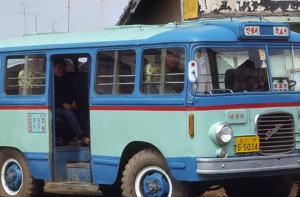
The Republic of Korea today bears no resemblance to the fledgling nation I saw when I served there. When I see photos of Seoul or any of the countryside there, I have to force myself to accept that they are real. So much has changed. Camp Humphreys has morphed into something hard to recognize. Camp Huston is long gone. I suspect that the students in the schools are also different. They are products of modernity. It was their grandparents, the ones I taught, the ones who had witnessed the horrors of the North Korean invasion, the ones who had to endure classrooms heated by charcoal burners on frigid winter days, the ones who walked four miles along rice paddy dikes to get to school, the ones who competed for allotted spaces on the school roster, and the ones who listened intently to tall Americans in green uniforms who sought to show them that soldiering was not always about waging war.

I fell in love with the Korean people while I was there and that love is as strong now as it ever was.  Arirang still brings tears when I hear it and kimchi is still one of my favorite foods. When I looked out from the door of my barrack on that day in 1963 and saw a bleak land of bare mountains stripped of vegetation by the ravages of war and villages of mud huts, thatched roofs, and dirt roads, I thought I had stepped back into the 15th century. But that landscape is no more. The incredibly strong, dedicated, and patriotic men, women, and children who lived there at that time have worked hard over the past sixty years to rebuild their nation and have bequeathed to future generations a homeland of which anyone could be proud. I am just so happy and thankful to have played a small part in the transformation.  


What did you learn from serving in Korea? Let us know –

Sharing your experiences from serving in Korea can be a powerful way to connect with others who have had similar experiences. By sharing your story, you may be able to help others who are currently serving in Korea or who are preparing to do so. You can share insights about the culture, the people, and the challenges you faced while serving. Your story can also help to shed light on the sacrifices that service members and their families make in order to protect our freedoms. So, if you have a story to share, we encourage you to take the time to put it down in writing and send it to KDVA.MyServiceInKorea@gmail.com along with any photos that help to tell your story.

Your contribution may be just what someone needs to hear in order to feel connected and supported.

Read more

USFK personnel looking for jobs with Korean companies in the U.S.?

USFK personnel looking for jobs with Korean companies in the U.S.?
Visit the www.USFKJobs.com website to explore openings and apply.
KDVA thanks our partner, KUSAF, for creating this platform to help USFK as they leave service or former USFK personnel.

Read more

From My Service in Korea, I Learned – Kenneth Hissong

From My Service in Korea, I Learned – Kenneth Hissong

I was sent to Air Police Tech school and assigned to Strategic Air Command Headquarters at Offutt AFB. Due to a physical profile change, I applied and was accepted at the Defense Information School Radio, and TV course at Ft. Ben Harrison, Indianapolis. In November 1967, I received orders to report to the 6314th Headquarters Support Squadron at Osan AFB. I was detached and assigned to Headquarters Armed Forces Radio/TV in Seoul. For the next 13 months, I was a DJ with a daily show from 9am to 1pm. Living in a Korean War Quonset hut was a real experience. Diesel heaters and sweat boxes.

The one thing that touched me the most was having a houseboy, Mr. Chung, who was a graduate civil engineer. He told me he could make more money working as a houseboy than he could in his profession! Nearly all the Korean nationals I came in contact with in those 13 months were eager to rebuild their country from the ravages of war, and boy did they ever.! I am enclosing some photos of AFKN and my trip to Panmunjom to cover the negotiations for the release of the Pueblo crew. In fact, I beat President Trump to North Korea by 50 years. I have a photo of an NK taking pictures of me as I was taking pictures of him! I missed the Pueblo crew release by one week. I enjoyed my time in country and could not have bought the experience for a million dollars! The only thing I could add to my time in the Republic was that I could not have paid a million dollars for the experience. While I entered the Air Force while working for a Radio/TV station, my bosses, GSA Station manager Ed Masters and Army Lt. Colonel Frank Tennant, allowed me to go beyond the scope of my normal duties. Covering the negotiations at Panmunjom for the release of the Pueblo crew was just one example. And I was astonished at the professionalism of the ROK civilians at AFKN who supported our operations. “Jimmy” Chae, our newsroom interpreter, is just one of them.

The Korean experience helped me get promoted once I was back stateside and helped me get a leg up once I was back in civilian life.


What did you learn from serving in Korea? Let us know –

Sharing your experiences from serving in Korea can be a powerful way to connect with others who have had similar experiences. By sharing your story, you may be able to help others who are currently serving in Korea or who are preparing to do so. You can share insights about the culture, the people, and the challenges you faced while serving. Your story can also help to shed light on the sacrifices that service members and their families make in order to protect our freedoms. So, if you have a story to share, we encourage you to take the time to put it down in writing and send it to KDVA.MyServiceInKorea@gmail.com along with any photos that help to tell your story.

Your contribution may be just what someone needs to hear in order to feel connected and supported.

Read more

KDVA ROK-U.S. Alliance Journal – 2026 1st Edition

2026 1st Edition

Read more

From My Service in Korea, I Learned – Michael Peck

From My Service in Korea, I Learned – Michael Peck

In 1968, during one of the most tense periods of the Cold War on the Korean Peninsula, I served in the United States Army as a Military Police Investigator assigned to the 7th Infantry Division in the Republic of Korea. My duties required me to travel throughout the country investigating misdemeanor offenses involving U.S. service members.

This experience placed me in constant contact with soldiers, civilians, and local Korean communities during a time when tensions with North Korea were extremely high. The year 1968 was marked by serious incidents, including the USS Pueblo Incident and the Blue House Raid. American forces stationed in Korea remained on heightened alert while continuing their daily missions.

For me, the assignment became far more than a routine military duty. It was a formative experience that combined professional responsibility, personal growth, and meaningful humanitarian service.


Duties as a Military Police Investigator

As a Military Police Investigator, my role involved traveling across the region to handle misdemeanor cases involving American personnel. The work required careful attention to detail, interviews with witnesses, and the preparation of investigative reports.

The job often took me to various U.S. installations and surrounding Korean communities. Military investigators were responsible for maintaining discipline and order among troops stationed far from home, ensuring that soldiers represented the United States Army with professionalism and respect.

The work demanded maturity and judgment, particularly because military investigators often dealt with sensitive situations involving both American personnel and Korean civilians. Each investigation required fairness, accuracy, and an understanding of the cultural environment in which we operated.


Service to the Community: The Tongduchon Orphanage

While my official duties were demanding, some of the most meaningful moments of my service occurred during my spare time.

Near the U.S. military installations was the town of Tongduchon (often spelled Tong Du Shon by American soldiers at the time). In this community there was an orphanage where children who had been affected by war and poverty lived.

Whenever I had free time, I visited the orphanage to spend time with the children. The visits were simple but meaningful. We played games, talked, and shared small moments that brought a sense of normalcy and encouragement to children who had faced difficult circumstances at such a young age.

For many American soldiers stationed in Korea, helping local communities became an unofficial mission. These experiences built bonds of goodwill between U.S. forces and the Korean people and reminded us that our presence there had a human dimension beyond military duty.

The time spent with the children at the Tongduchon orphanage remains one of the most memorable aspects of my service in Korea.


Soldier of the Month – Seventh Infantry Division

During my assignment in Korea, I was honored to be selected as Soldier of the Month for the Seventh Infantry Division.

The recognition reflected dedication to duty, professionalism, and performance as a Military Police Investigator. The award was presented by General In Mark, a senior commander within the division at the time. Receiving the recognition from a commanding general was a moment of great pride and an affirmation that the work I was doing was valued by my chain of command.

For any young soldier serving far from home, recognition from senior leadership was deeply meaningful. It reinforced the importance of maintaining high standards and representing both the Army and the United States with honor.


Preparing for Future Service

Looking back, my time in Korea in 1968 played an important role in preparing me for the challenges that would later come during my service in Vietnam.

The experience in Korea taught discipline, investigative skill, leadership, and resilience. Operating in a tense international environment helped me understand the realities of military service during a time of global conflict.

Just as importantly, the relationships built with fellow soldiers and the compassion developed through working with the Korean community shaped my perspective on service and responsibility.


Conclusion

Service in Korea in 1968 was a defining chapter in my military career. As a Military Police Investigator with the Seventh Infantry Division, I traveled across the country performing investigative duties while helping maintain discipline among U.S. forces.

Beyond official responsibilities, the time spent helping children at the Tongduchon orphanage provided lasting memories and a reminder that even small acts of kindness can make a difference.

Being named Soldier of the Month for the division and receiving recognition from General In Enmarc was an honor that reflected the dedication and professionalism expected of every American soldier.

The lessons learned in Korea — duty, leadership, and compassion — helped prepare me for the next stage of service in Vietnam and remained with me long after my time in uniform.


What did you learn from serving in Korea? Let us know –

Sharing your experiences from serving in Korea can be a powerful way to connect with others who have had similar experiences. By sharing your story, you may be able to help others who are currently serving in Korea or who are preparing to do so. You can share insights about the culture, the people, and the challenges you faced while serving. Your story can also help to shed light on the sacrifices that service members and their families make in order to protect our freedoms. So, if you have a story to share, we encourage you to take the time to put it down in writing and send it to KDVA.MyServiceInKorea@gmail.com along with any photos that help to tell your story.

Your contribution may be just what someone needs to hear in order to feel connected and supported.

Read more

Why Korea is an Assignment of Choice – By Ronald Alexander

Why Korea is an Assignment of Choice – By Ronald Alexander

My journey with the Republic of Korea began with an assignment I eagerly embraced, volunteering for service in 1982-83. I joined Headquarters and Headquarters Company (HHC) 2nd Infantry Division (2ID) Aviation Battalion, flying UH-1H helicopters as an Instructor Pilot out of Camp Casey (H-220). A stroke of serendipity, or perhaps fate, intervened shortly after my arrival at the “Turtle Farm” (Assignment HQ) in Yongson, North Post. Major Paul Hinote, the S-3 in 2ID and a former colleague from my Ft. Rucker days, specifically requested my transfer to 2ID rather than my original posting with the 52nd Avn BN at K-16. And so, my path led north.

Our unit operated within the ever-vigilant “Tactical Zone,” a demanding frontier along the Demilitarized Zone (DMZ). Our daily operations were a masterclass in tactical aviation: executing critical radar site resupply missions, flawlessly inserting and extracting troops from precarious LZs and DZs in support of 2ID’s intense tactical operations and expansive field exercises. We pushed the boundaries of night flight, honing our skills through rigorous night vision goggle training and low-level autorotations in challenging field environments.
Beyond the intense operational tempo, I was granted a rare and cherished opportunity: a home visit with a Korean family in Seoul. This immersion into local culture was profoundly impactful, offering insights into their customs, traditions, and the exquisite flavors of authentic home-cooked meals. Their warmth and genuine hospitality instantly made me feel like an honored guest, bridging cultural divides with effortless grace. This assignment also allowed my wife to visit on the Korean Reunion Tour, enabling us to travel extensively across the country. A particularly memorable experience was our visit to the DMZ at Panmunjom, where we stood mere feet from North Korean guards and briefly stepped into the armistice building, crossing onto the north side for a few fleeting minutes – a powerful and sobering moment.
My second chapter in Korea unfolded at Camp Humphreys in Pyongtaek, where I proudly commanded A Company, 2-501st Aviation Regiment, the “Blackcats.” Our unit, comprised of fifteen formidable CH-47D Chinooks, was the lifeline for critical logistical support, meticulously resupplying vital equipment across the entire South Korean peninsula, from the volatile Tactical Zone to its furthest reaches. One particularly memorable mission vividly illustrates the precision and stealth our unit embodied: a crucial Operational Readiness Inspection (ORI) exercise. Our task was to covertly extract Republic of Korea (ROK) Marines from Pusan and transport them under the cloak of darkness, halfway across the peninsula, to Kunsan Air Base. We commenced our flight shortly after midnight, navigating treacherous terrain with only the green glow of night vision goggles, even executing a mid-flight refueling in a secluded valley. As the first rays of dawn painted the sky, we successfully inserted the ROK Marines directly into the heart of the Kunsan compound, before the United States Air Force personnel were fully aware of our presence—a testament to the effectiveness of our infiltration tactics. Beyond the flight line, life outside Camp Humphreys, in the lively “Vill,” offered its own vibrant tapestry of experiences. It was a cultural hub, providing much-needed respite, camaraderie, and a delightful immersion into Korean cuisine and local entertainment for the stationed troops, much like the community around Camp Casey up north.
My final, and arguably most impactful, assignment positioned me as the 8th Army Aviation Officer, operating from the Sabingo compound in Seoul, a strategically vital location just east of South Post. In this leadership capacity, I continued to maintain my flight proficiency in C-12 aircraft from K-16, but my primary focus shifted to the strategic realm: conceptualizing, developing, and meticulously implementing comprehensive operational plans for *all* United States Army Aviation assets deployed across South Korea. This involved extensive coordination and rigorous training, often conducting exercises in both the central command facilities of CC Seoul and the challenging “Mountain” environments, ensuring peak operational readiness and interoperability.
A poignant moment during this tenure was an unexpected reunion with Lieutenant General Bill Crouch, who had once been my Squadron Commander in the 1/3 ACR during my second Cavalry Troop Platoon Leader assignment at Ft. Bliss, TX. He recognized me instantly, some fifteen years later, and with a wry smile, playfully reminded me of my “poor decision” to transition into aviation rather than remaining in Armored Cavalry. My response was a gentle challenge, pointing out the scarcity of officers from our era still serving at such senior levels. I highlighted three examples: himself, Brigadier General Konitzer (another aviator), and, of course, myself, as his 8th Army Aviator. His subsequent affirmation, “You made a very fine decision then!” was a deeply gratifying validation of my career path, underscoring the enduring value and necessity of Army Aviation leadership.
Reflecting on these three distinct assignments, spanning crucial decades, my admiration for the Korean people and their remarkable culture is profound. Their unparalleled resilience, unwavering dedication, and tireless hard work have transformed their nation, forging a world-class economy and infrastructure from formidable challenges. It has been an immense privilege to witness and be a part of this incredible journey.


Why Korea is an Assignment of Choice ? Let us know –

This initiative invites current and former Service Members, civilians, diplomats, and families to share their stories and reflections on why serving in Korea — whether with United States Forces Korea (USFK) or at the U.S. Embassy in Seoul — was one of the most meaningful and rewarding chapters of their lives.

Whether your experience involved joint operations, discovering the beauty of Korean culture, forging lifelong friendships, or contributing to one of the world’s strongest alliances, we want to hear from you!

Share Your Story by Telling Us:

  • What was your initial reaction upon learning that you were going to Korea?
  • Why did you have that reaction?
  • What did you know about Korea?
  • Was there an “aha!” moment that made you think that being in Korea was good?
  • How did serving and living in Korea shape your career, life, or worldview?  And your family’s?
  • What experiences left a lasting impression, good or bad?

Submissions can be written, video-recorded, or even a simple quote with a photo. Selected stories will be featured on all KDVA social media platforms, our website, and Journals.

How to Submit:

Email your story to KDVAKoreaChoice@gmail.com and tag us on social media using #KDVAKoreaAssignmentOfChoice.

There is no deadline.  We will keep this going because we will not run out of stories from the millions of people who have served in Korea over the past 75 years!

Help us show the world why Korea isn’t just an assignment — it can be life changing!


Read more

Brigadier General (Ret.) Chris Stockel

Brigadier General (Ret.) Chris Stockel currently serves as the vice president of the Civil Affairs Association Western Region and the senior U.S. civil military operations (CMO) advisor to the Korean Battle Simulation Center (KBSC). He commanded infantry, special forces, and civil affairs units, culminating at the one-star level as commanding general of the 351st Civil Affairs Command (CACOM) in Mountain View, CA and as the acting Combined Forces Command (CFC) C9 (civil affairs), Korea. 

As CG of the 351st, he was responsible for nearly all civil affairs operations in the INDO-PACIFIC. Before that, he was deputy commanding general, U.S. Army Civil Affairs & Psychological Operations Command (Airborne) and chief of staff (COS) of the 352nd CACOM. Before this, he was the commander civil military operations center (CMOC) and deputy COS strategic effects Operational Command Post (OCP)Third Army/ARCENT, Kuwait. He deployed twice to Iraq – once as a CA officer and later as the PAO for CJSOTF-AP. 

He spoke at the Council on Foreign Relations focused on China, at AUSA LANPAC in Hawaii on HADR, and testified about Iraq before Congress to the House committee on State and Foreign Operations. He earned a BA in Mathematics/Computer Science with a minor in German from Trenton State College including a year abroad at the Goethe University Frankfurt am Main, Germany and a Master’s Strategic Studies from the U.S. Army War College. He is a life member of the Council of Foreign Relations. While in uniform he held Department of Defense (DoD) language rating in German, Arabic, and Spanish. He is Airborne, Ranger, and Special Forces qualified. 

His awards include the Distinguished Service Medal, the Legion of Merit (2 OLCs), a Meritorious Service Medal, and numbers of other awards.


Read more

Tim Miller

Mr. Miller has over 34 years of progressive and successful leadership and management experience.

During 28 years’ service in the U.S. Army, he served in increasing positions of responsibility and leadership, including seven years in a joint environment, advising/training the Iraqi Ministry of Defense and Joint Headquarter staffs in developing joint and combined operations. Mr. Miller worked as a Senior Analyst and Planner for the United States Forces (USFK) J3 for Relocation and Re-stationing of United Nations Command, Combined Forces Command, and United States Forces Command Headquarters and previously as a Senior Program Analyst for USFK Governance Branch (Capabilities and Assessments). 

Additionally, he provided direct support to USFK Conditions-Based Operational Control Transition Plan (COTP) governance and assisted in battle rhythm development activities as a Senior Analyst.

Transitioned to supporting USFK J3 Korea Battle Simulation Center (KBSC) relocation efforts for their Yongsan Relocation Plan (YRP) and Land Partnership Plan (LPP) transformation projects. Currently serves in the KBSC Operations Branch, responsible for supporting KBSC’s deliverables for U.S. Army and Joint exercises in e United States Indo-Pacific Command

(USINDOPACOM).

Read more

Harold Kwon

Harold Kwon retired from the United States Army Reserve in June 2014 as a Colonel, having served as Deputy and Acting Brigade Commander.

His distinguished military career spanned thirty-five years, beginning as an enlisted infantry soldier and culminating in senior leadership roles as a commissioned officer. Over the course of his service in both the Regular Army and the Army Reserve, he served in the Infantry, Engineer, Public Affairs (PAO), Psychological Operations (PSYOP), Special Operations, Information Operations, and Civil Affairs career fields.

Colonel Kwon held numerous command and staff positions across multiple combat units, including assignments with the 18th Airborne Corps and Special Operations Command Central. His leadership roles included Battalion Mobilization Officer, Battalion Executive Officer, Battalion Commander, Brigade G3 Operations Officer, Joint Task Force (JTF) Staff Planner, Deputy CIMIC Director, and several senior brigade-level positions such as CAPT Chief, CMOC Chief, Headquarters Element Chief, Deputy Brigade Commander, Acting Brigade Commander, and Detachment Commander (Kosovo).

He deployed to Kosovo and Iraq and participated in numerous Pacific regional natural disaster response and humanitarian missions. Additionally, he supported more than fifty major overseas joint and combined exercises throughout the Indo-Pacific region. He played an active role in ten annual Theater Security Cooperation Program (TSCP) exercises incorporating Special Operations capabilities.

Colonel Kwon deployed to Singapore, Malaysia, Indonesia, Japan, Philippines, Australia, Korea, and Thailand in support of the U.S. Army Pacific (USARPAC) Commanding General’s Theater Security Cooperation vision. Indonesia was a key partner in this effort. He served as USAPAC Exercise Co-Director for Garuda Shield in Indonesia in 2012 and 2013.

His military awards and decorations include Legion of Merit Medal, Bronze Star Medal, Meritorious Service Medal, Joint Service Commendation Medal, Army Commendation Medal (with 1 Silver Oak Leaf Clusters), Army Achievement Medal (with 1 Silver Oak Leaf Clusters and 1 Oak Leaf Cluster). Army Reserve Components Achievement Medal (with 5 Oak Leaf Clusters), National Defense Service Medal (with Silver Service Star), Iraq Campaign Medal, Kosovo Campaign Medal, Global War on Terrorism Service Medal, Korean Defense Service Medal, Humanitarian Service Medal, NATO Medal, Armed Forces Reserve Medal (with M Device), Overseas Service Ribbon, Army Service Ribbon, Army Reserve Components Overseas Training Ribbon (with Numeral 50).

In civilian life, COL Kwon is employed as an Owner, Pacific International Services LLC and Pacific International Tours LLC.  Partner in I-net Reality Inc. (California and Hawaii).

He is Jr. Vice Commander, Veterans of Foreign Wars post 10276 (Fort Shafter)


COL Kwon is married to the former Karen Kwon and two Adult kids.

Read more

From My Service in Korea, I Learned – Gregory Asher

From My Service in Korea, I Learned – Gregory Asher

From my service in Korea, 1976-1977 I learned just how strong the bond of camaraderie, caring, and concern for your fellow soldier can be. My service in Korea was at Camp Casey assigned to 2nd Infantry Division HQ & HQ Company as part of the Division Transportation Office as a Movement Specialist.
My responsibilities included preparing flight manifests, receipt and preparation of all DTO correspondence. The division transportation office manages all aspects of moving personnel, equipment, and supplies within and beyond the division’s area of operations. They plan, coordinate, and execute all modes of transportation, ensuring timely and efficient delivery of resources. Their key responsibilities include route planning, movement coordination, and ensuring synchronized movements to mitigate congestion.
Ensuring the readiness of our battalion’s military equipment, a task that required meticulous record-keeping and detailed reporting.
I worked under a Major, 1st Lt and Master Sergeant who were exceptionally detail-oriented and strict, demanding nothing short of perfection. One of my key duties was preparing Aircraft manifest, which documented the condition/status and receipt and or shipment of military equipment. The report had to be exact and correct, and given the limitations of typewriters at the time, the best we could achieve was an original copy with three carbon duplicates. This meant the report had to be typed several times depending on the amount of copies required.
I would submit the manifest to the NCOIC DTO, where he would scrutinize it line by line, checking for typos and misspelled words. Each submission was a meticulous process, reinforcing the importance of precision and attention to detail.
During the winters of 1975-76 and 1976-77, I would have to prepare some of these manifest as the Chinooks land and then a soldier would walk up and hand me a list, the only problem was trying to prepare them with gloves on. The weather was so cold that my hands and fingers were freezing.
During my off hours I would frequently explore the surrounding villages and the culture of the Korean people. I got to know the area fairly well and became friends with a lot of ROK alliance and also the civilian people in the village. I was invited into their homes and taught about a lot of their delicacies. I was shown around and explained what some of their cultures meant and their rich history. I would at times be driven around and areas identified.
I fell in love with this country and will forever cherish the memories that I attained during my deployment there and would love the idea of a re-visit. Especially to the village of Dongducheon (TDC).

What did you learn from serving in Korea? Let us know –

Sharing your experiences from serving in Korea can be a powerful way to connect with others who have had similar experiences. By sharing your story, you may be able to help others who are currently serving in Korea or who are preparing to do so. You can share insights about the culture, the people, and the challenges you faced while serving. Your story can also help to shed light on the sacrifices that service members and their families make in order to protect our freedoms. So, if you have a story to share, we encourage you to take the time to put it down in writing and send it to KDVA.MyServiceInKorea@gmail.com along with any photos that help to tell your story.

Your contribution may be just what someone needs to hear in order to feel connected and supported.

Read more