KDVA Founding Month in May 2025

KDVA Founding Month in May 2025

May 2, 2025

2025년 5월, 주한미군전우회(KDVA) 창립의 달

2025년 5월 2일

Founded to honor and connect those who served in defense of Korea, KDVA stands as a living bridge between the Republic of Korea and the United States.

대한민국에서 복무한 모든 이들의 영예를 드높이고 이들을 하나로 연결하기 위하여 설립된 KDVA는 대한민국과 미국을 잇는 살아있는 가교입니다.

As one member shared:

한 회원은 다음과 같은 경험을 전하였습니다:

“I served in the active US Army for over 22 years, with over 9 of those years in the Republic of Korea … I fell in love with Korean culture—its food, its history, and its people. Through teaching English, building friendships, and living Army values, I saw firsthand how every soldier shapes America’s image … Korea holds a special place in my heart, and I look forward to returning again.”

“저는 미 육군에서 22년 이상 현역으로 복무하였으며 그중 9년을 대한민국에서 보냈습니다. 그동안 한국의 음식, 역사, 문화, 사람들의 매력에 깊이 반했습니다. 영어를 가르치고, 우정을 쌓고, 육군의 가치를 실현시키면서 저는 병사 개개인이 어떻게 미국이라는 나라의 이미지를 형성하는 데 기여하는지 직접 목격할 수 있었습니다. 한국은 언제나 제 마음에서 특별한 존재이며, 한국을 다시 방문할 날을 고대하고 있습니다.“

This story is just one of many that reflect the lifelong impact of service in Korea. During Founding Month in May, KDVA celebrates the unity and shared purpose of the enduring ROK-U.S. Alliance. We invite all Korea Defense Veterans to share your stories, connect with our growing community, and help each other.

이 회원의 소감에서 한국에서 복무한 이들이 평생 간직하는 특별한 마음을 엿볼 수 있습니다. KDVA는 5월, 창립의 달을 맞아 항구적인 혈맹인 한미동맹의 단결력과 공동의 사명을 기념합니다. KDVA는 모든 주한미군예비역 전우들이 저마다의 이야기를 공유하고, 꾸준히 성장하는 우리 공동체의 일부가 되며, 서로를 돕는 공공의 장이 되고자 합니다.

Also we thank the incredible work of our fundraising partner, the Korea-US Alliance Foundation (KUSAF).  It is because of KUSAF that KDVA activities and programs are for free – including KDVA membership.  So, please join our 44,000 (and growing!) members at www.KDVA.vet!

KDVA는 또한, 기금 모금 파트너인 한미동맹재단(KUSAF)의 헌신적인 지원에 감사를 표합니다. KUSAF 덕분에 KDVA의 모든 활동과 프로그램을 원활히 운영할 수 있음은 물론, KDVA 회원 가입도 무료입니다. 그러니 www.KDVA.vet을 방문하여 나날이 늘어나는 4만4천여명 회원의 일원이 되어 주시기 바랍니다.

Whether you’re a longtime KDVA Member or new to KDVA, your voice and dedication make a difference in continuing a legacy of service set by 3.5 million U.S. & ROK Korean War Veterans as well as another 3.5 million U.S. & ROK Korea Defense Veterans.

KDVA의 오랜 회원이든 새로 가입한 회원이든, 회원 분들의 목소리와 헌신 덕택으로 350만 명의 한국전쟁 참전용사들과 이후 350만 명의 주한미군예비역이 물려준 유산이 더욱 빛납니다.

“Together for the ROK-U.S. Alliance”

한미동맹을 위하여 함께

KDVA 2025 Founding Month Message_20250505_Dual Language

Read more

From My Service in Korea, I Learned – Garry Owen

What I learned from my service in Korea.

From November 2002 to April 2004, I was assigned as an M1A1 Abrams Tank Platoon Sergeant in Blackfoot Troop 4th Squadron 7th Cavalry at Camp Garry Owen near Munsan, Korea. Assigned to Camp Garry Owen, along the Imjin River, we were the most forward-deployed Cavalry squadron in the US Army.

On Christmas Eve night, 2002, we were visited by Ms. Soon Ok Lee. A very soft-spoken, dignified, and appreciative woman. She thanked us for our service on Christmas while far from our homes and families. In 1986, Soon Ok Lee, a supervisor of the material distribution center, was summoned outside to speak to the bureau chief but was quickly whisked away to the train station. She did not return to her family that night. Instead, she was taken to prison, where she endured six years of inhumane treatment.

While in prison, she witnessed the horrendous tortures and mass killings of Christians and could not understand why they stubbornly refused to bend to the government’s demands that they deny their faith. She authored the book “Eyes of Tailless Animals,” which documented her story, and spoke to the US Congress about her experience.

Listening to her harrowing story, I immediately understood why my fellow troopers and I were there on Christmas Eve. Not far from the gymnasium where she spoke was the border where a totalitarian regime had done that to her and countless others. Our now declassified combat mission was to enter the UN Joint Security Area and directly evacuate the UN negotiators as the rest of the 2d Division fell back toward the Hahn River.

Every doorway in the camp was painted with the question, ‘Are you ready to fight tonight?’ We understood that being assigned this close to the DMZ and with this unique mission made our time there not, nor would it ever be a pleasure tour.

The Troop leadership and I regularly attended secret briefings inside the Joint Security Area, where we coordinated and briefed our efforts with the leaders from the R.O.K. Army and US troops assigned to Camp Boniface.

Thankfully, we never had to activate the plan we discussed regularly and prepared for constantly. Had we had to do so, the eyes of the entire world would have been on us. Our life expectancy was short.

The mission was long and arduous, but at its conclusion, I knew what we had accomplished over my 16 months there truly mattered.

South Korea was free.

Cecil H. Greenwell III

(SFC, US Army. ret)

Read more

From My Service in Korea, I Learned – Tony Williams

FROM MY SERVICE IN KOREA, I LEARNED… Tony Williams

March 2002-08 (1-43 ADA & 35TH ADA)

January 2014-18 ( 8TH Army G6)

I served in the active US Army for over 22 years. Over 9 of these years were in the Republic of Korea. I learned leadership lessons at all echelon. I arrived as a PFC and left as a SSG during my first tour and served as a SFC during my second tour.

My first tour introduced me to Korean culture and all of its beauty. I fell in love with the food and extensive history of the nation. I visited many national landmarks, learned to make a few dishes, and began to understand how each soldier has a role to play in how America is perceived. Making friends, as I taught English and emersed into the Korean social life, allowed me to change negative stereotypes by demonstrating Army values in action.

My second tour was at a more senior level. For the first year and a half, I served as the VTC Team NCOIC for the CG and as the NETOPS NCOIC, overseeing the security and infrastructure stability of our network nationwide for the second year and a half. This gave me the opportunity to work with KATUSAs more and interact with the ROKA more. This type of leadership requires the development of people skills and diplomacy.

The scene of teamwork developed over these years has placed Korea in a special place in my heart. There were several events that occurred during my tours to test the resolve of the US-Korea relationship. We always came out of the situations closer than we entered. I have very beautiful memories of Korea and have visited a few times between my tours and plan to return in the future.

Tony T. Williams,  Ed.S., MHA, BA
CW2, LASG
Team Member, Region 7
4th Area Command

[MSG (R), U.S. Army]


What did you learn from serving in Korea? Let us know –

Sharing your experiences from serving in Korea can be a powerful way to connect with others who have had similar experiences. By sharing your story, you may be able to help others who are currently serving in Korea or who are preparing to do so. You can share insights about the culture, the people, and the challenges you faced while serving. Your story can also help to shed light on the sacrifices that service members and their families make in order to protect our freedoms. So, if you have a story to share, we encourage you to take the time to put it down in writing and send it to KDVA.MyServiceInKorea@gmail.com along with any photos that help to tell your story.

READ MORE STORIES HERE.

Read more

Now Hiring – Accounting & Program Assistant

Position/Title: Accounting and Program Assistant (APA)

The Korea Defense Veterans Association (KDVA), a nonprofit organization based in northern Virginia, is looking for an experienced, reliable, and task-oriented part-time Accounting and Program Assistant (APA) who will be responsible for assisting with accounting responsibilities and numerous KDVA Programs such as events, chapter, and membership support. In addition, the APA will assist in operations and administrative tasks to help manage the further growth of KDVA. Position is 100% remote with a flexible work schedule.

KDVA’s mission is to enhance the Republic of Korea – United States Alliance by advocating for the Alliance and supporting the people who built and serve the Alliance.

Main Duties and Responsibilities.

Accounting Support –

  • Payroll
    • Run Payroll and transfer funds to payroll account in our online banking.
    • Work with Payroll Company for issues regarding tax, state, worker’s comp, etc.
  • Bank
    • Make transfers and payments as necessary.
    • Look over account weekly to make sure there aren’t any questionable charges. If there are, work with the bank to resolve them.
    • Review our accounts/credit card plans and make sure we have the best accounts for what we need.
  • Work with the states for any documents or information needed.
  • Assist in gathering documents for 990 and other tax related issues.
  • Work with the accounting firm for budgets, financial reporting, etc.
  • Track monthly/quarterly transfers.
  • Obtain proper documents from vendors (1099, etc.)
  • Process expense reimbursements.
  • Must maintain a high level of confidentiality.

Programs Support

  • Event Support – Hands on support on-site to include but not limited to setting up/breaking down venue, AV coordination, and other support functions to ensure event runs smoothly.
  • Assist in membership activities (i.e., membership drives, incentive programs, inquiries from members, etc.)
  • Support KDVA chapters as needed.
  • Take on special projects.

Required Skills.

  • Accounting background.
  • Have a support mindset: Understand the work expectations of the KDVA Staff and be committed to making their work more effective.
  • Excellent communication: Have clear, concise, and professional written and verbal communication skills.
  • Initiative and motivation: Be a self-starter; highly responsive with excellent follow-through and follow-up; and work independently. Be resourceful and adapt to changing priorities.
  • Team-minded: Be friendly, professional, and respectful in working with outside organizations.
  • Strong technology competency: MS Suite, virtual meeting/conference software, etc.
  • Have your own reliable computer for remote working (with web camera and antivirus software, high-speed wireless internet, and smart phone).

Preferred Skills and Experiences.

  • Familiarity with Quickbooks.
  • Interest in Korea, Veterans, and their Families.
  • Work experience with non-profit organizations preferred.
  • Worked or lived in South Korea is desirable but not required.
  • A bachelor’s degree is great but not required.
  • Korean speaker is a plus.
  • Department of Defense or Military spouses are encouraged to apply.

Work Hours.

  • Part-time position with flexible business hours, 10-12 hours a week, Monday-Friday.
  • Be available to support KDVA’s events and meetings on-site in the Washington, DC area that take place outside of the workplace such as events, banquets, and conferences.

Location Requirement.

  • Must reside in the Washington, DC metro area – there is no relocation expense.

Compensation Range.

  • The total compensation is $15,000.
  • Fifteen vacation days.
  • KDVA observes all U.S. federal holidays.
  • No overtime; compensation time as needed.

We welcome your resumes and cover letters by 4:00 p.m. EDT on April 24, 2025 at:  KDVAHire@gmail.com.

The employer does not discriminate against any candidate on the basis of age, race, color, religion, disability, sex, national origin, or veteran status.

Read more

KDVA Introduces the second KDVA Campus Club in the United States.

KDVA Introduces the second KDVA Campus Club in the United States.

The Korea Defense Veterans Association (KDVA) is very excited to announce the 1st U.S of 2025. KDVA Campus Club at Millersville University located in Millersville, PA. The KDVA Campus Club (KCC) is led by Club President Ashley Via with support from Mr. David Owen, Faculty Advisor.

The Millersville University KDVA Campus Club is excited to bring together students with common interests to increase awareness and advocacy of the ROK-U.S. Alliance and our Veterans. With the support of KDVA, they will host Meet and Greets, Webinars, Conferences, Korean Cultural Experiences, and more.

Club President, Ashley Via said, “I’m truly excited to see KCC-MU become a space where we can honor the enduring partnership between South Korea and the United States, while building a supportive community of military-affiliated students.”

Ashley Via served in the U.S. Army for five years as a Behavioral Health Specialist, earning the rank of Staff Sergeant before transitioning to civilian life. During her time in service, she was stationed primarily at Fort Sill, OK, where she gained hands-on experience in mental health support and crisis intervention. Now in her first year at Millersville University, Ashley is pursuing a degree in Psychology.

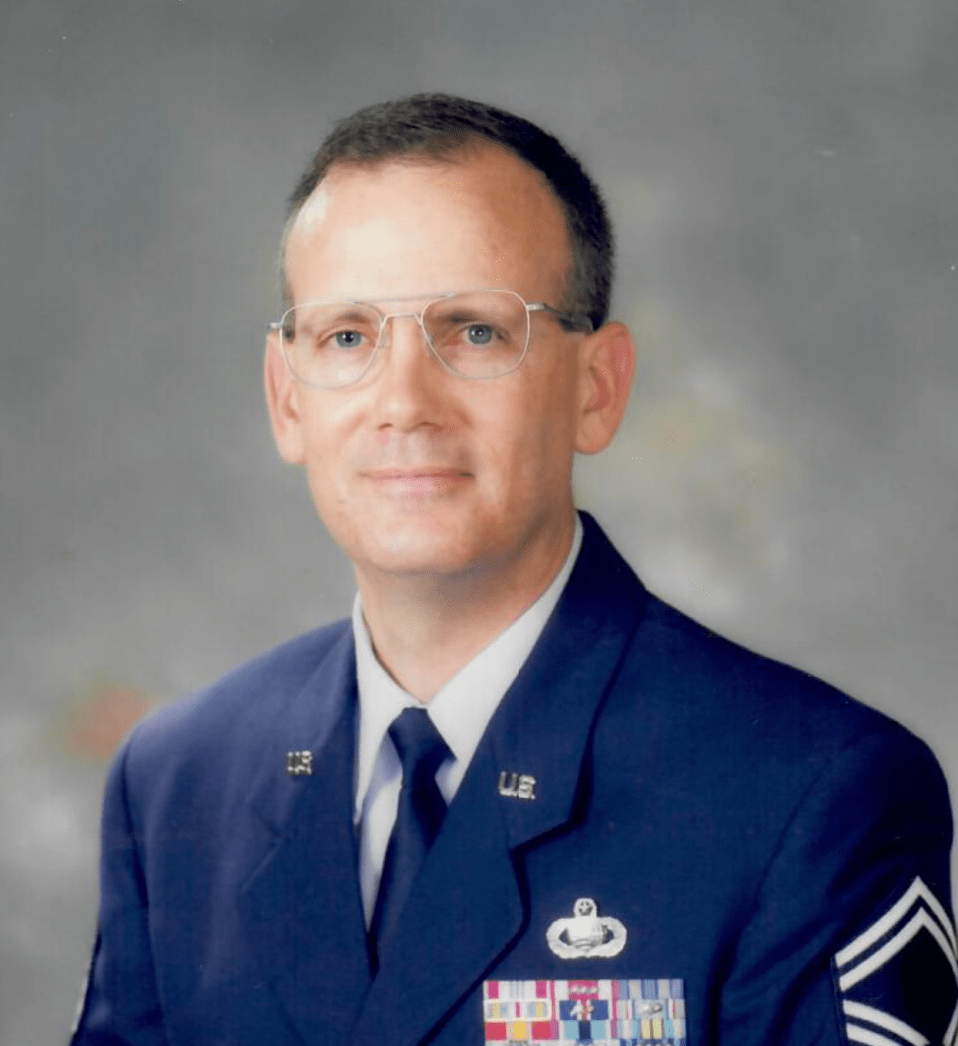
Mr. David Owen, KCC MU Faculty Advisor said, “Once I learned about KDSA’s mission and its plans to establish campus clubs across the U.S. to promote that mission, I was genuinely excited. Having served in the U.S. Air Force on the Korean Peninsula at Osan Air Base, I deeply understand the importance of the U.S.-South Korean alliance. The newly established KCC-MU not only provides us with an opportunity to educate local communities and create a presence on campus, but it also allows me to bring together many aspects of my life, namely my military service, life experiences in Asia, and teaching—in meaningful ways that benefit others. I am truly excited about what the future holds for KCC-MU and KDSA.”

Dr. David A. Owen holds a Ph.D. in Comparative Politics and Asian Studies from Southern Illinois University. He is currently an Associate Professor of International Politics at Millersville University of Pennsylvania, a position he has held since 2013. Before joining Millersville University, Dr. Owen spent approximately 17 years living in East and Southeast Asia. His career began in the U.S. Air Force, where he served for about 9 years, primarily on the Korean Peninsula and in mainland Japan.

Dr. Owen has been teaching since 1999, starting with faculty appointments at esteemed universities in East and Southeast Asia. He has published research on political attitudes and behavior across multiple countries, including Cambodia, China, Indonesia, Laos, Malaysia, Myanmar, North Korea, the Philippines, Singapore, South Korea, Thailand, and Vietnam. His work has appeared in respected scholarly journals such as the Journal of Communist and Post-Communist Studies, the Journal of Chinese Political Science, and Asian Politics and Policy, among others. His experience in the region began with his assignment at Osan Air Base, South Korea.


Did you know that anyone can start a KDVA Campus Club at any American or Korean college/university? KDVA will cover the cost of ALL activities. If interested, please connect with Ms. Ambrie Jones (KCC Coordinator) ambrie.kdva@gmail.com, register the KDVA Campus Club with your institution, and plan and run your activities about Korea, the ROK-U.S. Alliance, and Veterans. It’s that simple!

Here is information about the KDVA Campus Clubs: https://kdva.vet/campus/.

KDVA is a nonpolitical, nonprofit organization registered in Virginia with operations in the United States and South Korea.

Ambrie Jones

KDVA Campus Club Coordinator


KDVA is very excited to announce the second KDVA Campus Club in the United States. The campus club is located at the Millersville University in Millersville, Pennsylvania.

Our Millersville University KDVA Campus Club will launch its first Meet & Greet on Monday, April 21, 2025.

What: Millersville University KDVA Campus Club Launch Meet & Greet
When: April 21st from 5:00 PM – 7:00 PM
Where: Ford Atrium in Mccomsey Hall on Millersville University’s Campus
43 East Frederick St. Millersville, PA 17551

The event is free! Please register by April 20 to ensure we can accommodate all attendees.

Free parking in Parking Area 1 or Parking Area 2.

REGISTER


Read more

KDVA ROK-U.S. Alliance Journal – 2025 1st Quarter

2025 1st Quarter Edition

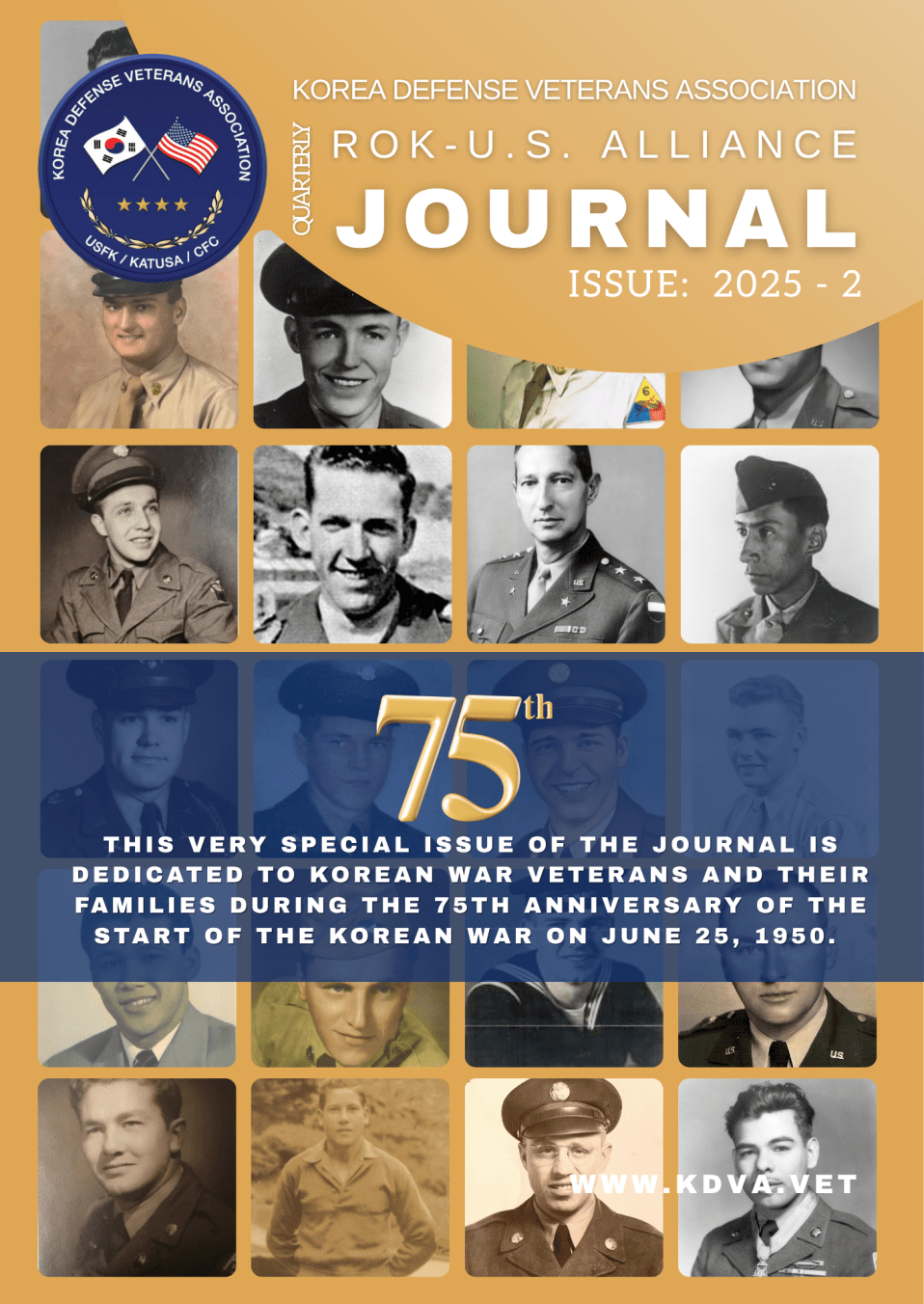
Featuring stories and articles by KDVA members and supporters of the ROK-U.S. Alliance.


Read more

From My Service in Korea, I Learned – David Erbstoesser

FROM MY SERVICE IN KOREA, I LEARNED… PFC David Erbstoesser

I walked into the Recruiting Office in Bismarck, ND, and signed up for a 3-year enlistment from 12 June 1962 to 11 June 1965 and then Standby Reserve to the final 11 June 1968. My Army Enlistment started June 12, 1962, and I took Basic Training at Ft Leonard Wood MO until August 17, 1962. I came home on leave and then proceeded to FT Bliss Texas on August 31, 1962-October 26, 1962.

I had orders for Germany, left for Ft Dix, NJ, and arrived there on October 29, 1962. I stayed at Ft Dix, NJ for about 2 weeks and got my orders changed to Korea. I flew to Oakland Army Terminal in California, after a few days to Travis AFB, and on to Hawaii, Wake Island, and Japan. I landed in Korea on November 28, 1962, and was assigned to Battery C, 7th Msl, Bn, 2nd Artillery Air Defense “Hawk Missile Site West of Suwon near the Yellow Sea.

My MOS was 176 Hawk Missile and while there I walked A lot of guards inside the Perimeter Fence as we and infiltrators tried to enter. I did Short Patrols when not on the tactical site and filled sandbags for the MG Emplacement. I Spent 13 Months in Korea. On August 31, 1963, IO was on a short routine patrol, when a land mine was tripped and landed on by another GI, I severely injured my left Ankle. I was forced to march on this foot for about 1 mile in terrible pain, as the Lt in charge said you “SOB there is nothing wrong with you, get up and move”.  I did as ordered. I was 19 years old.

The next day, I was at the 121st Evac Hospital where I got a walking cast. When it was time to take it off, I reported back to the 121st and was turned down as I was 1 day early for my Appointment. Remember I got a ride that was possible and that was at least an hour or more trip, so I went. Well, I did get the cast off after 5 to 6 weeks after I told an SP4 that I wanted to talk to someone with rank other than you or I would go back to the motor pool and cut the cast off myself!!!

I did my duty there and on December 7, 1963, I boarded the USS General William Mitchell for a 17-day trip to San Francisco, CA.

I went back to Ft Bliss, Texas for the rest of my enlistment and was assigned to Battery B, 6th Msl BN 56th Artillery. To Discharge, June 11, 1965.

As an SP-4, I volunteered for Vietnam, and I had the option not to go, but I have the orders in my file on hand today which confirm that I would accompany my unit if deployed. They placed me in a unit from Korea.

I learned a lot in Korea and did my duty under some stressful times. I learned to take orders and respect the service and all those who served and are now serving.

Today the VA takes care of me I am 100% DAV now and enjoying retirement in my 15th year. I am a life Member of these Veterans Organizations: DAV, Amvets, VFW, Vietnam Veterans of America.

I have held office as Commander for the Amvets DAV and VFW. I will be married to my wife for 59 years on June 18, 2025, I have two children, a son and Daughter, 3 grandkids, and 2 great-grandkids.


What did you learn from serving in Korea? Let us know –

Sharing your experiences from serving in Korea can be a powerful way to connect with others who have had similar experiences. By sharing your story, you may be able to help others who are currently serving in Korea or who are preparing to do so. You can share insights about the culture, the people, and the challenges you faced while serving. Your story can also help to shed light on the sacrifices that service members and their families make in order to protect our freedoms. So, if you have a story to share, we encourage you to take the time to put it down in writing and send it to KDVA.MyServiceInKorea@gmail.com along with any photos that help to tell your story.

READ MORE STORIES HERE.

Read more

From My Service in Korea, I Learned – Tracey Huff

From My Service in Korea, I learned… Tracey Huff

I served in Korea from December 2002 to January 2004.  What I learned from serving my country on the Korean peninsula was adaptability and how to work in a high-stakes, fast-paced environment.

I was the Noncommissioned Officer in Charge of Operations at the Pacific Air Force Security Forces Air Base Defense Regional Training Center, better known as “Commando Warrior” at Osan Air Base. I was so happy to have been able to secure a position there and I looked forward to what it entailed.  Cultural awareness and adaptability was something that struck me first off!  Living and working in Korea exposed me to a different culture, customs, and even some language barriers. Of course, working within the security arena of Korea, strategic readiness was a part of my daily job. Korea is a unique duty station due to its proximity to North Korea. I was able to train in high-alert scenarios, reinforcing the importance of being always mission-ready. During theater wide exercises I learned how to understand global military strategy while working in the Headquarters, 7th Air Force Intelligence Cell. My time in Korea gave me a deeper understanding of the U.S. military’s role in global security and the importance of allied cooperation in maintaining stability.

Working with a team of instructors continued to show me that teamwork and camaraderie was instrumental to success. Further instructing Pacific Air Force Security Forces personnel was something I wanted to continue, after my time as an Instructor Supervisor at the U.S. Air Force Security Forces Academy. Serving in Korea meant working closely with both U.S. and Korean forces. I formed strong bonds with fellow Defenders and learned how to operate in a multinational setting. While in Korea, I was also able to volunteer at a local orphanage and myself, and my team, deployed to support potato farmers after a hurricane struck the peninsula.

All in all, I learned so much from my time in Korea. For my one year of service there, I was awarded the Meritorious Service Medal, showcasing my team’s volunteerism and dedication to duty to help protect the people of the Republic of Korea. I owe them everything during this special time in my life and I feel so proud of my service to the people of Korea.


What did you learn from serving in Korea? Let us know –

Sharing your experiences from serving in Korea can be a powerful way to connect with others who have had similar experiences. By sharing your story, you may be able to help others who are currently serving in Korea or who are preparing to do so. You can share insights about the culture, the people, and the challenges you faced while serving. Your story can also help to shed light on the sacrifices that service members and their families make in order to protect our freedoms. So, if you have a story to share, we encourage you to take the time to put it down in writing and send it to KDVA.MyServiceInKorea@gmail.com along with any photos that help to tell your story.


READ MORE STORIES HERE.

Read more

From My Service in Korea, I Learned – Eric Rodley

From My Service in Korea, I learned… Eric Rodley

I was born and raised in California, in the Bay Area. My family moved to Oregon during my freshman year of high school after my father retired from AT&T. I enlisted in the U.S. Army infantry on August 29, 1989. At that time, Ft. Benning was the place to be for basic training as an infantry soldier, it was the home of the infantry. After graduating from basic training and advanced infantry training (AIT) in December of 1989, I took one month of leave. I flew from Portland, Oregon to Seattle, Washington, then to Seoul, Korea on January 14th, 1990.

About one week after arriving in Seoul, I can’t remember how many of us, but about a bus load of us were sent up north to Camp Casey. I was at the “turtle farm” for about two weeks when I was assigned to Charlie Company, 2/503 Infantry, 2nd platoon, Camp Hovey. Camp Hovey was a smaller Army base behind Camp Casey. When I arrived at my assigned unit, the unit was preparing for its rotation on the DMZ, I had arrived at just the right time. Our unit prepared by conducting mock combat patrols during the day and night. One particular night we had to lie in a mock ambush for two hours as if we were on the DMZ, it was so cold. I remember thinking to myself how exciting it was, but how miserable it was at the same time. Once on the DMZ, our platoon’s first phase was the patrol phase. We spent 30 days conducting day recon patrols, then night ambush patrols. One memory I have is the constant sound of North Korean and South Korean propaganda. At that time, the DMZ had very large speakers spread out all over different areas from both the North and South. The speakers were used for each side the blast their propaganda towards each other. I remember one day patrol where we were taking a patrol break, and the North Koreans played their national anthem 75 times in a row. This was driving us crazy but that was the point, the propaganda was meant to annoy and harass each other. The South Koreans played a lot of American music, this too was meant to annoy the North Koreans. Funny story is when I came back to the United States, if I heard a radio playing in the background somewhere, I would always think it was propaganda music, kind of funny.

My time spent in Korea was sort of unique. With 2/503 I did my three-month DMZ rotation from February 1990 to May 1990. At that time, the U.S Army started a reduction in force in Korea. The 2/503 was deactivated around June of 1990 so about a handful of us were sent to 5/20 Infantry (Mechanized) who relieved 2/503 on the DMZ. I was assigned to Charlie Company, 5/20 Infantry when 5/20 was starting their guard post phase. Each unit rotates through three assignments on the DMZ. Each phase on the DMZ is one month, patrol phase, guard post phase, and quick reaction force (QRF) phase. After my rotation with 5/20 on the DMZ we returned to Camp Casey in August. In December of 1990, I was given orders for Ft. Carson, Colorado, but the orders were rescinded due to the first Gulf War in August of 1990. Everyone stationed in Korea after January 1990 was involuntarily extended for an additional year due to the first Gulf war. I stayed with 5/20 Infantry until August 1991 when 5/20 Infantry received the Bradley fighting vehicles. Due to this restructuring, a group of us were given new orders for Alpha Company 1/503 Infantry on Camp Howze.

During my time in Korea, I visited many temples and had the opportunity to witness several traditional Korean weddings. These ceremonies were fascinating, showcasing the deep-rooted culture and pride of the Korean people. It was clear to me that they held a strong respect for their heritage. One of the most striking experiences was seeing the older generation still working in the rice paddies. I watched as elderly men and women carried their farming tools and equipment on their backs, yet they walked just as swiftly as we soldiers did while carrying 50 or 60 pounds of gear. I also had the privilege of speaking with many older Koreans who expressed their gratitude for the U.S. military’s role in keeping their country safe. When I was in Korea in 1990, many of them still remembered the war—some had fought in it, while others had lived through it as children. I often sat in restaurants just outside the base, listening to their stories. I believe they appreciated that a young soldier like me took an interest in their experiences and the history of their country. I found it all truly fascinating.

I have so many memories of Korea, and I wish I could write them all down. I spent eight years in the Army, but out of all the places I was stationed, Korea was my favorite assignment. My time there wasn’t perfect, but it was the best experience I had as a young soldier. I’ve told my family many times that if my only military service had been the two years I spent in Korea, I would have been completely satisfied. I had always wanted to experience an overseas assignment, and choosing Korea was one of the best decisions I made. The U.S. Army no longer patrols the DMZ; after the Cold War ended in 1993, we handed that responsibility over to the South Korean Army. Still, I feel honored to have been part of such a historic mission. In all, my time in Korea was from January 1990 to January 1992. I was honored to take part in a historic assignment at the DMZ, protecting freedom’s frontier along the southern boundary of the Korean Peninsula.


What did you learn from serving in Korea? Let us know –

Sharing your experiences from serving in Korea can be a powerful way to connect with others who have had similar experiences. By sharing your story, you may be able to help others who are currently serving in Korea or who are preparing to do so. You can share insights about the culture, the people, and the challenges you faced while serving. Your story can also help to shed light on the sacrifices that service members and their families make in order to protect our freedoms. So, if you have a story to share, we encourage you to take the time to put it down in writing and send it to KDVA.MyServiceInKorea@gmail.com along with any photos that help to tell your story.


READ MORE STORIES HERE.

Read more

From My Service in Korea, I Learned – Peter Thompson

From My Service in Korea, I learned… Peter Thompson

I enlisted in the Army in April 1958 and did basic training at Fort Dix, NJ. After basic training, I spent 8 weeks at Fort Gordon, GA, attending MP school. At the end of this training, all but one man was sent to Korea. We flew from Augusta, GA, to Seattle, WA, where we spent most of a week waiting for a troop ship to take us to Korea. The ship stopped in Kodiak, AK, to drop off some families and then on to Yokohama, Japan to drop off more passengers and give us a few hours of shore time. Then it was on to the port of Inchon and debarkation. We were trucked up to ASCOM city to await assignment. After a few days about 24 of us were sent to Hq & Hq Company, US Army Port Inchon. This facility was based on Wolmido Island which is off the coast of Inchon harbor.

I enlisted in the Army in April 1958 and did basic training at Fort Dix, NJ. After basic training, I spent 8 weeks at Fort Gordon, GA, attending MP school. At the end of this training, all but one man was sent to Korea. We flew from Augusta, GA, to Seattle, WA, where we spent most of a week waiting for a troop ship to take us to Korea. The ship stopped in Kodiak, AK, to drop off some families and then on to Yokohama, Japan to drop off more passengers and give us a few hours of shore time. Then it was on to the port of Inchon and debarkation. We were trucked up to ASCOM city to await assignment. After a few days about 24 of us were sent to Hq & Hq Company, US Army Port Inchon. This facility was based on Wolmido Island which is off the coast of Inchon harbor.

At that time this facility was responsible for moving all the troops and material in and out of the country. Since, at that time, the Inchon harbor was undeveloped and tidal elevation changes could reach 30 feet, all troop and material movement was handled by various watercraft and barges operated by members of this company. Military Police assigned to this unit would be doing guard duty at various locations around the port. Since this island is offshore and the predominant weather in the winter comes down from the north, the temperatures get very cold. Doing duty outside in this weather just standing around was not something to look forward to.

When we arrived on the island the personnel sergeant called me in and asked if I would be willing to take the job of the post mail clerk. Since this would be an inside job I jumped at the chance. This job consisted of going to the main post office on shore twice a day, collecting the bags of mail for our units, and returning to the island to sort and distribute it at mail call. In addition to this, I also had other duties which included

assisting the training sergeant during Saturday training sessions. The company commander had a specially prepared Jeep for his transportation, and I had the job of driving him to his various duties. One of these was to go to Seoul on payday to exchange script dollars for Korean won to pay the indigenous help on the base.

 I would put on my M1911 45 caliber pistol, the commander would get the money bag with the cash, and off we would go. After a stop at the officer’s club for lunch, we would go to the exchange. The money that would fill a small satchel on the way up would fill two duffel bags on the way back. In 1958 and 1959 Korea was a proud country but it had seen the ravages of war. Many people had little or nothing. The roads, what few of them there were, were still torn up from war. There were no private automobiles, and the only businesses were small shops selling necessities. I had the opportunity to return to Korea in 1983, just 24 years after I had left. I was amazed to see the transformation. There were superhighways filled with cars. Beautiful buildings and hotels filled the city, and it was obvious the people were prospering. I was taken aback to be thanked as a representative of a country that had assisted them in creating a modern, prosperous society. My service in Korea is a part of my life that I am most proud of.


What did you learn from serving in Korea? Let us know –

Sharing your experiences from serving in Korea can be a powerful way to connect with others who have had similar experiences. By sharing your story, you may be able to help others who are currently serving in Korea or who are preparing to do so. You can share insights about the culture, the people, and the challenges you faced while serving. Your story can also help to shed light on the sacrifices that service members and their families make in order to protect our freedoms. So, if you have a story to share, we encourage you to take the time to put it down in writing and send it to KDVA.MyServiceInKorea@gmail.com along with any photos that help to tell your story.


READ MORE STORIES HERE.

Read more