From My Service in Korea, I Learned – Eric Rodley

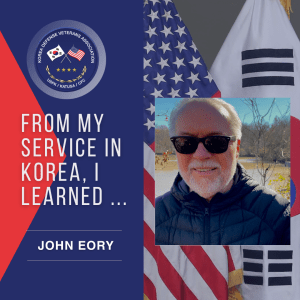
From My Service in Korea, I learned… Eric Rodley

I was born and raised in California, in the Bay Area. My family moved to Oregon during my freshman year of high school after my father retired from AT&T. I enlisted in the U.S. Army infantry on August 29, 1989. At that time, Ft. Benning was the place to be for basic training as an infantry soldier, it was the home of the infantry. After graduating from basic training and advanced infantry training (AIT) in December of 1989, I took one month of leave. I flew from Portland, Oregon to Seattle, Washington, then to Seoul, Korea on January 14th, 1990.

About one week after arriving in Seoul, I can’t remember how many of us, but about a bus load of us were sent up north to Camp Casey. I was at the “turtle farm” for about two weeks when I was assigned to Charlie Company, 2/503 Infantry, 2nd platoon, Camp Hovey. Camp Hovey was a smaller Army base behind Camp Casey. When I arrived at my assigned unit, the unit was preparing for its rotation on the DMZ, I had arrived at just the right time. Our unit prepared by conducting mock combat patrols during the day and night. One particular night we had to lie in a mock ambush for two hours as if we were on the DMZ, it was so cold. I remember thinking to myself how exciting it was, but how miserable it was at the same time. Once on the DMZ, our platoon’s first phase was the patrol phase. We spent 30 days conducting day recon patrols, then night ambush patrols. One memory I have is the constant sound of North Korean and South Korean propaganda. At that time, the DMZ had very large speakers spread out all over different areas from both the North and South. The speakers were used for each side the blast their propaganda towards each other. I remember one day patrol where we were taking a patrol break, and the North Koreans played their national anthem 75 times in a row. This was driving us crazy but that was the point, the propaganda was meant to annoy and harass each other. The South Koreans played a lot of American music, this too was meant to annoy the North Koreans. Funny story is when I came back to the United States, if I heard a radio playing in the background somewhere, I would always think it was propaganda music, kind of funny.

My time spent in Korea was sort of unique. With 2/503 I did my three-month DMZ rotation from February 1990 to May 1990. At that time, the U.S Army started a reduction in force in Korea. The 2/503 was deactivated around June of 1990 so about a handful of us were sent to 5/20 Infantry (Mechanized) who relieved 2/503 on the DMZ. I was assigned to Charlie Company, 5/20 Infantry when 5/20 was starting their guard post phase. Each unit rotates through three assignments on the DMZ. Each phase on the DMZ is one month, patrol phase, guard post phase, and quick reaction force (QRF) phase. After my rotation with 5/20 on the DMZ we returned to Camp Casey in August. In December of 1990, I was given orders for Ft. Carson, Colorado, but the orders were rescinded due to the first Gulf War in August of 1990. Everyone stationed in Korea after January 1990 was involuntarily extended for an additional year due to the first Gulf war. I stayed with 5/20 Infantry until August 1991 when 5/20 Infantry received the Bradley fighting vehicles. Due to this restructuring, a group of us were given new orders for Alpha Company 1/503 Infantry on Camp Howze.

During my time in Korea, I visited many temples and had the opportunity to witness several traditional Korean weddings. These ceremonies were fascinating, showcasing the deep-rooted culture and pride of the Korean people. It was clear to me that they held a strong respect for their heritage. One of the most striking experiences was seeing the older generation still working in the rice paddies. I watched as elderly men and women carried their farming tools and equipment on their backs, yet they walked just as swiftly as we soldiers did while carrying 50 or 60 pounds of gear. I also had the privilege of speaking with many older Koreans who expressed their gratitude for the U.S. military’s role in keeping their country safe. When I was in Korea in 1990, many of them still remembered the war—some had fought in it, while others had lived through it as children. I often sat in restaurants just outside the base, listening to their stories. I believe they appreciated that a young soldier like me took an interest in their experiences and the history of their country. I found it all truly fascinating.

I have so many memories of Korea, and I wish I could write them all down. I spent eight years in the Army, but out of all the places I was stationed, Korea was my favorite assignment. My time there wasn’t perfect, but it was the best experience I had as a young soldier. I’ve told my family many times that if my only military service had been the two years I spent in Korea, I would have been completely satisfied. I had always wanted to experience an overseas assignment, and choosing Korea was one of the best decisions I made. The U.S. Army no longer patrols the DMZ; after the Cold War ended in 1993, we handed that responsibility over to the South Korean Army. Still, I feel honored to have been part of such a historic mission. In all, my time in Korea was from January 1990 to January 1992. I was honored to take part in a historic assignment at the DMZ, protecting freedom’s frontier along the southern boundary of the Korean Peninsula.


What did you learn from serving in Korea? Let us know –

Sharing your experiences from serving in Korea can be a powerful way to connect with others who have had similar experiences. By sharing your story, you may be able to help others who are currently serving in Korea or who are preparing to do so. You can share insights about the culture, the people, and the challenges you faced while serving. Your story can also help to shed light on the sacrifices that service members and their families make in order to protect our freedoms. So, if you have a story to share, we encourage you to take the time to put it down in writing and send it to KDVA.MyServiceInKorea@gmail.com along with any photos that help to tell your story.


READ MORE STORIES HERE.

Read more

From My Service in Korea, I Learned – Peter Thompson

From My Service in Korea, I learned… Peter Thompson

I enlisted in the Army in April 1958 and did basic training at Fort Dix, NJ. After basic training, I spent 8 weeks at Fort Gordon, GA, attending MP school. At the end of this training, all but one man was sent to Korea. We flew from Augusta, GA, to Seattle, WA, where we spent most of a week waiting for a troop ship to take us to Korea. The ship stopped in Kodiak, AK, to drop off some families and then on to Yokohama, Japan to drop off more passengers and give us a few hours of shore time. Then it was on to the port of Inchon and debarkation. We were trucked up to ASCOM city to await assignment. After a few days about 24 of us were sent to Hq & Hq Company, US Army Port Inchon. This facility was based on Wolmido Island which is off the coast of Inchon harbor.

I enlisted in the Army in April 1958 and did basic training at Fort Dix, NJ. After basic training, I spent 8 weeks at Fort Gordon, GA, attending MP school. At the end of this training, all but one man was sent to Korea. We flew from Augusta, GA, to Seattle, WA, where we spent most of a week waiting for a troop ship to take us to Korea. The ship stopped in Kodiak, AK, to drop off some families and then on to Yokohama, Japan to drop off more passengers and give us a few hours of shore time. Then it was on to the port of Inchon and debarkation. We were trucked up to ASCOM city to await assignment. After a few days about 24 of us were sent to Hq & Hq Company, US Army Port Inchon. This facility was based on Wolmido Island which is off the coast of Inchon harbor.

At that time this facility was responsible for moving all the troops and material in and out of the country. Since, at that time, the Inchon harbor was undeveloped and tidal elevation changes could reach 30 feet, all troop and material movement was handled by various watercraft and barges operated by members of this company. Military Police assigned to this unit would be doing guard duty at various locations around the port. Since this island is offshore and the predominant weather in the winter comes down from the north, the temperatures get very cold. Doing duty outside in this weather just standing around was not something to look forward to.

When we arrived on the island the personnel sergeant called me in and asked if I would be willing to take the job of the post mail clerk. Since this would be an inside job I jumped at the chance. This job consisted of going to the main post office on shore twice a day, collecting the bags of mail for our units, and returning to the island to sort and distribute it at mail call. In addition to this, I also had other duties which included

assisting the training sergeant during Saturday training sessions. The company commander had a specially prepared Jeep for his transportation, and I had the job of driving him to his various duties. One of these was to go to Seoul on payday to exchange script dollars for Korean won to pay the indigenous help on the base.

 I would put on my M1911 45 caliber pistol, the commander would get the money bag with the cash, and off we would go. After a stop at the officer’s club for lunch, we would go to the exchange. The money that would fill a small satchel on the way up would fill two duffel bags on the way back. In 1958 and 1959 Korea was a proud country but it had seen the ravages of war. Many people had little or nothing. The roads, what few of them there were, were still torn up from war. There were no private automobiles, and the only businesses were small shops selling necessities. I had the opportunity to return to Korea in 1983, just 24 years after I had left. I was amazed to see the transformation. There were superhighways filled with cars. Beautiful buildings and hotels filled the city, and it was obvious the people were prospering. I was taken aback to be thanked as a representative of a country that had assisted them in creating a modern, prosperous society. My service in Korea is a part of my life that I am most proud of.


What did you learn from serving in Korea? Let us know –

Sharing your experiences from serving in Korea can be a powerful way to connect with others who have had similar experiences. By sharing your story, you may be able to help others who are currently serving in Korea or who are preparing to do so. You can share insights about the culture, the people, and the challenges you faced while serving. Your story can also help to shed light on the sacrifices that service members and their families make in order to protect our freedoms. So, if you have a story to share, we encourage you to take the time to put it down in writing and send it to KDVA.MyServiceInKorea@gmail.com along with any photos that help to tell your story.


READ MORE STORIES HERE.

Read more

From My Service in Korea, I Learned – Sawvel Family

From My Service in Korea, I learned… Dr. USA SFC (Ret) William Sawvel & USAF Sgt Ronald Sawvel

Walking down the dark hallway towards the TA50 storage room, I felt like I was in an episode of The Twilight Zone as a homogenously bouncing glow peeked out from under the door crack of every other soldier’s room. From the nearly synchronous noise of reporter dialogue, I realized we were all watching the same thing – two commercial jets had just crashed into the World Trade Center buildings within twenty minutes of each other. In South Korea, it was 11 pm on September 11th, 2001, and half of our soldiers were still enjoying the night out in town while the other half of us stayed in. The purpose for gathering my equipment while I had no idea what would happen next. I knew it wasn’t good when the first aircraft hit, I briefly wondered, “Now, what idiot was flying that plane?” It was as I watched the second plane collide on live television that I instantaneously knew… we were going to war.

Serving in the Second Infantry Division under the command of Major General Russel L. Honoré (aka “The Ragin’ Cajun”) – a famously animated leader who seemed to enjoy torturing us with regular 3 AM sirens to respond to an imaginary Democratic People’s Republic of Korea (DPRK) surprise invasion – I was thoroughly convinced staff duty would be beating on our doors at any moment. Except, this time, the threat would be real. While that alarm never came, the last several months of my time in South Korea included my unit moving up along the Imjin River and pulling guard alongside our Republic of Korea (ROK) Army counterparts, in the event North Korean leader Kim Jong Il decided he would take advantage of our distraction. I realized that even developing conflicts thousands of miles away had a global impact on, not just the United States, but our partner nations. I also realized just how much of a dedicated ally South Korea was.

I remember hearing stories as a child about how my grandfather, already a WWII veteran and then a flight engineer for a major airline, helped to transport ROK Army soldiers (and their family members) from South Korea into Vietnam to fight alongside American counterparts. At 320,000 the Republic of Korea sent the largest contingent of any U.S. ally in the war. While deployed to Afghanistan in 2013, I often walked past a tiny ROK compound situated along the outer perimeter of Bagram Airfield – near what later became the site of an intense firefight against breaching Taliban fighters. We recently heard that ten thousand soldiers of the number one enemy of South Korea joined in the fight in Ukraine alongside one of our own largest opponents, the Russian Federation.

In 2021, Admiral Philip S. Davidson, commander of the U.S. Indo-Pacific Command (INDOPACOM), testified before the U.S. Senate Armed Services Committee that the People’s Republic of China (PRC) intended to invade Taiwan by 2027. If ADM (Ret) Davidson’s testimony was accurate, the threat to South Korea is irrefutable. In vicinity alone, North Korea, an ally of China, is the only country by land separating the PRC from ROK. During the 20th century, DPRK assisted the Chinese Communist Party (CCP) in the Chinese Civil War; and China reciprocated by sending 260,000 of its own soldiers in to reinforce the North Koreans in the Korean War.

From a U.S. perspective, South Korea (and Japan) sit close enough to the Bering Sea and Arctic, an extremely important strategic region, that Chinese and Russian vessels heading towards or leaving the Northern Sea Route are likely to come near the peninsula, if not stop at  Busan  (South Korea’s largest port and a major global logistics hub). Chinese military and commercial vessels (who regularly impede on sovereign territorial waters) leaving ports in Dalian, Shandong, and even Shanghai are likely to be seen by South Korea before leaving the Yellow and East China Seas.

As far as the largest elephant in the room, China and North Korea both pose a nuclear threat to the United States, as well as South Korea and Japan. Should China invade Taiwan, and should the U.S. and its allies become involved, both South Korea and Japan would be perfectly positioned to give early warning and rapid logistical support. However, there must always be give and take.

During the 2024 ROK-US Alliance Conference, I listened with intense concentration as General (Ret) Leem, Ho-Young eloquently and accurately mentioned that the U.S. must realize that South Korea has needs and expectations of its own, which cannot go ignored. While rapidly developing technology has made it easier for mortal enemies to achieve global reach, there are just four kilometers of concertina wire and landmines that separate North and South Korea and, according to RAND Corporation’s Arroyo Center, there are nearly six thousand North Korean artillery systems within range of heavy population centers that could kill more than ten thousand civilians within an hour. The people of South Korea are in constant threat of attack with hardly any warning. Yet, they have never ceased to be a staunch ally of a nation over five thousand miles away (to the continental U.S.) on the other side of the Pacific.

Taking into consideration the Department of Defense’s model on the instruments of national power (Diplomatic, Information, Military, and Economic – DIME), we simply cannot afford to ignore the needs of South Korea, in addition to our own, and the extreme advantage of having them as an ally in realizing strategic effects against China.

Generally speaking, we are culturally dissimilar; we come from different backgrounds and experiences; our immediate needs and expectations may differ; and our ideas for achieving victory might be distinct. However, our reliance on each other is undeniable. With today’s adversaries simultaneously threatening our individual homelands, we must expand and reinforce the alliance and collaboration between our two nations.

Dr. USA SFC (Ret) William Sawvel with His Father, USAF Sgt Ronald Sawvel (Panmunjom JSA, 2024)


What did you learn from serving in Korea? Let us know –

Sharing your experiences from serving in Korea can be a powerful way to connect with others who have had similar experiences. By sharing your story, you may be able to help others who are currently serving in Korea or who are preparing to do so. You can share insights about the culture, the people, and the challenges you faced while serving. Your story can also help to shed light on the sacrifices that service members and their families make in order to protect our freedoms. So, if you have a story to share, we encourage you to take the time to put it down in writing and send it to KDVA.MyServiceInKorea@gmail.com along with any photos that help to tell your story.


READ MORE STORIES HERE.

Read more

KDVA and Welcome Wagon of Korea Support USFK

KDVA and Welcome Wagon of Korea Support USFK

January 27, 2025

주한미군을 지원하는 주한미군전우회와 주한미군신참환영인단

2025년 1월 27일

The Korea Defense Veterans Association (KDVA) and the Welcome Wagon of Korea (WWoK) are excited to announce their partnership that will benefit U.S. Service Members serving in Korea and support our efforts to further enhance the ROK-US Alliance.

주한미군전우회(KDVA)와 주한미군신참환영인단(WWoK)이 한국에서 복무하는 미군 병사들의 복지를 증진하고 한미동맹을 강화하려는 노력을 상호 지원하는 파트너십을 맺었음을 기쁜 마음으로 선언합니다.

The mission of the WWoK is dedicated to creating a positive first impression for Service Members and their dependents upon their arrival in the Republic of Korea. They accomplish their mission by ensuring that each group of arriving Service Members and their families are greeted with essential information, snacks, and a warm welcome.

주한미군신참환영인단은 대한민국 땅에 발을 디딘 주한미군 병사들과 그 가족들이 한국에 도착하자마자 그들이 헌신할 국가에 대한 긍정적인 인상을 형성하도록 돕습니다. 환영인단은 새로운 나라인 한국에 잘 적응할 수 있도록 필수적인 정보와 정성 가득한 음식, 따뜻한 환대를 제공하며 주어진 사명을 다합니다.

KDVA’s mission is to enhance the ROK-U.S. Alliance by advocating for the Alliance and supporting those who built and serve it. Over 3.3 million American men and women have served in Korea since the Armistice was signed in 1953. With over 36,000 members and 106,000 social media followers (and growing each day), KDVA continues to be the premiere organization with the primary goal to support the Alliance and our Veterans.

주한미군전우회의 사명은 한미동맹을 형성하고 현재까지도 공고하게 다지려는 이들을 위해 목소리를 높이며 한미동맹의 영향력을 널리 알리고, 나아가 강화하고자 힘쓰는 것입니다. 1953년 정전협정 이래 330만 명 이상의 미군이 대한민국 땅에서 복무했습니다. 현재 3만 6천 명 이상의 회원을 보유하고, 소셜미디어 팔로워 수가 10만 6천에 달하며 그 수가 나날이 증가하는 주한미군전우회는 한미동맹과 한국전쟁 참전용사들을 지원한다는 최우선 목표를 가지고 정진하는 기관입니다.

General (Ret.) Curtis Scaparrotti, KDVA Chairman and President said, “We are honored to partner with the Welcome Wagon of Korea and to support the great work they do for our Service Members joining U.S. Forces Korea (USFK). We are very thankful for the Welcome Wagon’s passion and dedication to ensure that U.S. Service Members and their Families get a warm welcome from their USFK community. This is a noble mission, and KDVA is very proud to make a monthly donation to be WWoK’s main sponsor.”

주한미군전우회의 회장 및 이사장인 커티스 스캐퍼로티 미 육군 대장(예)은 다음과 같이 소회를 밝혔습니다. “한국으로 파견된 미군 용사들을 위해 노력을 아끼지 않는 주한미군신참환영인단과 주한미군전우회가 협력 관계를 맺을 수 있어 기쁩니다. 한국에 먼저 와 자리잡고 있던 주한미군 구성원들로부터 환대를 받을 수 있도록 힘쓰는 환영인단의 열정과 헌신에 감사를 표합니다. 이 일은 무척 숭고하며, 주한미군전우회는 매달 정기 후원을 통해 환영인단의 주요 협력자가 되었음이 자랑스럽습니다.”

Mrs. Kelly Karwel, WWoK President, said: “We are grateful for our partnership with KDVA and their generous support in helping us fulfill our mission to welcome U.S. Service Members and their families to Korea. As an organization dedicated to enhancing the ROK-US Alliance and advocating for those who have served, KDVA’s commitment to supporting our military community is inspiring. Through our partnership, we will continue to make each newcomer’s arrival a positive and memorable experience as we serve our Service Members, Veterans, and families.”

주한미군신참환영인단 회장인 켈리 카월 부인은 다음과 같은 소감을 전했습니다. “한국에서 복무하게 된 미군과 그 가족들을 환영하고 적응을 돕는 환영인단의 사명을 다할 수 있도록, 주한미군전우회의 협력과 지원을 받게 되어 진심으로 감사합니다. 한미동맹을 공고하게 유지하며 동맹을 위해 힘쓴 이들을 지원하는 기관인 주한미군전우회가 미군 공동체를 위해 협조하는 것은 저희에게 큰 힘이 됩니다. 이 협력 관계 덕택에 환영인단은 주한미군과 참전용사, 그 가족들을 위해 힘쓰며 한국에서의 시간이 보람 있고 따뜻한 기억으로 남도록 하는 저희의 소임을 꾸준히 다해 갈 수 있을 것입니다.

The United States has 28,500 Service Members stationed in the Republic of Korea and each one of them plays a vital role in ensuring security and stability of the Korean Peninsula and the region. Working together, KDVA and WWoK will provide an important welcome upon their arrival and promote a desire to embrace their new duty station.

현재 미 육군은 2만 8천 5백명의 미군을 대한민국에 파견하였습니다. 주한미군 용사는 한 명도 빠짐없이 한반도는 물론 동아시아 지역의 군사적 안정성과 안보를 보장하는 중추적 역할을 수행하고 있습니다. 주한미군전우회와 주한미군신참환영인단은 단단한 협력 관계를 기반으로, 새로 파견된 주한미군이 한국에 기쁜 마음으로 정착하여 정을 붙이고 살아갈 수 있도록 따뜻이 환대할 것입니다.

For more information about KDVA programs and how you can join the Korea Defense Veterans Association, please visit www.KDVA.vet, and if you would like to volunteer or support the WWoK, please email w.w.ofkorea@gmail.com.

주한미군전우회의 다양한 프로그램에 대해 더욱 알고자 하는 분이나, 전우회에 가입하고자 하는 분은 www.KDVA.vet으로 방문해주시면 됩니다. 주한미군신참환영인단을 후원하거나 자원봉사로 함께해 주실 분은 w.w.ofkorea@gmail.com로 연락주시기 바랍니다.


KDVA WWoK Announcement 20250124 – Dual Language

Read more

KUSAF and KDVA’s Work Matters

한미동맹재단과 주한미군전우회의 숭고한 사명

KUSAF and KDVA’s Work Matters

2025 년 새해 복 많이 받으시고 건승하시길 기원합니다.

Happy New Year 2025 & we wish you great success.

참전용사와 복무장병, 그리고 그 후원자들은 한국과 미국 국민들이 더 나은 삶을 영위할 수 있도록 중요한 역할을 해왔습니다. 이러한 이유로 한미동맹재단과 주한미군전우회는 참전용사와 복무장병을 지원하기 위해 노력하고 있습니다.

Why do Veterans and their supporters matter? Veterans and their supporters matter because they helped make life better for Koreans and Americans … that is what the Korea-US Alliance Foundation (KUSAF) and the Korea Defense Veterans Association (KDVA) believe and work to support.

참전용사, 복무장병, 후원자들의 노력으로 대한민국과 미국은 역동적이고 필수적인 동맹을 구축했습니다. 한미동맹은 전 세계적으로 중요한 한반도의 안정성을 유지하며, 이 안정성은 양국이 서로 보완하고 상호 지원하는 관계를 통해 사회적 번영을 도모하고 있습니다.

The work of Veterans and supporters has built a vibrant and essential Alliance between the United States and the Republic of Korea. This Alliance maintains stability in one of the most important areas of the world for Koreans and Americans. This stability enables the Alliance to thrive in many facets of our combined societies that are increasingly intertwined and mutually supportive and beneficial.

한미동맹재단과 주한미군전우회가 진행하는 모든 동맹 사업은 한미동맹재단이 주도하는 모금 활동에 의해 지원받고 있습니다. 전우회는 이러한 재단의 역할에 큰 감사의 뜻을 표합니다.

The work of KUSAF and KDVA is built on KUSAF’s central role in raising funds for both organizations – and KDVA is very thankful for KUSAF. KUSAF engages Korean companies and Korean citizens who are eager to show their appreciation for the Veterans who saved their country during the Korean War and continue to defend Korea today.

주한미군전우회는 2024 년에 회원 수 34,000 명, 소셜 미디어 팔로워 105,000 명을 돌파하며 기록적인 성장을 이루었습니다. 한미 양국 국민들이 전우회에 가입하고 팔로우함으로써 동맹과 참전용사, 복무장병들에 대한 지지를 표하고, 동맹에 대한 이해를 넓히며, 우정을 나누고, 개인의 경험을 공유하여 강력한 동맹을 구축하고 있습니다. 2024 년에 플로리다와 캘리포니아에 새로운 챕터를 창립한 것에 대해 깊이 감사하며, 2025년에는 미국 전역에 2~4개의 추가 챕터를 창립할 예정입니다. 또한 주한미군 장병들을 위한 챕터를 추가로 창립하여 28,500 명의 주한미군 장병들에게도 혜택을 확대할 계획입니다.

KDVA had another year of record growth in 2024, topping 34,000 members and 105,000 social media followers. These Americans and Koreans join and follow KDVA to show their support, to gain insights about the Alliance and our Veterans, to gather for friendship, and to share their individual stories and experiences that collectively continue to build our strong Alliance. And KDVA is very thankful that in 2024 we were able to open two more KDVA Chapters in Florida and California. We will open two to four more chapters in 2025 to help our members and supporters connect all over the United States. KDVA will also open chapters in Korea on U.S. Forces Korea (USFK) installations to better support the 28,500 U.S. Service Members in Korea.

2024 년 한미동맹재단은 전우회와 국가보훈부와 협력하여 한미동맹 컨퍼런스 및 포럼을 개최함으로써 한미동맹의 중요성을 널리 알리고 참전용사 및 복무장병들의 헌신을 되새기는 기회를 마련하였습니다. 재단은 동맹을 위해 헌신한 기업과 개인에게 한미동맹대상과 아너스상을 수여했으며, 유엔 및 주한미군 복무장병의 방한 초청 사업과 미래 세대를 위한 안보 및 동맹 교육도 진행하였습니다. 2025 년에는 정전 후 한국에서 전사한 주한미군 장병들을 기리는 추모비 건립을 추진할 예정입니다.

In 2024, KUSAF, in cooperation with MPVA and KDVA, hosted the Alliance and Veterans Conference, thereby promoting the importance of the Alliance and reaffirming the dedication of Veterans. KUSAF awarded the Alliance Grand Award and Honors to businesses and individuals who have dedicated themselves to the alliance, and supported the Korea revisit program for UNC and USFK Veterans, as well as security and alliance education for future generations. In 2025, the Foundation plans to pursue the construction of a memorial for U.S. Forces Korea service members who were killed in action in Korea after the armistice.

한미동맹재단과 주한미군전우회의 활동은 평화로운 시기는 물론 도전적인 시기에도 중요합니다. 한국이 겪고 있는 어려움 속에서도 전우회는 한국 국민이 강력한 민주주의를 향해 나아갈 수 있도록 지원할 것입니다. 한미동맹재단과 주한미군전우회는 지도자, 후원자, 회원들의 참여와 지원 덕분에 350 만 한국전 한미 참전용사와 주한미군 복무장병들의 헌신을 기억하고 예우할 수 있었습니다. 2025 년에도 전우회에 가입하여 복무장병들을 지원해 주시면 감사하겠습니다.

What we do matters during good times and times of challenges. During these challenging times in Korea, KDVA stands with the Korean people as they navigate and chart their course for a stronger democracy. And KUSAF and KDVA are thankful that our leaders, donors, and members stand together to ensure the sacrifices and contributions of the 3.5 million ROK & U.S. Korean War Veterans and 3.5 million ROK & U.S. Korea Defense Veterans are remembered, cherished, and paid forward. Please consider making your own contributions by joining KDVA in 2025 (kdva.vet).

“함께 해요 한미동맹”

“Together for the ROK-U.S. Alliance!”


임호영
예비역 육군 대장 한미동맹재단 회장

Leem, Ho Young
General, ROK Army (Retired) President, KUSAF


커티스

스카파로티 예비역 육군 대장 주한미군전우회 회장

Curtis M. Scaparrotti

General, U.S. Army (Retired) President, KDVA


KUSAF and KDVA 2025 Message


Read more

Welcome KDVA 2025 Interns!

KDVA IS PROUD TO ANNOUNCE OUR 2025 INTERNS!

The KDVA Interns will have opportunities to learn more about the ROK-U.S. Alliance and its diverse topics, gain invaluable professional experience, develop skills, make professional contacts, and make contributions to the ROK-U.S. Alliance.  They will be involved in diverse research and activity projects to include:

  • Researching ROK-U.S. Alliance topics.
  • Writing Alliance articles for the KDVA quarterly journal, webpage, newsletter, Facebook, and X.
  • Serving as Research Assistants to team with a senior KDVA leader and write articles for KDVA platforms, news articles, and think tank publications.
  • Collaborating with academic institutions and young professional organizations to research joint projects.
  • Supporting events in Seoul and DC.
  • Supporting social media efforts.

We look forward to their efforts! “Together for the ROK-U.S. Alliance.”

Read more

KDVA’s Museum and Memorial Mobile Tour App Now Features the Military Women’s Memorial

The Military Women’s Memorial is the leading memorial and education center honoring the commitment, contributions and experiences of Servicewoman.

The Korea Defense Veterans Association Museum and Memorial App offers a valuable opportunity to bridge language barriers and ensure that all onsite or virtual visitors can fully engage with the exhibits and panels.

By providing translations into Korean, the app enhances accessibility and inclusivity, allowing Korean-speaking visitors to gain a deeper understanding and appreciation of the museum’s historical significance and the ROK-U.S. Alliance.

Check out our mobile app or visit one of the Memorials today! 

KDVA APP


AVAILABLE KDVA MUSEUM & MEMORIAL TOURS –

The MacArthur Memorial

The MacArthur Memorial was founded in 1964 as a museum and library dedicated to the life and times of General of the Army Douglas MacArthur.


Norfolk, Virginia, USA

VIEW TOUR –>

The Military Women’s Memorial

The Military Women’s Memorial is a one-of-a-kind tribute to America’s Servicewomen, past and present. The Memorial features an education center, interactive exhibits, and a world-class collection of military women’s stories.

Arlington, Virginia, USA

VIEW TOUR –>


Read more

From My Service in Korea, I Learned – Richard Hernandez

From My Service in Korea, I learned… Richard Hernandez

I deployed to Korea  as an 18 year old Army medic and was assigned to 2/72 Armor, 2nd Infantry Division, August 1967 to September 1968. I received my orders to Korea right out of medic training at Fort Sam Houston TX. It was a surprise. We all thought we were going to Vietnam.  I didn’t even know we still had troops in Korea.

I thought I had been given a reprieve from combat. On the day I arrived in Korea, 12 Aug 1967, the Stars and Stripes headline was “N. Koreans kill 3 GI’s.” That was a wake-up call. I remember an old, grizzled SGT at the reception center informing us to be very careful during our 13 month tour, because “you can get killed just as dead in Korea as in Vietnam.”

When I arrived in Korea I was young and inexperienced in the ways of the world, the knowledge and skills needed to be a soldier, and the responsibility that was to be placed on me as a medic. I quickly learned that my fellow soldiers expected me to be there when they were sick, injured, or wounded. They expected me to be knowledgeable and skillful at all times. It was an enormous responsibility, and taught me that I had the strength of character to meet any challenge. Those 13 months in Korea turned out to be the most important and defining months of my life. People laugh when I say this, but I arrived in Korea an 18 year old boy, and left Korea a 19 year old man.

In the field, I was assigned as the company medic for A Company. My “ambulance” was an M113 Armored Personnel Carrier. It was painted camouflage, but had big red crosses on a white background on both sides. The first time I saw that I thought, “boy…what a great target.” I had an antenna flag made that said, “REMEMBER THE GENEVA CONVENTION, THOU SHALL NOT KILL.” It was a tongue-in-cheek reminder to the North Koreans to not fire on the medics. In garrison, I was the battalion pharmacy tech. I managed and dispensed the medications that our battalion surgeon would prescribe during sick call. I also had the combination to the safe where we kept our morphine and extra ammo.

We had two KATUSA medics in my unit, CPL Kim and CPL OH. They were not only excellent medics, they also were personable and were always available to help us GI’s understand their culture. In the field, I was often paired with one of our KATUSAs and that helped lower my anxiety and stress levels, especially on combat ops. We also supported a local orphanage and CPL Kim and CPL OH were instrumental helping us provide the best medical care.

Those of us who have served in Korea know how volatile the border can be. January 1968 was a particularly challenging time for South Korean and US forces. The attempted assassination of President Park Chung Hee at the Blue House, followed by the capture of the USS Pueblo, brought us close to full out war. The Blue House Raid failed, but the raiding party, composed of 31 North Korean infiltrators, attempted to escape back to North Korea. They met a coordinated response by South Korean and US military. My unit was used as a blocking force and on 26 Jan 1968, engaged in a firefight with at least one of the infiltrators. One of our troopers was KIA in the action. I was the closest medic, but by the time I could get to him he had died. All I could do was pronounce him dead and evac his remains to 2nd Medical Bn. His name was PVT Salvador Mojica. He had been in-country no more than 1 week. Like me, he was Hispanic and from Los Angeles.  He was 18 years old. I had turned 19 four days before. His death on that day 56 years ago, has stayed with me. I had not met him because I was in the field. However, I truly believe that based on our similar  backgrounds, we would have been buddies. I remember him every January 26.

Starting April 1968 the area north of the Imjin River became a Hostile Fire Area and Hostile Fire Pay was authorized. My unit was at Camp Beard which was south of the Imjin, but our area of operation included north of the river. I made hostile fire pay several times before the end of my tour.  My next duty station was Letterman Army Hospital, Presidio of San Francisco. When I reported to Personnel, the Personnel Specialist sat me down and went through my 201 file. At one point he stopped, looked up at me, and said, “You’re one lucky SOB.” He explained that since I had made Hostile Fire Pay in Korea, that counted as a combat tour. I wouldn’t be sent to Vietnam unless I volunteered. It was a tough decision. I could spend my last 16 months in the Army in San Francisco, or volunteer for Vietnam. Took me a split second to decide.

After the Army  I spent 20 years in the Navy Reserve. Summer 1988 I was assigned as the Navy’s representative to the Joint Medical Regulating Office Korea (JMRO-K) at Osan Air Base for Ulchi Focus Lens. I was again assigned to JMRO-K March 1989 for Team Spirit. On 20 March 1989 a US Marine Corps helicopter crashed near Pohang killing 22 Marines and injuring 15.  Most of the injured Marines were sent to the 121st Evac in Seoul. At the time, my civilian profession was registered respiratory therapist and so I was sent TDY from Osan to the 121st Evac to help care for the Marines in the Intensive Care Unit. I stayed for 3 days until the Army Burn Specialist Team arrived from Fort Sam Houston and relieved us. I was honored to be in a position to help. It was a humbling experience.

Last year (2023) I was selected for the Return to Korea Program. It was an eye-opening experience seeing modern Korea compared to my past visits in the 1960’s and 1980’s. The visit culminated for me the last day when I was in the hotel elevator on my way to breakfast. A couple got on with a young child. The gentleman looked at my name badge and looked me in the eye and said, “you are hero.” He went on to say that because of me he and his family could live in freedom. I almost lost it. It helped me realize that the time and effort I contributed to the defense of South Korea will be one of my life’s greatest accomplishments.


What did you learn from serving in Korea? Let us know –

Sharing your experiences from serving in Korea can be a powerful way to connect with others who have had similar experiences. By sharing your story, you may be able to help others who are currently serving in Korea or who are preparing to do so. You can share insights about the culture, the people, and the challenges you faced while serving. Your story can also help to shed light on the sacrifices that service members and their families make in order to protect our freedoms. So, if you have a story to share, we encourage you to take the time to put it down in writing and send it to KDVA.MyServiceInKorea@gmail.com along with any photos that help to tell your story.


READ MORE STORIES HERE.

Read more

KDVA and KUSAF Honor American Veterans on U.S. Veterans Day

November 11, 2024

2024년 11월 11 일

KDVA and KUSAF Honor American Veterans on U.S. Veterans Day

한미동맹재단과 주한미군전우회, 미 제대군인의 날에 참전용사 및 복무장병을 기리며

For U.S. Veterans Day on November 11, 2024, the Korea Defense Veterans Association (KDVA) and the Korea-US Alliance Foundation (KUSAF) sincerely thank over 1.8 million American Veterans who fought in the Korean War from 1950 to 1953, and since 1953, the 3.3 million American Veterans who defended, and continue to defend, South Korea and American interests. Because of our shared experiences and relationships, we are proud to be “Together for the ROK-U.S. Alliance”!

2024 년 11 월 11 일 미국 제대군인의 날을 맞아, 한미동맹재단과 주한미군전우회는 1950 년부터 1953 년까지 한국전쟁에 참전한 180 만 명 이상의 미국 참전용사들과 1953 년 이후 한국을 지키며 한미 양국의 국익을 수호해 온 330만 명 이상의 미국 복무장병들께 깊은 감사를 드립니다. 우리의 공유된 경험과 굳건한 결속 덕분에 우리는 “함께하는 한미동맹”에 깊은 자부심을 느낍니다.

Americans created the Veterans Day National Holiday to remember and honor our Veterans who served around the world to protect the American way of life. This is a special day set aside so that Americans can remember and honor our Veterans who fought for our freedom and continue to provide protection around the world, especially in Korea.

미국 국민들은 전 세계에서 미국 국민들의 생명과 자유를 지키기 위해 헌신한 참전용사 및 복무장병들을 기리기 위해 제대군인의 날을 국경일로 제정했습니다. 이 날은 미국 국민들이 전 세계에서 자유를 위해 싸운 모든 참전용사 및 복무장병들을 기억하고 감사하는 날이며, 특히 주한미군 복무장병들의 희생과 헌신을 특별히 기리는 날이기도 합니다.

For our Veterans who served in Korea, there is added meaning to serving on a foreign land … Korea Veterans proudly say that their service in Korea was worth it because Korea has risen to be one of the great countries in the world and one of America’s most important allies … only 70 years after the signing of the Korean Armistice Agreement in 1953. This is the sentiment shared by 25 Korea Defense Veterans and their companions who participated in KDVA’s annual Korea Revisit Program on October 27-31, 2024. These participants were very thankful that the ROK Government and Korean people remembered and honored them. They have returned to their hometowns as “Korea Revisit Ambassadors” to share their experiences and service in Korea that helped Korea become a world leader in so many fields.

주한미군 복무장병들은 1953년 한국 정전 협정이 체결된 지 불과 70년 만에 한국이 미국의 가장 중요한 동맹국이자 세계에서 가장 위대한 국가로 성장한 것에 대해, 한국에서의 복무가 매우 가치 있었다고자부심을느낍니다.이는2024년10월27일부터31일까지실시된전우회의한국재방문 행사에 참여한 25 명의 주한미군 복무장병과 가족들이 전한 소감입니다. 참가자들은 대한민국 정부와 한국 국민들이 자신들을 기억하고 존중해 준 것에 깊은 감사를 표했습니다. 또한, 한국이 여러 분야에서 세계적인 리더가 되는 데 기여한 자신들의 경험을 알리기 위해 “한국 재방문 명예 대사”로서 고향으로 돌아갔습니다.

Please consider making a tradition of remembering and honoring American Veterans this day. Start a conversation with family and friends about what Veterans have done for America, thank a neighbor who served, volunteer at a VA hospital, and support Veterans on this and every day. Please also consider visiting a memorial dedicated to Korean War Veterans by using this KDVA link, https://kdva.vet/korean-war-memorials/.

이제 미국 참전용사 및 복무장병들을 기억하고 기리는 전통을 함께 만들어 나갑시다. 제대군인들이 미국을 위해 헌신한 이야기를 가족과 친구들에게 나누고, 복무장병 이웃에게 감사의 마음을 전하며, 보훈 병원에서 봉사하는 등 우리의 일상 속에서 이들을 응원하고 존중해 주시기 바랍니다. 또한, 주한미군전우회 링크를 통해 한국전쟁 참전용사 기념비를 방문해 보시기를 권합니다. https://kdva.vet/korean-war-memorials/

Together for the ROK-U.S. Alliance”

“함께 해요 한미동맹”

Curtis M. Scaparrotti
General, U.S. Army (Retired)
President, Korea Defense Veterans Association

커티스 스카파로티 예비역 육군 대장 주한미군전우회 회장

Leem, Ho Young
General, ROK Army (Retired)
President, Korea-US Alliance Foundation

임호영
예비역 육군 대장 한미동맹재단 회장

Press Release_KDVA and KUSAF for 2024 U.S. Veterans Day

Read more

KDVA Congratulates the U.S. 7th Air Force’s Founding on November 1, 1940

KDVA Congratulates the U.S. 7th Air Force’s Founding on November 1, 1940

November 1, 2024

On the 84th anniversary of its founding, the Korea Defense Veterans Association (KDVA) proudly honors the U.S. 7th Air Force and its generations of Service Members and civilians. Established on November 1, 1940, as the Hawaiian Air Force, 7th Air Force has evolved through World War II, the Korean War, and the Vietnam War, ultimately anchoring itself at Osan Air Base, Republic of Korea, as a vital component of the ROK-U.S. Alliance.
 
Today, under the leadership of Lieutenant General David Iverson and Chief Master Sergeant Jeremiah Ross, 7th Air Force remains “ready to fight tonight” — a force poised to deliver precise, intense, and overwhelming airpower. Its mission to deter aggression, defend the Republic of Korea, and defeat any threat to our Alliance embodies the strength of the ROK-U.S. Alliance and reflects the enduring words of a former 7th Air Force Commander, Major General Clarence L. Tinker, who said, “The Air Force will be the controlling factor in all wars.”
 
KDVA is honored to support and recognize the men and women of 7th Air Force who uphold this duty and extend our deepest respect to those who have come before them, especially the Veterans of the Korean War. Their unity with the ROK Air Force represents one of the world’s strongest examples of combined airpower, committed to providing a secure and peaceful future for Americans and Koreans alike.
 
KDVA extends its heartfelt congratulations to 7th Air Force and its entire community of Service Members, government civilians, and their families on their 84th anniversary. Together, we celebrate a legacy of strength, sacrifice, and unwavering dedication. 
 
“Together for the ROK-U.S. Alliance!”

Curtis M. Scaparrotti
General, U.S. Army (Retired)
President, Korea Defense Veterans Association

Download Statement: 7AF Message

Read more