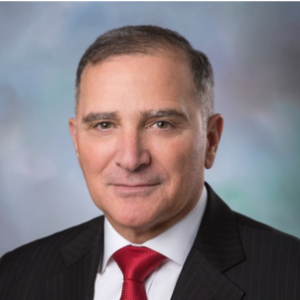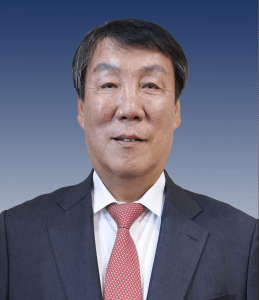
Mr. KIM Taeup

Mr. KIM Taeup

Accomplishments or support for the ROK-U.S. Alliance:

Army BG(R) Kim Taeup contributed greatly to the ROK-U.S. alliance. During his 33-year military service, he spent more than 15 years working with the U.S. Army and U.N. forces, served as the second Deputy Commanding General of ROK of the ROK-U.S. Combined Division which is the first and unique division in the world, and was the first Deputy Commanding General of ROK of the U.S. Eighth Army, contributing greatly to the defense of the Korean Peninsula and strengthening of the ROK-U.S. military alliance with the U.S. Forces Korea generals at the forefront of the ROK-U.S. alliance. As a POL-MIL Adviser to the Eighth Army, he has been working at the forefront of the ROK-U.S. alliance until today in charge of explaining the situation and political situation of the Korean military and seeking understanding of Korea’s culture to the leaders of the Eighth Army.


Volunteer efforts:

BG(R) Kim Taeup usually volunteers and does a lot of good community service activities. In particular, while working as an advisor to the Korea-US Children’s Culture Association, a volunteer organization for the U.S. Forces in Korea, he has been working since 2021 to make Kimchi making event for U.S. soldiers and their families in November every year, allowing them to experience Korean culture. In addition, he has cooperated with heads of local governments in Pyeongtaek, Asan, and Suwon, which are nearby Humphrey Base, to help U.S. soldiers and their families participate in local government festivals (Hanmaum Festival, Suwon Hwaseong Festival, General Yi Sun-shin Festival, ceramics festival, marathon competition, etc.). He also helps U.S. soldiers and their families minimize the inconvenience in living in Korea as a member of the USO Council, and introduces good Korean culture to U.S. soldiers and their families in consultation with Korean Good Neighbors organizations in the event of US Army ball, he regularly makes donations for African donor organization, Good Neighbor and Doctors Without Borders.


Short biography:

General Kim Taeup graduated from the Korea Military Academy in 1987 and was commissioned as a second lieutenant in the infantry and served as a major commander and staff member in various parts of the front and rear areas of Korea and abroad area. He spent more than 15 years in the ROK-US alliance field out of 33 years in the military. He served as the first DCG-R of the U.S. Eighth Army, the second DCG-R of the ROK-US Combined Division, and the DC5 of CFC. He served with U.S. soldiers on the battlefield while serving as the MNF-I civil-military operations officer in Iraq, the interpreter officer, and the G3 of the ROK Regiment unit for supporting the Afghanistan War, and served as the PAO of the UNMOGIP(United Nations Military Observers Group in India and Pakistan) HQ when he was a major and the ROK Regiment  Commander of the UNIFIL(United Nation Interim Forces in Lebanon) when he was a colonel. He was the second Korean general to complete the UN’s Senior Leaders Program. He served as a special professor at Seoul Cyber University, the Secretary General of the KDVA-KR, the director of the International Peace Activities Center of the Defense Diplomatic Association, and the advisor to the ROK MND and the Army Headquarters. He completed his master’s degree in international graduate school at Hanseong University, his doctorate in politics at Washington International University, and his degree in chief executive officer at Seoul National University.


Statement from the nominator about the nominee’s qualities:

Not only was BG(R)  Kim Taeup directly dedicated to strengthening the ROK-US alliance, but he is still greatly dedicated to the ROK-US alliance at the cutting edge of the ROK-US alliance as a political and military adviser to the US Eighth Army. When he was active, he contributed greatly to reaching an agreement between Korea and the United States in the areas of Korea-US policy, such as the THAAD conflict and SOFA issues, and he contributed greatly to resolving the conflict through smooth cooperation between the ROK Army and the US Army in the event of a conflict caused by RLFC. During his two years as Secretary General of KDVA-KR, he greatly improved his KDVA membership under the guidance of Chairman Lee Seo-young and contributed greatly to informing the US Junior soldiers of the importance of the ROK-US alliance through the Education Conference. General Kim is confident that he will greatly serve and dedicate himself to the ROK-US alliance field in the future.


Read more

Mr. Philip Mok

Mr. Philip Mok

Accomplishments or support for the ROK-U.S. Alliance:

Assisted in the development of the Korea-U.S. Free Trade Agreement (KORUS FTA) while interning in Hon. Lee KeJin’s office (2007). As Campaign Coordinator for Maryland Gov. Martin O’Malley, solicited support of Korean Veteran community for volunteers (2010).  Founding member of Kollaboration DC, which highlights Korean and other Asian talent to mainstream audiences.  Named as Korean American Leader in the Public Sector by Korean Consulate General in NYC (2013).  Supported Korean & U.S. Veterans while serving as Korean Community Liaison for NY Senator Toby Ann Stavisky (2012-2014). Support ROK-U.S. Alliance through active participation in Society of American Military Engineers (SAME), which supports military engineering worldwide.


Volunteer efforts:

Founding Board Member, Kollaboration DC (12/09-4/11); Social Media Specialist, Kollaboration Houston (2/12-5/12); VP of Communications, COMTO New York (12/16-6/18); VP of Publicity, Society of American Military Engineers NYC Post (1/20-1/22); Mentor Hawaii Committee Member, Chamber of Commerce Hawaii Young Professionals (7/23-7/24); Web Manager, SAME Honolulu Post (1/24-Pres.); Startup Mentor, Blue Startups (2/24-Pres.); Virtual Professional-in-Residence (VPIR), Pacific Asian Center for Entrepreneurship (4/24-Pres.); Board Member, COMTO Hawaii (6/24-Pres.); and VP, Western Region, SAVE International (6/24-Pres.)


Short biography:

Phil Yong Soo Mok was born in Baltimore, Maryland to parents James Jinsu & Christine Eunjoo Mok, both Korean Americans who came to the U.S. at an early age to pursue the American Dream. James’ father had served in the Korean War, and Christine was adopted by an American GI. He knows that the Republic of Korea would not exist without the U.S.-ROK Alliance and has dedicated parts of his career to furthering that Alliance. Phil received his Bachelor’s in Government & Politics from the University of Maryland with a specialization in East Asian relations, and studied at Korea University’s International Summer Campus in 2007, where he interned at the Office of ROK National Assemblyman Kejin Lee, who was on the Assembly Culture and Tourism Committee, and Chairman of the Agriculture, Forestry, and Maritime Committee. Thanks to the KORUS FTA, goods and services trade between the two countries total $200 billion annually. Phil then worked for Maryland Governor Martin O’Malley and New York State Senator Toby Stavisky in Korean community outreach roles, and worked in an advisory role for Korean outreach on political campaigns. He currently resides in Honolulu, Hawaii, with his wife Andriani, and works for AECOM, a Fortune 500 infrastructure consulting firm as a Project Manager on projects in Hawaii, Guam, Korea, and Japan.


Statement from the nominator about the nominee’s qualities:

If selected for this Honor, I will continue to do my best to contribute further to the ROK-U.S. Alliance by first publishing that I was chosen for this Honor to my social media (15,650 LinkedIn connections,  4600 Facebook followers, ~1200 Instagram) and Honolulu Korean-language media, urging all those who support the Alliance, democracy, a free and open Indo-Pacific, and the rules-based international order to join KDVA.  I will continue my steadfast support of the Alliance by contributing to events that will further the relationship between the two nations and their peoples. In addition, I will create connections between my colleagues in Congress (ex. Rep. Grace Meng), the ROK National Assembly, and Korean Consulate General in Honolulu and supporting formal engagements between the two nations, for example joint declarations, military exercises, joint bases like the one announced in Japan. I will support commerce between the two nations using my connections at Blue Startups and University of Hawaii’s Shidler School of Business.

Read more

Mr. John Sagan

Mr. John Sagan

Accomplishments or support for the ROK-U.S. Alliance:

Mr. John Sagan is a Korean War Veteran.


Volunteer efforts:

Volunteers at the Veterans of Foreign Wars (VFW) and his church.


Short biography:

John Paul Sagan was born 12-17-1931 along with his twin sister, to immigrants of Poland. He grew up in an average farm family with 13 children on an 80-acre farm in Oak Creek, Wisconsin. He only finished 9 grades of school, in order to run the farm, then worked in abatement. One month after turning 20, he was drafted first going to Fort Jackson for a short basic training, then he went to Camp Louis in Washington state. He left there on a troop ship, arriving in Japan for gear issue, then to Incheon, South Korea. He trucked, then walked to Pork Chop Hill. In the 2d Infantry Division, 38th Infantry, Company D, they fought against constant mortaring, traveling to Old Baldy, then T Bone Hill. Throughout this journey, his troop were accompanied by two Korean Soldiers, twice his age. He says they spoke English, helped them get to the next hill, but mostly tried to reassure them that they were going to make it home. Without the support and encouragement of those two Korean officers, they would not of made it through the war. He turned 21 at T Bone Hill and was still there when the Armistice was signed. He came home to marry Lois and have four amazing children. He was one of the first police officers in Oak Creek, WI, and bought a bar & restaurant with his wife. We lost Lois 14 years ago, but we still have the bar. He still owns two properties that he takes care of, he is a devoted Chistian, friend, and member of the legion. He has helped countless people throughout the years and continues to do that. I was gifted the chance to accompany him on an Honor Flight last year at the age of 91! I cannot express the appreciation that I have for my father – a great man, selfless, defender, and contributor to all.


Statement from the nominator about the nominee’s qualities: 

John Paul Sagan was never angry, like so many that were drafted seem to be. As hard as it was to leave his family and the safety of the farm, he was, and still is, ready for whatever anyone asks of him. Besides his work ethics, he is strong for his family, friends, and fellow Veterans. He belongs to the local VFW, and though all of the other men served in Vietnam or later, he considers them equal … and family. He helps out with events, and if not physically, then with donations to help get the job done. He received the Korean War medal from the Korean Embassy, that he shows off proudly. He truly would like to go back to Korea next year, so I will do whatever I need to make that trip possible!

Read more

Major General Richard Appelhans

Major General Richard Appelhans

Accomplishments or support for the ROK-U.S. Alliance:

Rick served as the Assistant Chief of Staff, J2, and Deputy Assistant Chief of Staff, C2 in UNC, CFC, and USFK from 9 June 2021 to 19 June 2023. During this period, Rick led 352 military, civilian, and contractor intelligence professionals executing combined and joint intelligence amid an unprecedented sequence of provocations and challenges by North Korea. His leadership was critical in focusing the intelligence’s predictive characterization of North Korea’s ballistic missile launches, UAV incursions, development of cruise missile capabilities, and preparation for a seventh nuclear weapons test. This provided the Commander with the critical information to execute a variety of response options and dominate the information domain. He drove a ground-breaking transformation of intelligence exercise support from COMBINED COMMAND POST TRAINING events into theater-level field exercises after a five-year hiatus. Under his innovative and inspirational leadership, the integration of combined intelligence was expanded with the historic transition and relocation of intelligence operations from Yongsan Garrison to Camp Humphreys. Finally, Rick pioneered the Regional Fusion Cell concept, advancing on-Peninsula and off-Peninsula intelligence capabilities to ensure the current and future commanders will be able to deter adversary threats during Armistice, and, if deterrence fails, effectively neutralize threats.


Volunteer efforts:

Although not volunteer work, Rick was a servant leader always cognizant that the personnel that served under him was his most precious resource. He secured the intelligence mission by prioritizing the advancement of quality-of-life concerns of both the military and civilian work forces. He was able to do this by increasing the quality and quantity of senior leader engagements and communication with service members, civilians, families, and contractors.


Short biography:

Rick is currently serving as the Commanding General, U.S. Army Intelligence Center of Excellence and Fort Huachuca. Prior to this position, he served as the USFK J2 and CFC Deputy C2. Rick’s overseas assignments and deployments include the Republic of Korea, Kuwait, Germany, the Netherlands, Afghanistan, Bosnia-Herzegovina, and Iraq. Rick was commissioned as a Distinguished Military Graduate from Central Washington University. He holds a BS in Political Science from Central Washington University and a Master’s Degree in Strategic Studies from the U.S. Air War College. In 2023, Rick was awarded the Korea Order of National Security Merit Cheonsu Medal by President Yoon Suk-yeol.


Statement from the nominator about the nominee’s qualities: 

Rick believes the ROK-U.S. Alliance is like no other in the world – forged in blood and grounded in common values and interests. He characterizes it as a pillar of stability and prosperity in Northeast Asia. Furthermore, he considers the combined ROK-U.S. Intelligence Enterprise, grounded in mutual trust and respect, at the forefront of the Alliance. His selfless service and passion to the Alliance and Veterans, was demonstrated through his accomplishments while serving as the USFK J2, and CFC Deputy C2. Rick’s experience while serving in the ROK has served as the foundation that informs his current duties in developing and integrating the most cutting-edge intelligence technologies that will enhance the Alliance’s deterrence and defense capabilities for decades to come. This will ensure the ROK-U.S. Alliance remains the Gold Standard for Intelligence interoperability and sharing. Rick believes in the Korea Defense Veterans Association’s mission, and as a member, plans to support its endeavors to the greatest extent possible.

Read more

From My Service in Korea, I Learned – Ben Tiseo

From My Service in Korea, I learned… Ben Tiseo

Learning Not To Panic

I was stationed in Korea from Nov 1966 to Dec 1967 during a period referred as the “Second Korean War” (defined from 1966 to 1970) because of all the hostile interactions with North Korean (NK) Infiltrators. By example, in May 1967, NK Infiltrators breached the wire around the 23rd Infantry Regiment at Camp Walley, planted explosives, and killed several 2ID Warriors and injured many more.

It was a hot summer day in 1967 when I was ordered to take a patrol of about a dozen men to search an area adjacent to the DMZ for sighted NK Infiltrators.

I was stationed at Camp Pelham, which was about two miles from the Imjin River, which was another two miles south of the DMZ. We arrived in the morning and just before we jumped off the truck and started our patrol we turned our heads towards an explosion in the DMZ. That was an interesting introduction to a very dangerous place.

We were selected because we were a close base to the. The area we were to explore was about a square mile, by my best guess, and abutted the south wire and DMZ.

I remember walking through rice paddies, elephant grass, and wooded areas looking for the NK Infiltrators. After several hours of walking, we came to a clearing. We were the standard 5 yards apart for patrolling as we came to the end of the clearing and into a line of trees. The wooded area was about 100 yards deep and, as I was about 10 yards from the end of the tree line, I noticed the back of a triangular sign attached to a string of barbed wire. Instantly I knew that meant we were in a mine field. At that time, I found out how quickly the mind can process information.

The moment I saw the triangular sign shape I knew, because of my training, that I was looking at the back side of a painted warning that a mine field was beyond the wire and that we were not to enter. At that same instant I also knew what we had to do to get out safely. I ordered my men to halt and stated that we were in a mine field, to pivot 180 degrees on one toe, and to step exactly in their footprints back out. As we retreated to the start of the tree line I looked to my left and noticed a roll of barbed wire. I examined the wire and noticed it was cut and rolled to this location to allow our patrol to enter the mine field. This was the NK Infiltrators at their best, welcoming us to their country.

After we examined the wire, we continued for the rest of the day looking for our welcoming party so we could give them our own welcome. No luck, they got away.

To this day, I can still see every blade of bent grass in my footprints.

The lesson I learned was, Do not panic or you die. After that experience I adopted a new approach to life, “Don’t panic until the bullet penetrates the skin.”


Sergeant Benedetto Tiseo

2ID Korea – HQ, 6/37 Arty 1966 – 1967

2IDA National President 2023 – 2025


What did you learn from serving in Korea? Let us know –

Sharing your experiences from serving in Korea can be a powerful way to connect with others who have had similar experiences. By sharing your story, you may be able to help others who are currently serving in Korea or who are preparing to do so. You can share insights about the culture, the people, and the challenges you faced while serving. Your story can also help to shed light on the sacrifices that service members and their families make in order to protect our freedoms. So, if you have a story to share, we encourage you to take the time to put it down in writing and send it to KDVA.MyServiceInKorea@gmail.com along with any photos that help to tell your story.


READ MORE STORIES HERE.

Read more

KDVA Introduces the 1st U.S. KDVA Campus Club

KDVA Introduces the 1st U.S. KDVA Campus Club

The Korea Defense Veterans Association (KDVA) is very excited to announce the 1st U.S. KDVA Campus Club at Columbus State University (CSU), located in Columbus, Georgia.  The KDVA Campus Club (KCC) is led by Club President Kelly Britt with support from Club Advisors, Mr. Daewoo Lee, Maj. Gen. (Ret.) Patrick Donahoe, and Mr. David Kieran.

CSU KDVA CAMPUS CLUB PRESIDENT AND FACULTY ADVISOR

Kelly Britt President

DaeWoo Lee Faculty Advisor

The additional founding members of the CSU KCC are Mason Martin, Vice President; Janetta Crawford, Secretary; Hannah Boisvert, Treasurer; and Hallie Tanner, Scribe.

The CSU KDVA Campus Club is excited to bring together students with common interests to increase awareness and advocacy of the ROK-U.S. Alliance and our Veterans. With the support of KDVA, they will host Meet and Greets, Webinars, Conferences, Korean Cultural Experiences, and more – all are free!

Mr. Daewoo Lee said, “We are honored to host the KDVA Campus Club Meet and Greet at Columbus State University, marking the establishment of the first KDVA Campus Club in the United States. This event reaffirms KDVA’s unwavering commitment to the ROK-U.S. Alliance—a crucial partnership that ensures peace and security for both nations. Engaging in meaningful dialogue strengthens our resolve to advocate for this Alliance and support those who have served it.”

The CSU KCC held its Launch Meet & Greet on August 29, 2024.

KDVA Campus Clubs are our “Boots on the Ground” on college campuses in the United States and Korea.  KCCs support KDVA’s mission of enhancing and supporting the ROK-U.S. Alliance and our Veterans on college campuses. Anyone can start a KCC and run the Campus Club as its President.  KDVA HQ provides all the funds, social media support, and senior Alliance leaders to participate in person or by Zoom.  You just need to register the KCC at your school and come up with ideas for activities and events.

The first KCC in South Korea was launched in April 2024 at the University of Utah, University Asia Campus in Incheon, Republic of Korea.

If you’re interested in learning more about starting a KDVA Campus Club at your school, please contact KDVA Campus Club Coordinator Ambrie Jones at ambrie.kdva@gmail.com.  And join KDVA for free, yes for free, at kdva.vet/join-kdva.


WTVM News Coverage on the Meet & Greet – https://www-wtvm-com.cdn.ampproject.org/c/s/www.wtvm.com/video/2024/08/30/kdva-establishes-student-chapter-columbus-state-university/


Read more

Explore Exciting Opportunities at Hyosung, USA!

Hyosung, USA, a generous donor to KUSAF and KDVA, is currently recruiting for various positions nationwide. Here’s how you can apply:

Read more

Passing of General (Ret.) Gary Luck, Former Commander in Chief of UNC/CFC/USFK

The Korea Defense Veterans Association (KDVA) is very saddened by the passing of General (Retired) Gary Luck, a former Commander-in-Chief of the United Nations Command, ROK-U.S. Combined Forces Command, U.S. Forces Korea (1993-1996).  He passed away at the age of 87 on August 13, 2024.

The 24,000 members of KDVA mourn the loss of a former 4-star commander in Korea who helped lead the ROK-U.S. Alliance through a very difficult time in the mid-1990s when North Korea developed weapons-grade plutonium at its Yongbyon nuclear facility and threatened to withdraw from the Nuclear Non-Proliferation Treaty.  During that crisis and other North Korean provocations and threats, General Luck was a respected voice for a strong Alliance and military in meeting these challenges.

As a successor to General Luck, I am very grateful for the example he set and for his staunch support of the Alliance and our Veterans for decades afterwards.  A lifelong mentor to generations of leaders, General Luck had a significant impact on the leadership and education of the Joint Force.

We send our sincere condolences to the Luck Family and want them to know that many Americans and Koreans are thankful for General Luck’s service, leadership and example. We will miss him.


Curtis M. Scaparrotti

General, U.S. Army (Ret.)

Chairman and President

Korea Defense Veterans Association

Read more

From My Service in Korea, I Learned – Darrell Lake

From My Service in Korea, I learned…

Darrell Lake

I left McCord Air Force Base at 3:00 AM on January 17, 1968. I arrived at Kimpo Air Force Base in Korea at noon on January 19th losing one day flying over the International Dateline and was bused to Ascom City Army Depot for further processing and then bused up to Camp Casey near the DMZ in South Korea.  I was assigned to the 7th MP Company of the 7th Infantry Division, was assigned to a platoon, and immediately started working regular military police duties patrolling the streets of Tongduchon outside the gates to Camp Casey.  Shortly thereafter, I was called into the Provost Marshal’s Office and LTC. Marion Glover told me he wanted to assign me to a new Physical Security Inspection Team under the Office of the CID.  What a great opportunity working without rank insignia and having to travel all over South Korean inspecting various army facilities?!  I was sent to a rigorous two-week training at the Eighth Army Physical Security School in Seoul and was then assigned my vehicle and private quarters.  I almost felt like an officer.

Although Korea was no Vietnam, things were becoming heated there too during my tour of duty.   The U.S.S. Pueblo, a Navy intelligence ship was boarded and captured by North Korean forces just a few days after my arrival on January 23, 1968, in what was known as the Pueblo Crisis.  It seems we were on alert a good deal of the time and conducted a lot of maneuvers and various war games in the region.  As a side note, the Pueblo is still held by North Korea today and officially still remains a commissioned vessel of the U.S. Navy.  She is moored along the Taedong River in Pyongyang, North Korea, and used as a museum ship.  The Pueblo is the only ship of the U.S. Navy currently being held captive.  I was still there when they were released 11 months later.

On a lighter note, I have to share a rather embarrassing incident.  My mother had heard of a local girl Jeanne, from Idaho who was serving in the Peace Corps in a southern province in South Korea and suggested I look her up sometime.  Why not give it a try since I was given my own set of wheels?  Early one Saturday morning I set off for this little village that I only vaguely knew where it was.  I drove on dirt roads and trails crossing streams and rice patties going through village after village having to stop and ask the Korean Police directing traffic the direction to the address I had on an envelope in Korean and they would point in some direction and off  I would go to the next village.  After nearly 5 hours I arrived in the little village and then directed to the Korean home where this young lady was living.  She was a bit surprised to see me and we had a nice visit.  The Korean family playing host to her fixed a lovely lunch and it was nearing the time that I needed to start back.  She had asked to see my handcuffs so I handed them over to her and somehow we got handcuffed together.  I was not concerned at the time as it was easy enough to unlock them and be on my way and then suddenly panic set in as I had lost my handcuff key.  I tried to pick it to no avail and finally decided we would have to visit a village police station as surely they would have a key.  It was not easy to explain what we needed since they could not understand a word of English and our Korean was extremely limited but we kept pointing to the handcuffs and twisting our fingers like we had a key. Unfortunately, their handcuffs were different and their keys would not fit.  Finally, after a couple of hours of incredible stress thinking about how I was going to explain this to the Provost Marshal, having to take her back to the base with me, they were able to unlock us.  Not exactly the way I wanted to meet a young lady.  Lesson here of course is a no-brainer. “Make sure you have the key to the lock before locking it.”

My working partner, Inspector Everton, and I got along great during our tour in Korea.  We worked hard during our working hours and played hard during our off time visiting a good part of Korea and taking thousands of pictures. We were somewhat adopted by the Kim Chang Tae family.  Mr. Kim was an artist who painted beautiful pictures and spoke pretty good English so he served us well as an interpreter and tour guide.  Whenever we wanted to purchase anything (which I did often) we let Mr. Kim buy it for us and he would argue and negotiate for the very best price.  Mr. Kim had a lovely wife and six children Kyong 8, Sanna 7, Yangho 5, Un Young 4, Zema 3, and Angel was born during my time there.  They lived with his brother Kim Chang Sop, his brother’s wife, and their mother in a very small hooch of less than 200 square feet in Tongduchon.  I spent nearly all of my holidays and a great deal of my time off with the Kim’s.   I was even invited there for Christmas 1968 and what a wonderful Christmas we had.  It was so fun giving all the kids gifts and watching them open them and how thankful and appreciative they all were.  Then it was time for dinner, and I was afraid that we would be served Kimchi (that I never did acquire a taste for) but they wanted to make dinner very special and had bought and fixed us chicken.  Christmas 1968 was certainly different than what I was acquainted with on the farm in Idaho but was wonderful.  After all the guys were fed the women ate and then the children all sat on the floor in their hooch.  I came to love them all dearly and still wonder how they are doing today.

Korea was an incredible experience that I will never forget.  I learned so much from my time there watching how children can be happy just playing kick the can or playing with a block of wood.  Women smiling as they were washing their clothes in the dirty rivers and scurrying about to care for their families.  Life has not been easy for the Korean people but they have pulled themselves up by their bootstraps and to see how their country has changed since my time there is unbelievable, they are a very thriving industrialized country.  The people there are not afraid of working hard in difficult situations, and their standard of living has greatly improved.  Perhaps our country could learn a lot from them.  Visiting the DMZ, seeing the bunkers and foxholes, and knowing that our country lost thousands of soldiers fighting to gain just inches of barren ground I cannot even imagine what it was like to be there during the Korean War.  What sacrifices were made by so many for the freedom they all enjoy today!


What did you learn from serving in Korea? Let us know –

Sharing your experiences from serving in Korea can be a powerful way to connect with others who have had similar experiences. By sharing your story, you may be able to help others who are currently serving in Korea or who are preparing to do so. You can share insights about the culture, the people, and the challenges you faced while serving. Your story can also help to shed light on the sacrifices that service members and their families make in order to protect our freedoms. So, if you have a story to share, we encourage you to take the time to put it down in writing and send it to KDVA.MyServiceInKorea@gmail.com along with any photos that help to tell your story.


READ MORE STORIES HERE.
Read more

From My Service in Korea, I Learned – Gerald Simpson

From My Service in Korea, I learned…

Where do I begin this tale of serendipity, discovery, enlightenment, affection, and redemption which has had life-altering consequences, an edification challenging my deepest assumptions of the world and my place in it?

Let my story begin with the end of my emotionally challenging college career avoiding the military draft. Making good enough grades to stay in school without a clear plan for my life had taken a toll. Like many of my fellow students, I was somewhat rudderless, adrift. It seemed impossible to think about making long-range plans. I had three older brothers who involuntarily served in the military and now it was my turn with a very low draft number at the height of the Vietnam War. I had struggled between my patriotic duty to my country and self-preservation and pursued every moral and ethical avenue to avoid the draft. I graduated and taught school for one year, but with the end of teaching deferments, my low draft number sealed my fate. I was drafted and inducted into the United States Army on June 15, 1971.

After basic training at Ft. Campbell, Kentucky I survived being the smallest member of my Advanced Individual Training (AIT) company to become a Military Policeman (MP), training at Fort Gordon, Georgia. MP school was very interesting and challenging, especially the advanced judo classes where I often felt like I was the practice training dummy because of my relatively small size. Everyone wanted to train with me, I was an easy throw! Fortunately, black and blue were my favorite colors.

Much to my chagrin and consternation at the end of AIT when assignment orders were handed out in groups according to your country of assignment, I was in the group going to Viet Nam. VIET NAM was stamped in big bold letters on my manila envelope. My heart sank! I tried to compress the next twenty years of my life into my two-week leave, having an unshakeable premonition of not returning home alive. Transportation orders and arrangements were in a separate cover and I never looked inside my orders envelope, I accepted my fate.

Following this period of disquiet and doom, saying my last goodbyes, I reported to Fort Lewis, Washington. I reported wearing my summer khakis in late October. We were told not to bring our winter issue to Vietnam, they would not be needed. In retrospect, I should have suspected something was amiss when the sergeant at the reporting desk gave me a scowl of disbelief and astonishment. He asked me where I thought I was going and I answered that I was going to Vietnam like my envelope said. He opened my envelope while shaking his head in frustration and incredulity. Then with a straight face, he said there had been a mix-up. I was going to Korea. For two minutes I was disappointed- I was psyched up and ready for “action”! I called my parents and they were ecstatic with the mistake in my deployment orders. Although being what I considered somewhat educated, I was still a rather naive farm boy. My first thought was, where is Korea? There had been a war there?! I had not studied maps since the eighth grade!!

Following a twenty-plus hour flight via Alaska, I arrived at the Army Service Command (ASCOM) in the Republic of Korea in late October 1971 late at night. Not knowing what to expect, I awakened to a muddy, wet, soggy hellhole the next morning. It seemed to be the “armpit” of the world! I could not wait to put this place behind me, so I jumped at the opportunity to hitchhike a ride in a courier jeep to my post. The first leg of my journey took me through downtown Seoul, a cacophony of sound, strange odors, and a sea of people, who at the time appeared to all look alike. Severe apprehension overwhelmed me when the driver of the diminutive M-151A1 attempted to jockey for position among the huge highway transport buses on the unmarked six-lane streets. I sighed in relief when we left metropolitan Seoul only to experience more white knuckles riding over one-and-a-half lane roads careening through ascending mountain passes while still trying to avoid the same large buses in the midst of a desolate, treeless, cold, and wet late October. I wasn’t ready to recommend Korea as a tourist Mecca!!

Arriving at a semblance of civilization, Camp Page, ChunChon, Kang-Won Do, the home of the 226th Signal Company and the 4th Missile Command of the 8th U.S. Army, I thought this might be tolerable for the next thirteen months of my assignment. Certainly better than Viet Nam! However, that fantasy suddenly evaporated when I discovered that I was to be assigned to a Maximum Security Area (MSA) approximately eight miles away from the main base as a guard. Now I understood why Korea was considered a hardship tour. The MSA truly was the “ARMPIT”!!!! Approximately six acres of mud, weapons storage bunkers filled with items not allowed in Korea, no trees, surrounded by a double security fence topped with concertina wire with guard dogs patrolling between and quad fifty machine gun emplacements at all four corners guarding all approaches. My assigned duty was going to be manning the watch towers between the machine gun emplacements, trying to avoid Article 15s and court-martial for falling asleep while working eight-hour swing shifts of nine days on and three days off. Highlights of the base included the barracks, a mess hall, a px the size of a small bedroom, a movie/meeting room the size of a small living room, the CQ, and a basketball court. And did I forget to mention the mud? Mud everywhere! The only other color was green or in military parlance olive drab. My home for the next thirteen months.

The first soldier that I encountered, a huge man, greeted me with tears welling in his eyes followed by the blank 10,000 meter stare. He felt truly sorry for the new replacements. Approximately two weeks before I arrived, one of the soldiers, in deep despair had committed suicide behind the barracks. This was not going to be a “Roman holiday”!

I could not perform my assigned duty because I only had a summer issue of clothing and no winter clothing was available anywhere in the country. For over a month, the only duty I pulled was to guard a civilian fuel delivery truck for maybe thirty minutes. After enough time, doing nothing can become strenuous. Most of the time I hitchhiked a ride into Camp Page and went to the library, movie theater, and snack bar. I was growing increasingly bored and concerned, understanding this could not continue. What was next for me was beginning to creep into my dreams, most often as nightmares!?

Feeling sorry for myself and sitting alone in the corner of the mess hall, all of my friends were out in the guard towers, I attempted to celebrate Thanksgiving, thinking of home, the smells, tastes, and the warmth of family. Unwittingly I had a chance encounter with an officer in his dress blues. This officer was working his way around the mess hall on an apparent mission of public relations and esprit de corps. He proceeded to sit down across from me and ask me how I liked my assignment. With a rather cold and disgustingly nonchalant answer, I explained how disappointed I was with the Army. I had graduated from college, taught chemistry and physics for a year, been drafted, and made an MP- during training they emphasized that we were “the best the Army has to offer”. Now I was going to be stuck here for thirteen months watching the countryside turn from brown to green to brown to green with some snow thrown in for color and slowly lose my sanity, much as I could see happening to others that arrived at the same time. Thankfully the officer did not consider my answer insubordinate, but he did sit back in his seat appearing a little startled and nonplussed. He proceeded to ask about my education and civilian experience and then asked if I might have any interest in interviewing for a position that was opening up at the Camp Page dispensary. I said sure and he got up and left. I put this conversation out of my mind, thinking nothing further would happen, and finished the worst Thanksgiving meal of my life, feeling very sorry for myself. Alone.

The next morning I received orders to report directly to Lt. Col. Kroeber, the Camp Page commander. The interaction on that depressing Thanksgiving Day took place so quickly that I failed to recognize him or his rank. Needless to say, I was mortified at what had taken place, but not nearly as much as the captain in command of the MSA. He very vocally expressed his displeasure with me concerning his perception of an indiscretion that I might have committed which might have sullied his command reputation. “WHAT DID YOU DO !!!!” I feigned total ignorance and innocence of the situation.

I was given an escort to Camp Page, interviewed by the medical staff of the dispensary, returned to the MSA, picked up my gear, and returned to Camp Page to be reassigned to work as a med tech for the remainder of my tour of duty. From that point, I had a wonderful, challenging assignment. I was back in civilization. The base did not have a T.O.&E.(Tactical Operations and Equipment) slot to have a real med tech assigned. They had to pick someone and on-the-job train them to fill the position. The current holder was leaving Korea and a new trainee was needed. I trained for two weeks and became the base med tech. My new position gave me the opportunity to work with several Korean civilian employees and KATUSAS(Korean Augmentation To the United States Army). Working with them, I was able to develop new friendships and expand my knowledge of Korea and its people. I began to experience Koreans as individuals, just as all peoples worldwide exist.

One of my most memorable experiences was the opportunity to attend the traditional Korean wedding of one of my civilian coworkers. The wedding banquet introduced me to many new, unusual, and unique foods, many of which over the past years have become favored culinary choices. I became extremely impressed with their culture-wide ingenuity, persistence, industriousness, dedication, and focus. It was often demonstrated to me that we were alike in so many ways with nearly all the same life values. They made me feel “at home”. Spring arrived. All was well. The weather had improved, birds were singing, the meager assortment of trees were leafing out and a few flowers were blooming. I was relatively content with the challenges of my new job and rekindled my interest in dentistry by spending time and observing in the adjacent dental clinic. Learning about the “Irish of Asia” and how friendly and interesting this country and its people are, created a daily sense of adventure.

Another key turning point in my story occurred when I was offered a position as an English language conversation instructor to an informal class of college students. Nearly all educated individuals in Korea could read and write English to some extent. In fact, some textbooks were in English, however, conversation was a bridge too far and this created a demand to practice spoken English. This class began when a Korean civilian nurse who worked in the dispensary was preparing to emigrate to the United States. Three of the medics put this class together to help this individual’s transition by meeting for informal English conversation in the local coffee/tea rooms where locals meet socially, somewhat like an early version of Starbucks. Friends and siblings began to attend as well and the class grew to 8-10 individuals. As I arrived in Korea the last of the original instructors was preparing to leave Korea. One day he asked if I would be interested in continuing this class and meeting ordinary Korean individuals who were nothing like what I had experienced immediately surrounding the military base and to learn about Korea and its people. I met the class and we mutually agreed to continue. I had a most delightful evening interacting with “real” Korean civilians.

This revealed a whole new world, opening my eyes to a depth of understanding unavailable to most transient soldiers. Their rich cultural history and customs as well as common values stimulated many lively and edifying conversations. I had found a second home and a new path of adventure opened to me. I found myself enjoying this cultural revelation so much that I extended my tour by six months to finish my military obligation in Korea, rather than be assigned to a less ideal position in the U.S. This allowed me to travel in Korea and Japan thereby opening my horizons even further. People the world over value the same basic things. Family, security, and hope as part of the Family of Man.

An equally serendipitous and remarkable story is that I met my future wife in the conversation class. Over many months we became friends and after much soul-searching and overcoming familial objections on both sides, we agreed to wait until she finished college to continue our relationship. This was to be an adequate test of our commitment to each other. Twenty-two long and seemingly endless months later she joined me in the U.S. and we have been happily married for nearly fifty years. With her help, encouragement, and unquestioned support I earned a Master’s Degree in microbiology, Doctor of Dental Surgery, and practiced for thirty years with her by my side. This led to a daughter who is also a practicing dentist.

I am eternally grateful to Lt. Col. Kroeber, a most judicious and thoughtful man, for the opportunity that I was given to serve in a meaningful capacity which led to my experiencing the real Korea. One never knows how the ramifications of a seemingly small gesture and chance encounter can work to produce immeasurable consequences in someone’s life. Indeed the hand of our Creator often works in mysterious and unfathomable ways. It is to our own detriment when we lack faith. Serendipity? I don’t think so!

I had an opportunity to visit Korea in 1993 and was astounded by the changes that had taken place since my time there in 1973. I was amazed at how modern everything had become in so short a time and still Korea had maintained its essential cultural identity. The progress from a war recovery economy to modernity was astounding! This spoke volumes to the resourcefulness, ingenuity, dedication, and determination of the Korean people.


What did you learn from serving in Korea? Let us know –

Sharing your experiences from serving in Korea can be a powerful way to connect with others who have had similar experiences. By sharing your story, you may be able to help others who are currently serving in Korea or who are preparing to do so. You can share insights about the culture, the people, and the challenges you faced while serving. Your story can also help to shed light on the sacrifices that service members and their families make in order to protect our freedoms. So, if you have a story to share, we encourage you to take the time to put it down in writing and send it to KDVA.MyServiceInKorea@gmail.com along with any photos that help to tell your story.


READ MORE STORIES HERE.

Read more