From My Service in Korea, I learned…
Song Pak Stisher
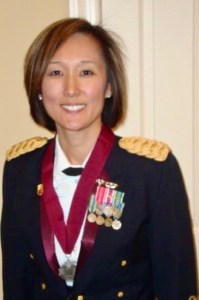
“Resiliency through Building Cultural Respect, Trust and Friendship”
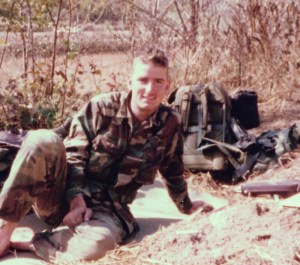
As a newly commissioned Second Lieutenant in 1990, my first assignment in the Army as a Medical Service Corps Officer (70B) was a Medical Platoon Leader at the 568th Medical Company (Ground Ambulance), 52nd Medical Battalion, at Camp Humphreys, Pyongtaek, Korea. Camp Humphreys was quite different back then, a fenced in perimeter of post surrounded by pig farms and rice paddies. I can still smell the pig farms as I often ran the 10 mile perimeter o dark thirty in the morning.
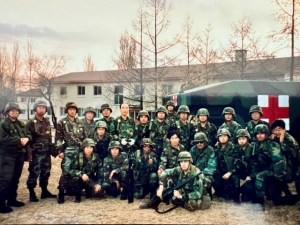 My unit, the 568th Med Co, was a very unique in a sense it was a multi comp TOE unit consisted of US Army active duty personnel, Korean Service Corps (KSCs) and Korean Nationals (KNs). We didn’t have any KATUSAs assigned to 568th, however, our sister company, the 560th Medical Company did. I was assigned as one of the three Platoon Leaders at the 568th and within my platoon, I was in charge of about 30 KSCs, along with my platoon sergeant. The KSCs were unique in their skill sets as medics and civilian service members, fluent in both Korean and English. They were also senior in grade and time in service. They were well trained and skilled in various medical treatment and evacuation operations. I quickly gained a tremendous respect for them as I was a brand new Lieutenant who was their new leader. But I also faced some unique cultural challenges.
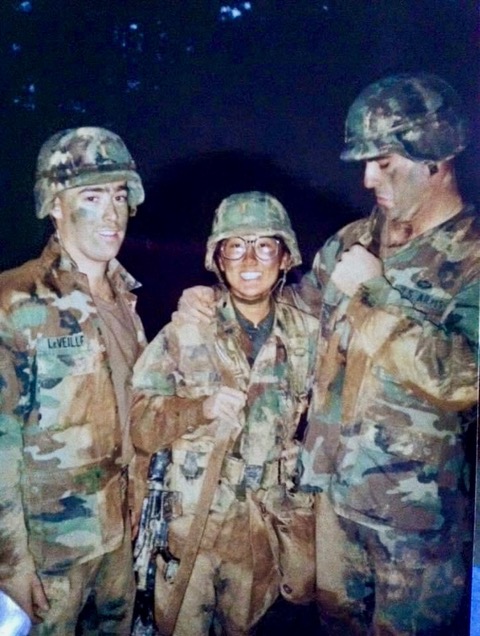 I was a 22 year old, Korean American, a female US Army Officer in charge of a group of very seasoned KSCs and this was their very first experience working for a woman, someone who was half their age, without much time and grade and very “green.” They didn’t really know what to expect from me, never mind taking orders from me. I quickly realized this was a very difficult situation for the KSCs, who have traditionally reported to male leaders in a male dominant society and culture. I also realized that respect is not simply given but earned and this was a two way street. I had to first prove to them that I respected their contributions and commitment to the unit’s mission. We were able to do this through various field training exercises, team building and leadership training. Over time and collaborations, we were able to build mutual trust, respect and acceptance of each other. We accomplished many missions and tasks throughout the 12 months we spent together at Camp Humphreys. I can honestly say that by the end of my tour in Korea, we became family.
As I look back to my time in Korea and the unique experience gained working with the KSCs at 568th, I can still remember all of their smiling faces. I will never forget friendship, culture and humanity we shared during our time together. And best of all, it truly taught me the importance of resiliency when challenged with unique cultural differences and how we can all overcome these challenges through mutual respect and trust. We believed in our motto “Katchi Kapshida” – Let’s Go Together.
This journey was very special to me as I had returned to Korea to serve since my family immigrated to the US in 1978. I hope to revisit Korea soon and walk through the journey one more time.
Thank you for allowing me to share my story.

 What did you learn from serving in Korea? Let us know –
Sharing your experiences from serving in Korea can be a powerful way to connect with others who have had similar experiences. By sharing your story, you may be able to help others who are currently serving in Korea or who are preparing to do so. You can share insights about the culture, the people, and the challenges you faced while serving. Your story can also help to shed light on the sacrifices that service members and their families make in order to protect our freedoms. So, if you have a story to share, we encourage you to take the time to put it down in writing and send it to KDVA.MyServiceInKorea@gmail.com along with any photos that help to tell your story.
READ MORE STORIES HERE.
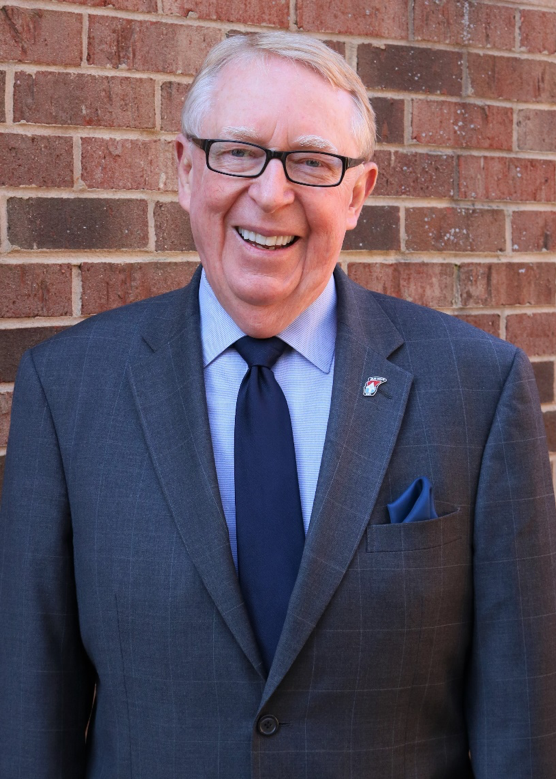
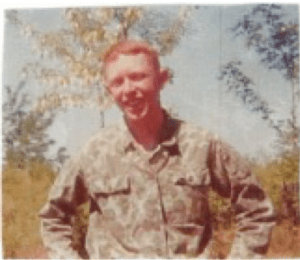 Army Signalman, Mike Reynolds, who was killed in my company area of the DMZ while stringing wire to our Guardpost Gladys, September 27, 1968 and new 2LT James Weeks, killed on his first patrol into the DMZ on July 20, 1968, both had family members reach out to me and we have become friends. I found Michael Rymarczuk’s mother, brother and daughter in Philadelphia and we became friends. I told Michael’s daughter, Micki, that her father was my DMZ Brother. She calls me and several of her father’s other Charlie Company, 3rd platoon buddies, her “uncles”, because her father, who was killed before he could hold his baby girl, was our brother. Earl Jeffery, WIA July 30, 1968 , also in my 3rd platoon, was flown home after being wounded and we never heard from him again. I found his daughter several months ago in Dennison, Texas. She told me, her father had just died last year and that even though he had survived his multiple wounds from that long night, he had limped all his life and had nightmares. I wish I had been able to find Earl before he died. I carry my DMZ brothers’ memories with me every day. I am proud we helped defend the people of the Republic of Korea from North Korean aggression. Whenever I have to make a public speech, or try a jury case in court, or have a serious doctor’s appointment, I carry my Imjin Scout patch, which I removed from my fatigue shirt, in my pocket. I would not trade that 55 year old faded green cloth patch for any other medal or military award. It says that I served in dangerous situations with some of the best men I have ever met. David Benbow, Statesville, NC (formerly Sgt (E-5) David Benbow, Charlie Company, 3/23rd Infantry, 2nd Infantry Division.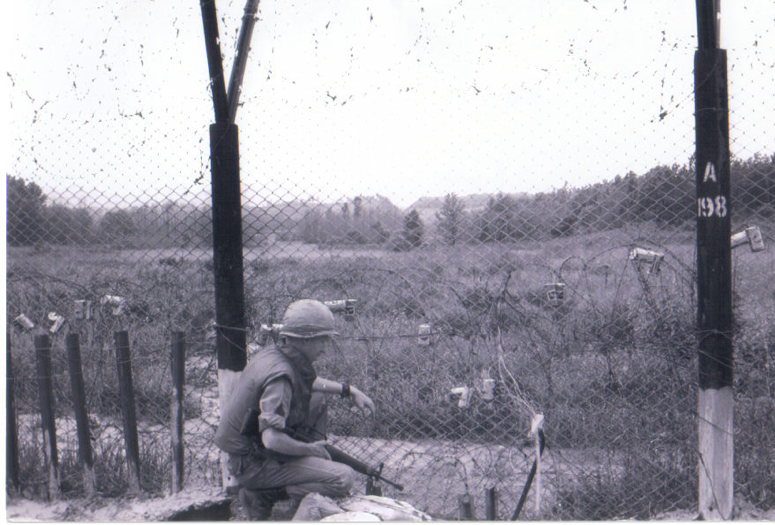


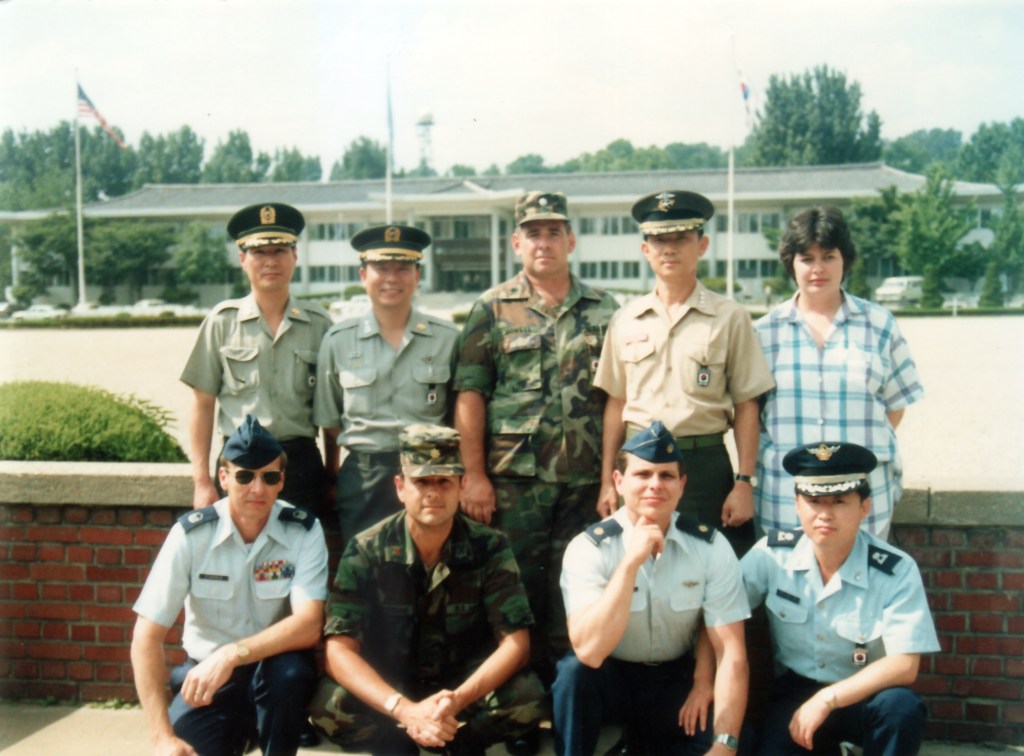


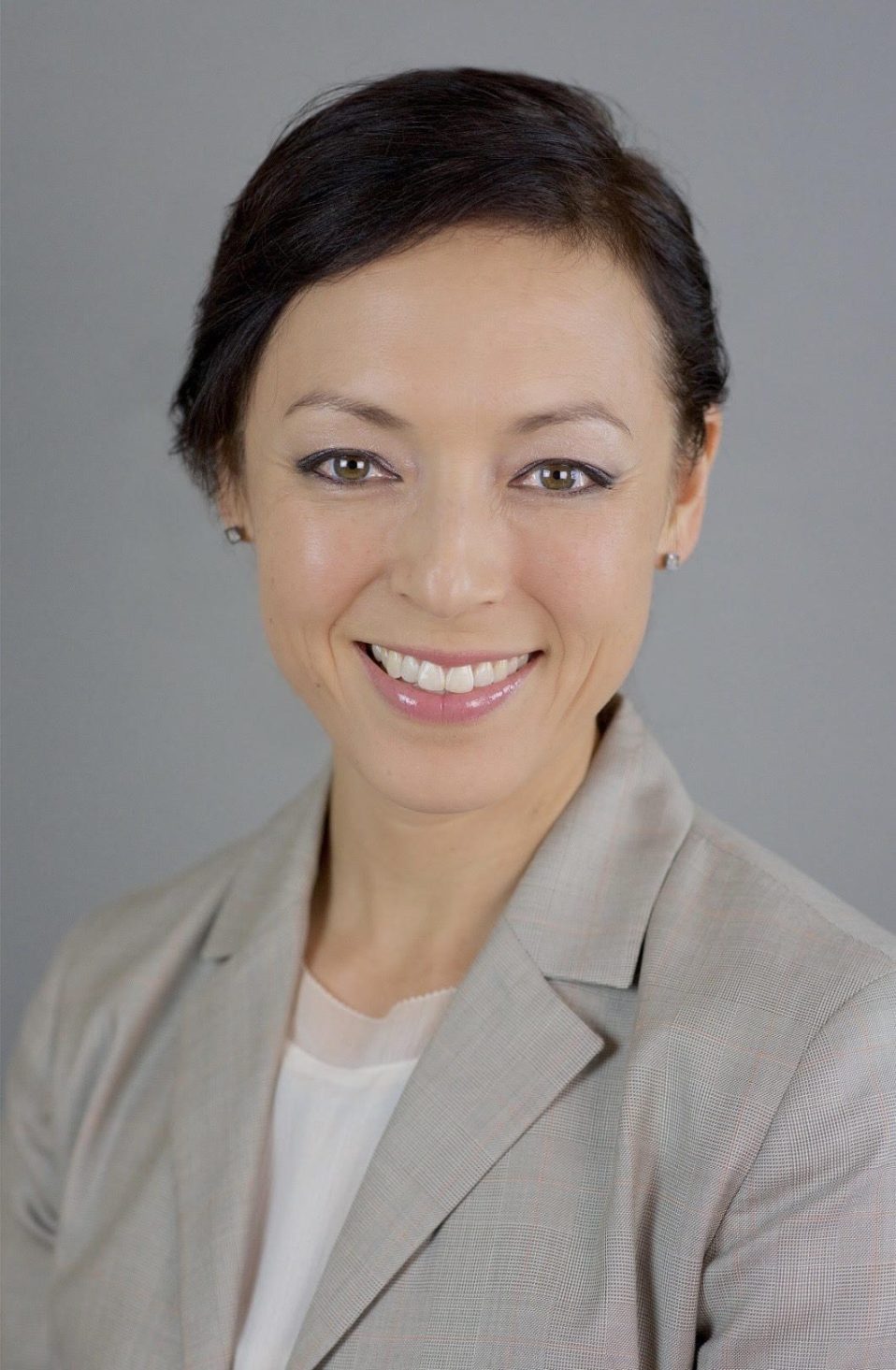
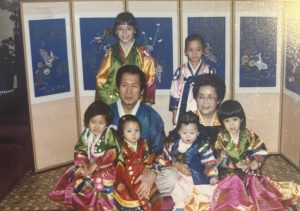 The first time I had the privilege to move to Korea was from 1984-1986, during my elementary school years. This was the first time I was near immediate family members, and I learned from my Grandparents and Uncles the hardships of the war itself. Having fun navigating through Korea, playing with cousins and spending lots of time running up and down Mount Apsan in Camp Walker, Taegu, Korea was my true focus. I didn’t realize the impact of the threat of the Cold War and what was just 8 hours drive north of us in North Korea. The second time we moved back was just after the 1988 Olympics in Seoul. I spent my 8, and 9th grade years in Seoul, Korea at Seoul American High School. This time I was much more aware of the impact of. communism and dictatorship upon societies. We saw the Iron Curtain fall in 1989 while I was in History Class in Seoul. We visited the DMZ and saw the last bit of staunch Russian Red Umbrellas just across the border in North Korea. We drove through the South Korean College student riots proclaiming “Americans Leave Our Soil.”
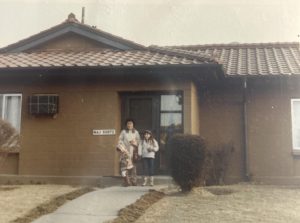 I came back to the US with a renewed sense of preservation for continuing this story, the Forgotten War. Being more and more removed from the actual physical fighting, I delved into anything I could learn about North Korea and the tactics they take to oppress their people.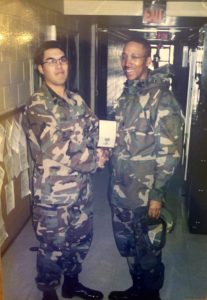



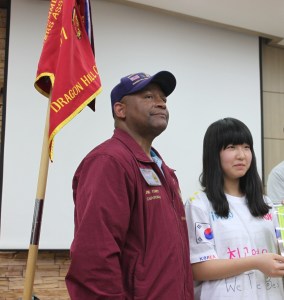 There were programs within Eight Army and United States Forces Korea that amplified our relationships. Our NCOA Chapter as well as other organizations both US and Korean had programs that fostered goodwill and built on these strong relationships. As an example, our chapter sponsored the Young Nak Orphanage, and the Bosung Girls Middle and High Schools. There were two unique programs our Chapter implemented. One was an English Camp with the Korean Girls School, and the other was a Military Introduction Program. In the latter program, our NCOA Chapter members and other Volunteers along with US service members, ROK and KATUSA service members. In a nutshell, the students were shown what it was like to be a military service member and how we worked together as an Alliance. This included an introduction to Physical Fitness Training, Drill and Ceremonies, samples of Meals Ready to Eat for lunch etc. The program was very well received by all. We also had Holiday introduction programs, American and Korean Christmas Programs, and information about Thanksgiving in the US and Chuseok in South Korea.