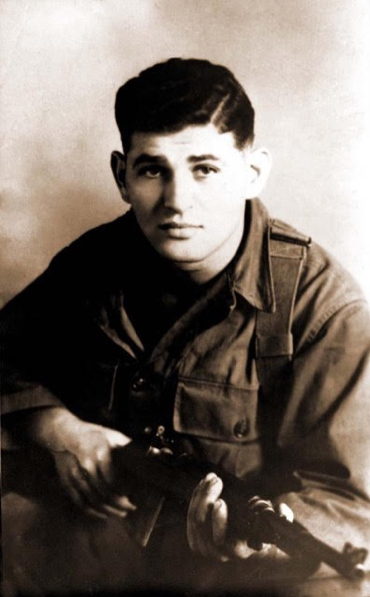
I Don’t Hate Nobody Because Life Is So Short

The Remarkable Story of the Only Holocaust Survivor to be Awarded the Medal of Honor

By: Mr. Ned Forney, U.S. Marine Corps veteran, career educator, and grandson of a Korean War veteran

“When I became a citizen, it was one of the happiest days in my life . . . [the U.S.] is the best country in the world, and I’m part of it.” – Tibor Rubin

He survived more than a year in a Nazi concentration camp, was awarded the Medal of Honor for actions in Korea, endured thirty 30 months as a Chinese POW, and upon his release, became a U.S. citizen.

The Korean War

Arriving in America in 1948 after surviving the horrors of 14 months at Mauthausen concentration camp, Tibor “Ted” Rubin worked odd jobs, made friends, and repeatedly tried to enlist in the U.S. Army. But his English wasn’t good enough.

In 1950, however, he got his lucky break. With a little “unofficial” help from a few American buddies, he passed the English language test, was admitted into the Army, and was soon on his way to Korea.

As a member of I Company, 8th Cavalry Regiment, First Cavalry Division, PFC Rubin fell under the wrath of his company First Sergeant, a man described by fellow Soldiers as an “extreme anti-Semite.” The ruthless Staff NCO, who made no qualms about verbally assaulting the 21-year-old PFC and giving him the company’s worst jobs, frequently “volunteered” him for dangerous and seemingly impossible missions.

“He would send me to the most difficult positions so that I would be killed,” Rubin recalled. “It scared the hell out of me. I couldn’t even hold my rifle, but I still went.”

They Looked Like Ants

On July 23, 1950, Rubin’s sadistic First Sergeant sent him on what many would later say was a suicide mission. With his company in retreat, Rubin, now a corporal, was ordered to stay behind and defend a vital hilltop. Alone and without support from other units, Rubin was hit by an overwhelming North Korean force.

“There were so many, they looked like ants,” Rubin recalled in an MOH (Medal of Honor) video. “I didn’t have too much time to get scared, so I went crazy. I was like a machine, a robot. I ran around to every foxhole on the hill and started throwing hand grenades and shooting my rifle to make as much noise as possible so the North Koreans would think they were fighting more than one person.”

According to his Medal of Honor citation, “He inflicted a staggering number of casualties on the attacking force during his personal 24-hour battle, single-handedly slowing the enemy advance and allowing the 8th Cavalry Regiment to complete its withdrawal.”

But his First Sgt. was not impressed. Despite the fact that Rubin had been recommended for the Medal of Honor, the enraged Staff NCO refused to submit the paperwork and would repeatedly “misplace” every recommendation (Medal of Honor, Distinguished Service Cross, and Silver Star) that Rubin was nominated for.

Nightmare at Death Valley

By October 1950, with the North Koreans retreating and the Americans advancing deep into enemy territory, the war appeared to be all but over. The Chinese, however, had other ideas.

Sneaking across the North Korean border during October and November, tens of thousands of Chinese unleashed a massive offensive against U.S. forces in North Korea. In what became known as the Battle of Unsan, two Chinese divisions attacked the 8th Cavalry Regiment.

Outnumbered and outgunned, Rubin and hundreds of American soldiers were surrounded, taken prisoner, and marched for weeks to the camp they would forever call “Death Valley.”

A POW

Over the next 30 months, Rubin and his fellow prisoners endured the barbaric conditions of the remote camp located in the remote mountains of North Korea. Suffering from extreme cold, deprivation, and physical and mental torture, men starved to death, succumbed to disease and exposure, and simply lost the will to live.

Rubin, however, never lost hope. He became a beacon of optimism and strength for all the men in the camp. Frequently risking his life to steal food and medicine, the seemingly fearless corporal raised the morale of the prisoners and saved the lives of 40 men.

“He’d go out of his way . . . to help us survive,” fellow inmate Leo Cormier said. “He saved a lot of GI’s lives. He gave [us] courage to go on living when a lot of guys didn’t make it. He saved my life when I could have laid in a ditch and died — I was nothing but flesh and bones.”

James Bourgeois remembers Rubin boiling snow and using the steaming water to clean his wounds and bandages. “At one time my wounds got so infected he put maggots in them to prevent gangrene from setting in. [He] not only saved my left arm — which I have full use of today — but also my life.”

Rubin’s nightmare of Chinese captivity came to an end in 1953 when the 23-year-old corporal and countless other emaciated, sick, and wounded Americans were repatriated during “Operation Little Switch,” an exchange of prisoners from April 20 to May 3, 1953.

His release and reunion with his family back home, however, was bittersweet. Recalling his buddies that perished, he told Soldiers Magazine, “Some of them gave up, and some of them prayed to be taken.”

When asked years later about his feelings toward those who had imprisoned him during the Holocaust and Korean War, he replied, “I don’t hate nobody because life is so short. If you feel hate for your fellow man, you’ll only hurt yourself.”

To read the full story of Tibor Rubin’s life and how he became the only Holocaust survivor to be awarded the Medal of Honor, visit: http://nedforney.com/index.php/2020/06/22/tibor-rubin-holocaust-korean-war-pow-medal-of-honor/

About The Author:

Ned Forney is a Marine veteran, career educator, and grandson of the late Colonel Edward H. Forney, USMC, the evacuation control officer at Hungnam in December 1950.  He is currently working on a non-fiction book about the Battle of Chosin (Changjin) Reservoir and Hungnam Evacuation, the largest U.S. military amphibious evacuation of civilians, under combat conditions, in American history.

See this and other stories of our Veterans in KDVA’s “I Know a Korean War Veteran Campaign” webpage at https://kdva.vet/i-know-a-korean-war-veteran-campaign/.
 

Read more

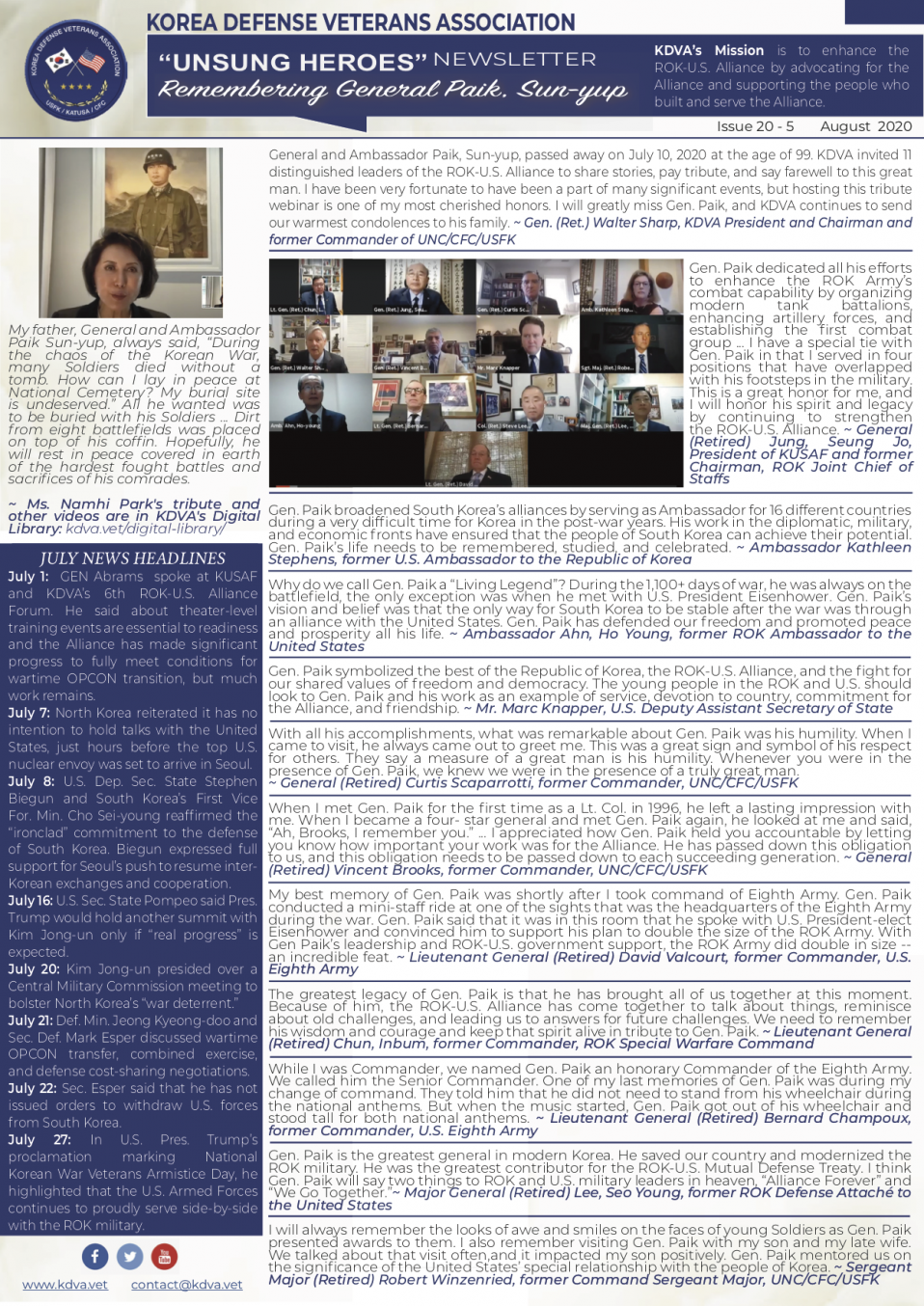
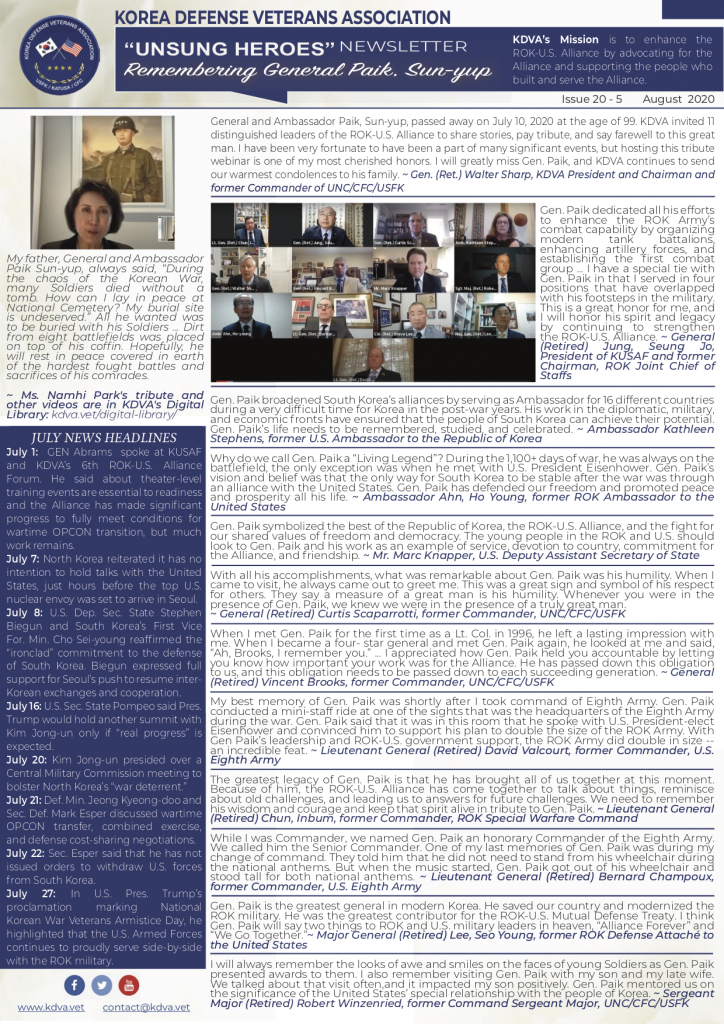
KDVA August 2020 Newsletter – Issue 20-5

Download English Version: KDVA Newsletter Issue 20-5 August 2020


Read more

A Daughter’s Tribute – Ms. Namhi Park’s tribute to General Paik Sun-yup

A Daughter’s Tribute

Ms. Namhi Park, daughter of General Paik Sun-yup shares her heartfelt tribute of her father with the Korea Defense Veterans Association in this short video.


Video – https://youtu.be/5lUJTdwc_VE

Read more

Recording Now Available – United Nations Command Webinar

RECORDING NOW AVAILABLE.

View recording on KDVA’s Digital Library page and YouTube channel.
Image

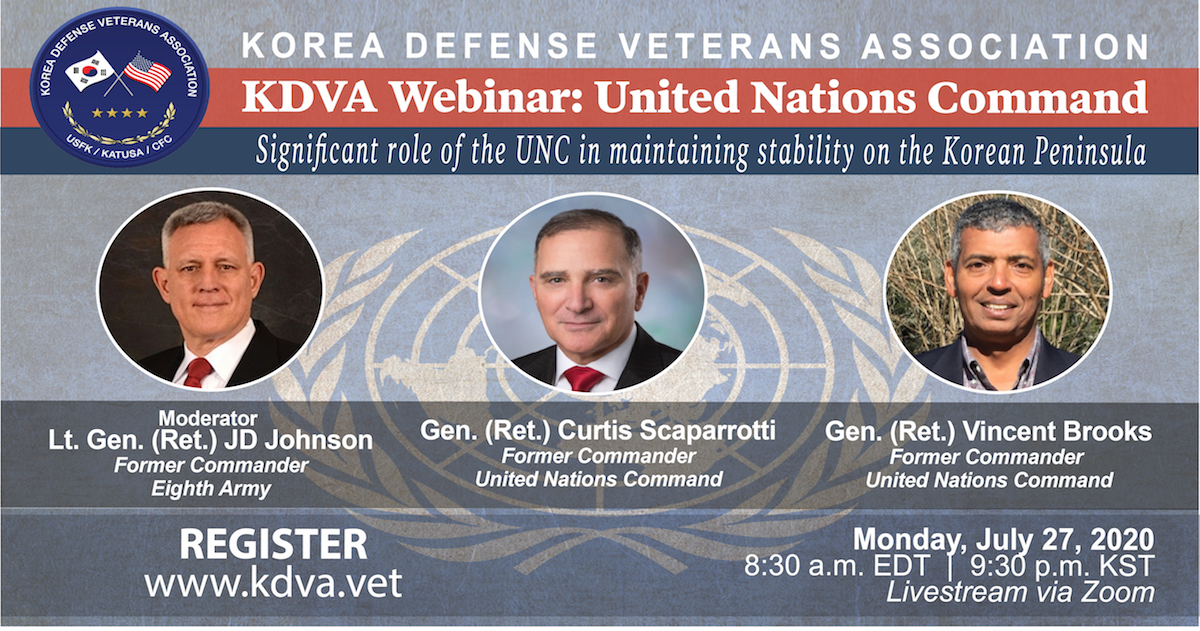
KDVA Webinar: United Nations Command

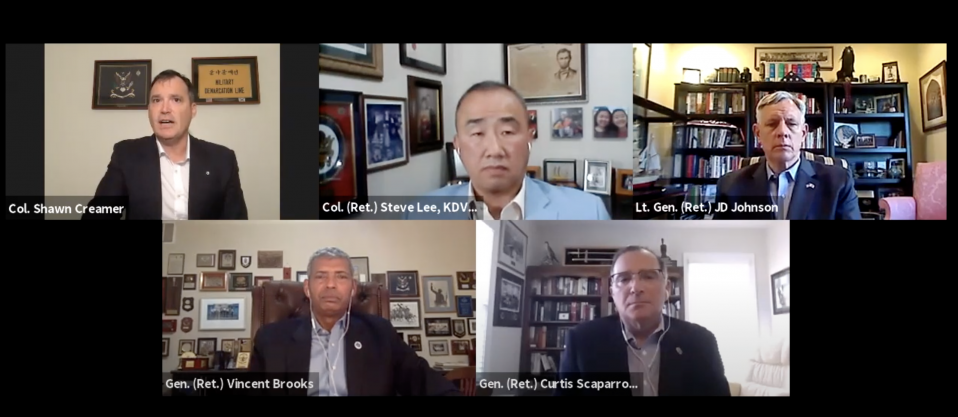
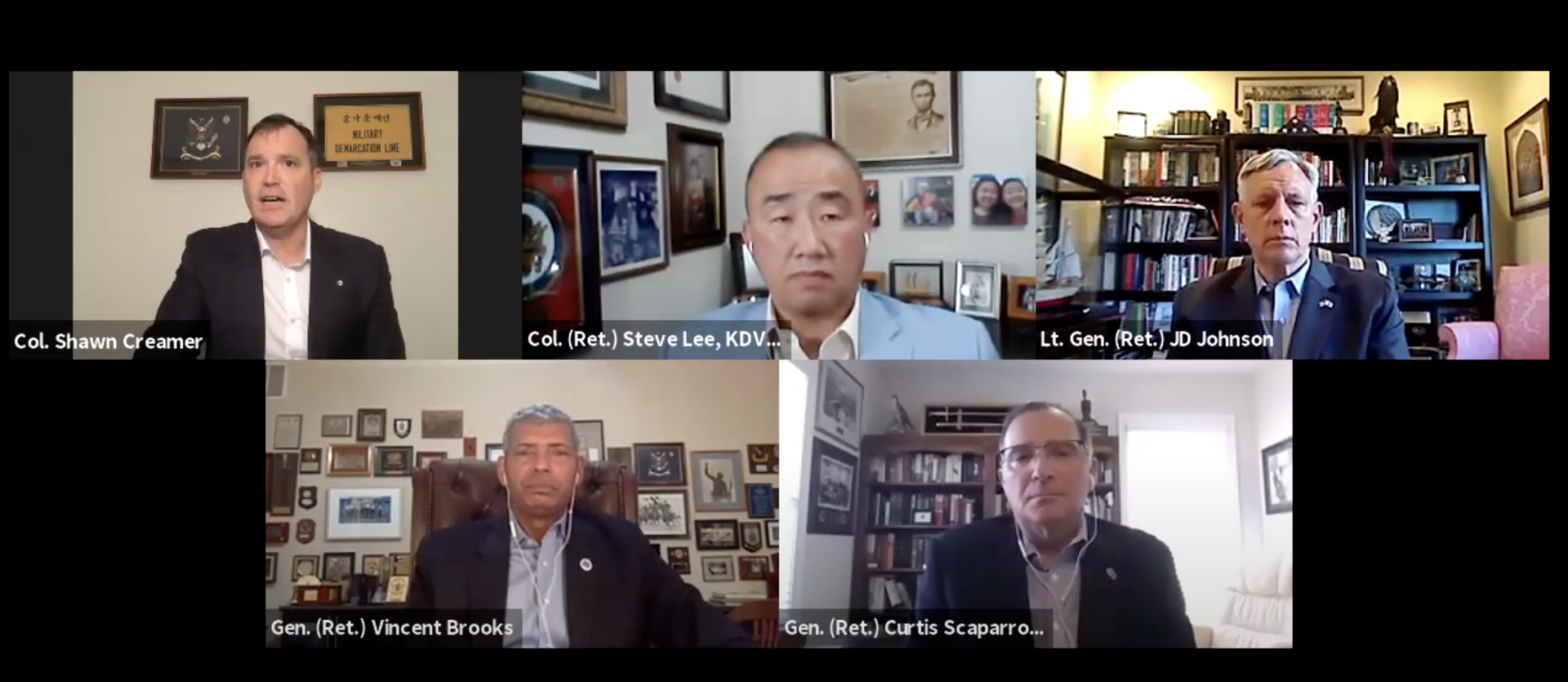
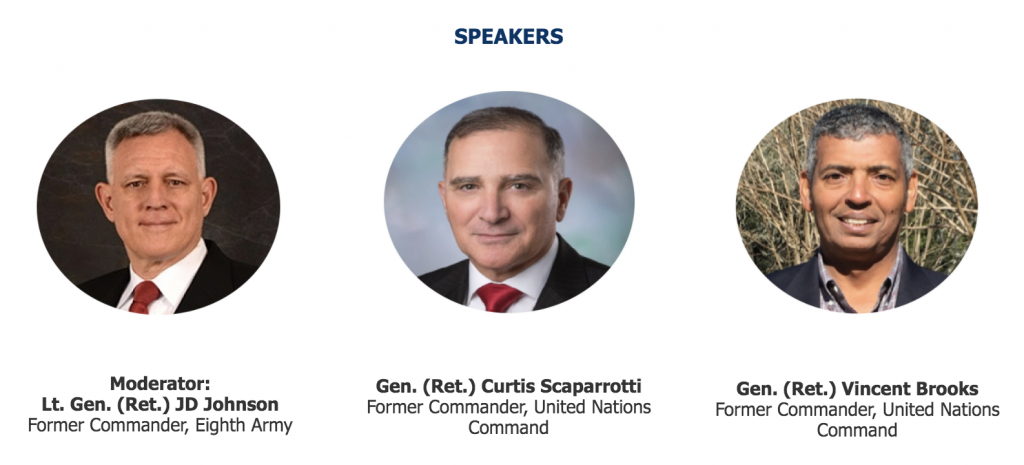
On July 27, 2020 KDVA hosted an United Nations Command webinar. Former Commanders of the United Nations Command, Gen. (Ret.) Curtis Scaparrotti and Gen. (Ret.) Vincent Brooks and Commander of the 196th Infantry Brigade, COL Shawn Creamer discussed the significant role of the United Nations Command in maintaining stability on the Korean Peninsula.

Alternate text
Read more

Announcing KDVA Webinar: United Nations Command

Please join KDVA for our webinar on the significant role of the United Nations Command in maintaining stability on the Korean Peninsula.


Monday, July 27, 2020

8:30 a.m. – 9:30 a.m. (U.S. EDT)
9:30 p.m. – 10:30 p.m. (KST)

 Livestream via Zoom

Feel free to join 15 minutes prior to each webinars’ start time to chat with other KDVA members and attendees via Zoom messenger chat.

The webinar is free, but you must register in advance.


REGISTER

https://us02web.zoom.us/webinar/register/WN_WMM2xfPVRtyTtgg8GCQeng


Read more

Webinar Recording Now Available! 70th Commemoration of the Korean War Webinar Series – Part 2: Fulfilling Our Veterans’ Legacy

70th Commemoration of the Korean War Webinar Series –

Webinar Part 2: Fulfilling Our Veterans’ Legacy: Enduring Nature of “Alliance for the Ages”

Friday, June 26, 2020

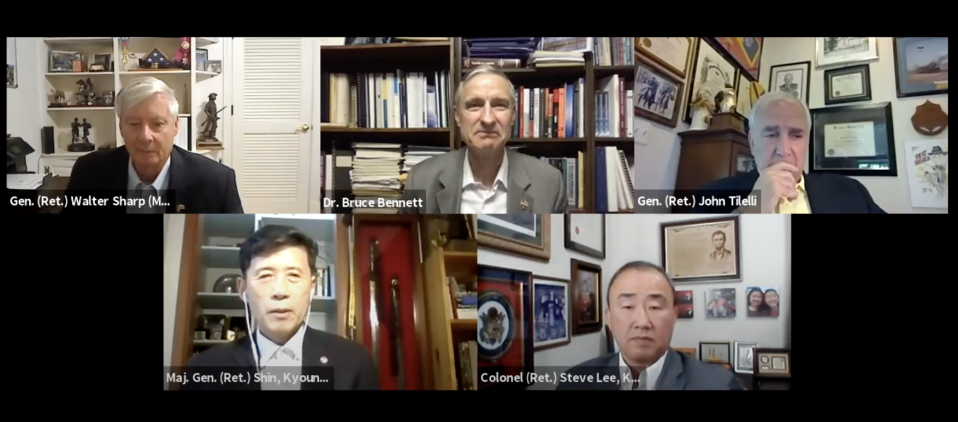
Discussion and Q&A with prominent Korea experts and senior military leaders of KDVA.

Speakers:


Topics:

  • Korean War’s place in shaping ROK-U.S. relations
  • The need for a strong Alliance — what we are doing to ensure Korean War veterans’ service and sacrifice live on today and into the future
  • Highlight the “Wall of Remembrance” as an enduring example of the “Alliance for the Ages”

Recording:

Read more

Webinar Recording Now Available! 70th Commemoration of the Korean War Webinar Series – Part 1: Honoring Those Who Served

70th Commemoration of the Korean War Webinar Series –

Webinar Part 1: Honoring Those Who Served: 70 Years of the Irreplaceable ROK-U.S. Alliance

Thursday, June 25, 2020

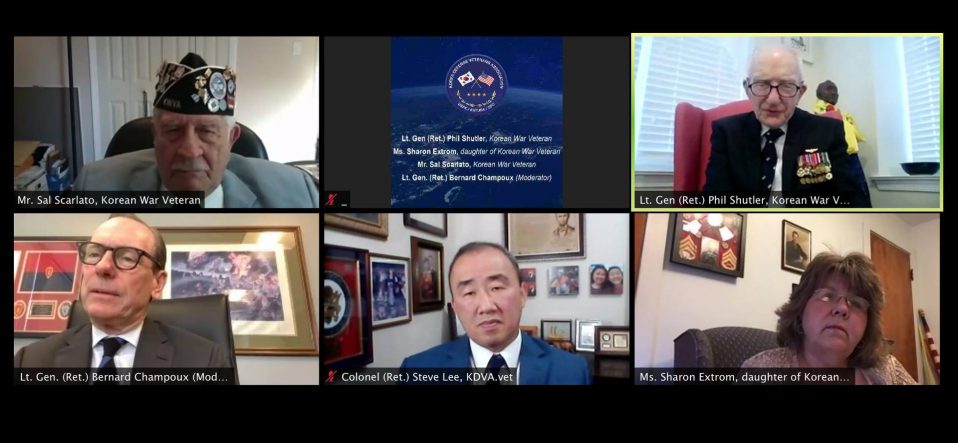
Interview and Q&A with Korean War Veterans and their family members.

Speakers:


Topics:

  • Look back on those who served and sacrificed during the war; include the perspective of families through the decades
  • Discuss why they think their service was worth fighting the war
  • Look now at recognizing and honoring service members and their families

Recording:

Read more

The Sharp Family Story

By Ms. Nicole Ruiz, KDVA Research Intern


Photo Caption: Gen. (Ret.) Walter Sharp is holding a picture of his father, then-Lieutenant Earl “Bill” Sharp (who is on the right), with the 40th Infantry Division during the Korean War in 1952 to 1953.  Bill Sharp ended his 28-year military career, retiring as a Cavalry Colonel and inspiring his son to follow in his footsteps. General Sharp started his Army career at West Point and ended in 2011 as the 4-star commander of United Nations Command (UNC), Combined Forces Command (CFC), and U.S. Forces Korea (USFK).


General (Retired) Walter “Skip” Sharp

President and Chairman, Korea Defense Veterans Association

Former Commander United Nations Command / Combined Forces Command / U.S. Forces Korea

Son of Korean War Veteran, Colonel (Retired) Earl “Bill” Sharp


Shortly after graduating from the University of West Virginia and receiving his commission as a 2nd Lieutenant, Earl “Bill” Sharp joined the 40th Infantry Division during the Korean War in 1952. In 1953, Lieutenant Sharp returned home to his wife and his new son, Walter “Skip” Sharp, who had been born while he was fighting in Korea. Then-Lieutenant Sharp would pursue a 28-year military career, retiring as a Cavalry Colonel and inspiring his son to follow in his footsteps. Skip Sharp entered West Point and graduated in 1974, launching what would become a 37-year military career and ultimately retiring as a 4-star General in 2011. When General Sharp was set to deploy for Operation Desert Storm in the early 1990s, his father emphasized the importance of taking care of his troops thru tough realistic training and trusting his subordinates. Still, his father did not fully breach the topic of his wartime experiences.

General Sharp was first stationed in Korea between 1996 and 1998. General Sharp received his promotion from Colonel to Brigadier General and his parents, who had attended every promotion since West Point, joined him for a short visit in Korea. The trip held special meaning for his father because it was the first time he set foot on Korean soil since the Korean War. General Sharp reflected, “He really was amazed and pleased to see how much Korea has progressed and said several times ‘The sacrifices of the Korean War were worth it’.” Unfortunately, Colonel Sharp passed away in 2006 before he could see his son earn his fourth star and return to Korea for his dream final job in the Army as the commander of United Nations Command (UNC), Combined Forces Command (CFC), and U.S. Forces Korea (USFK) from 2008 until his retirement in 2011.

This tour as the 4-star commander in Korea gave General Sharp the opportunity to visit the location where his father fought, an experience he wishes he could have shared with him. His Deputy CFC Commander, General Jung, Seong Jo, mobilized Korean historians to help identify the locations where his father served in the Heartbreak Ridge-to-Punchbowl area in late 1952 and early 1953. General Jung also arranged for General Sharp and his wife to visit the battlefield as well as receive a briefing from the unit stationed in that area. Even though his father could not join him to revisit the battlefield, being able to do so was still a special moment for General Sharp, especially because his father never talked about his experiences in any detail. General Sharp remembered, “There were times when he would talk about how cold it was, the coldest he was ever in his life.” Besides these little snippets of information, much of Co lonel Sharp’s service was shrouded in mystery.

It wasn’t until several years after his father passed away that General Sharp would learn more about his father’s experiences in Korea and Vietnam. When the family stumbled across a cedar chest containing photos and military records, General Sharp described finding such a chest as “pretty emotional.” Like many veterans from the Korean War, his father closely guarded his experiences and never really divulged any details. General Sharp reflected, “I wish I had a better understanding on how things went and how he was able to prepare, lead, and fight in a war at such a young age.” He went on to say, “When I retired, I vowed that I was going to continue to do everything I could … to strengthen the ROK-U.S. Alliance and honor those who had served in Korea.”

True to his word, General Sharp honored the legacy of his father and other Korean War veterans after his retirement by speaking on their behalf. He also played a crucial role in forming the Korean Defense Veterans Association (KDVA), becoming the first chairman and president of the organization. These organizations are important because they provide a platform for the importance of the ROK-U.S. Alliance and for veterans to share their experiences and others to learn from them
.

Image

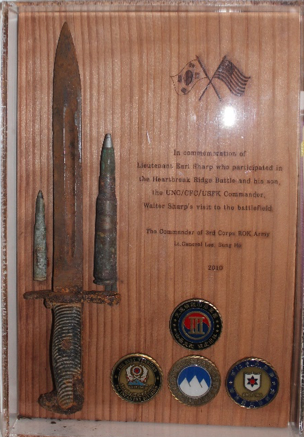
Photo Caption: This bayonet was presented to General Sharp by the 3rd ROK Corps during his visit to where his father fought in the Korean War.

Image

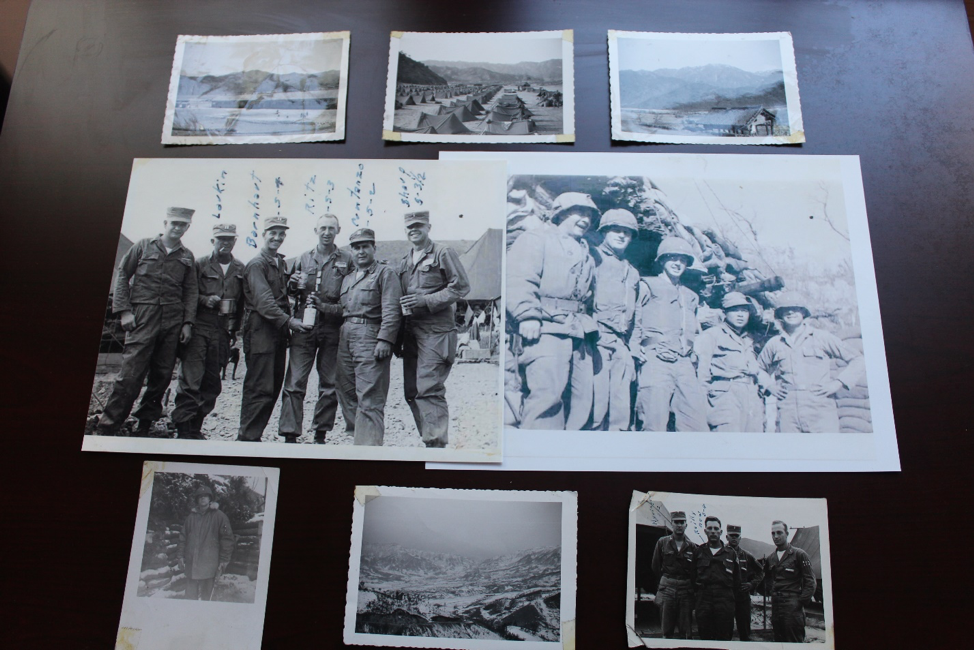
Photo Caption: Pictures of General Sharp’s father, then-Lieutenant Earl “Bill” Sharp, with the 40th Infantry Division during the Korean War in 1952 to 1953.

Read more

You’re invited! KDVA’s 2-Part Webinar Series, “70th Commemoration of the Korean War”

The Korea Defense Veterans Association invites you to attend our 2-Part Webinar Series, 

“70th Commemoration of the Korean War“

Livestream via Zoom 

Feel free to join 15 minutes prior to each webinars’ start time to chat with other KDVA members and attendees via Zoom messenger chat. 

The webinars are free, but you must register in-advance.


Webinar Part 1: Honoring Those Who Served:

70 Years of the Irreplaceable ROK-U.S. Alliance

Thursday, June 25, 2020

8:30 a.m. – 9:30 a.m. (U.S. EDT)
9:30 p.m. – 10:30 p.m. (KST) 

Interview and Q&A with Korean War Veterans and their family members.

Speakers:

Will be announced soon.

Topics:

Look back on those who served and sacrificed during the war; include perspective of families through the decades

Discuss why they think their service was worth fighting the war

Look now at recognizing and honoring service members and their families

REGISTER

https://us02web.zoom.us/webinar/register/WN_eVDAazjuTGaev515xhpCvA


Webinar Part 2: Fulfilling Our Veterans’ Legacy:

Enduring Nature of “Alliance for the Ages” 

Friday, June 26, 2020

8:30 a.m. – 9:30 a.m. (U.S. EDT)
9:30 p.m. – 10:30 p.m. (KST)

Discussion and Q&A with prominent Korea experts and senior military leaders of KDVA.

Speakers:

Will be announced soon.

Topics:

Korean War’s place in shaping ROK-U.S. relations

The need for a strong Alliance — what we are doing to ensure Korean War veterans’ service and sacrifice live on today and into the future

Highlight the “Wall of Remembrance” as an enduring example of the “Alliance for the Ages”

REGISTER

 https://us02web.zoom.us/webinar/register/WN_BJk2KiFLTj2cUrZLyog6mw

Read more

KDVA’s ROK Memorial Day Message

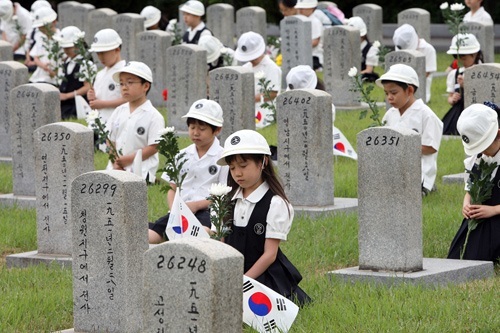
On this 6th day of June, the people of the Republic of Korea remember their Service Members who died during the Korean War and other conflicts. KDVA would like to ask you to join the Korean people in reflecting on and remembering all that they did for this important and great country.

KDVA honors their brave and heroic sacrifices by supporting the ROK-U.S. Alliance and the people who built the Alliance and continue to serve it.  They include the 28,500 U.S. Service Members serving in South Korea today and the millions of Korean and American troops who have served together in “The Land of the Morning Calm” since the start of the Korean War on June 25, 1950 and around the world in Vietnam, Iraq, and Afghanistan.

KDVA truly believes in working “Together for the ROK-U.S. Alliance.”


Sincerely,

General (Ret.) Walter Sharp

President and Chairman, KDVA

Read more