Uncategorized

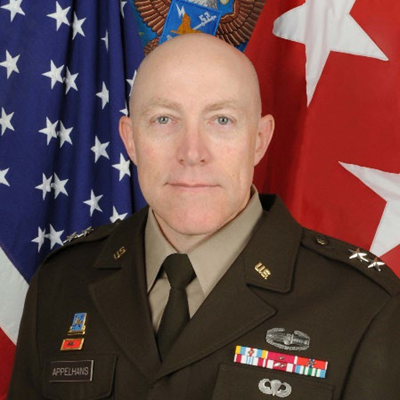
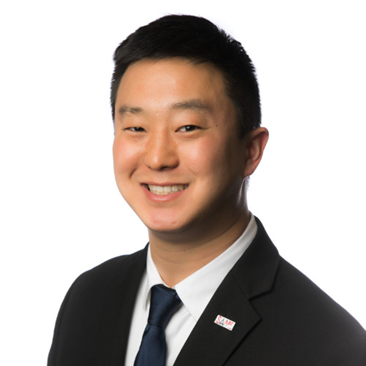
Major General Richard Appelhans

Major General Richard Appelhans
Accomplishments or support for the ROK-U.S. Alliance:

Rick served as the Assistant Chief of Staff, J2, and Deputy Assistant Chief of Staff, C2 in UNC, CFC, and USFK from 9 June 2021 to 19 June 2023. During this period, Rick led 352 military, civilian, and contractor intelligence professionals executing combined and joint intelligence amid an unprecedented sequence of provocations and challenges by North Korea. His leadership was critical in focusing the intelligence’s predictive characterization of North Korea’s ballistic missile launches, UAV incursions, development of cruise missile capabilities, and preparation for a seventh nuclear weapons test. This provided the Commander with the critical information to execute a variety of response options and dominate the information domain. He drove a ground-breaking transformation of intelligence exercise support from COMBINED COMMAND POST TRAINING events into theater-level field exercises after a five-year hiatus. Under his innovative and inspirational leadership, the integration of combined intelligence was expanded with the historic transition and relocation of intelligence operations from Yongsan Garrison to Camp Humphreys. Finally, Rick pioneered the Regional Fusion Cell concept, advancing on-Peninsula and off-Peninsula intelligence capabilities to ensure the current and future commanders will be able to deter adversary threats during Armistice, and, if deterrence fails, effectively neutralize threats.


Volunteer efforts:

Although not volunteer work, Rick was a servant leader always cognizant that the personnel that served under him was his most precious resource. He secured the intelligence mission by prioritizing the advancement of quality-of-life concerns of both the military and civilian work forces. He was able to do this by increasing the quality and quantity of senior leader engagements and communication with service members, civilians, families, and contractors.


Short biography:

Rick is currently serving as the Commanding General, U.S. Army Intelligence Center of Excellence and Fort Huachuca. Prior to this position, he served as the USFK J2 and CFC Deputy C2. Rick’s overseas assignments and deployments include the Republic of Korea, Kuwait, Germany, the Netherlands, Afghanistan, Bosnia-Herzegovina, and Iraq. Rick was commissioned as a Distinguished Military Graduate from Central Washington University. He holds a BS in Political Science from Central Washington University and a Master’s Degree in Strategic Studies from the U.S. Air War College. In 2023, Rick was awarded the Korea Order of National Security Merit Cheonsu Medal by President Yoon Suk-yeol.


Statement from the nominator about the nominee’s qualities: 

Rick believes the ROK-U.S. Alliance is like no other in the world – forged in blood and grounded in common values and interests. He characterizes it as a pillar of stability and prosperity in Northeast Asia. Furthermore, he considers the combined ROK-U.S. Intelligence Enterprise, grounded in mutual trust and respect, at the forefront of the Alliance. His selfless service and passion to the Alliance and Veterans, was demonstrated through his accomplishments while serving as the USFK J2, and CFC Deputy C2. Rick’s experience while serving in the ROK has served as the foundation that informs his current duties in developing and integrating the most cutting-edge intelligence technologies that will enhance the Alliance’s deterrence and defense capabilities for decades to come. This will ensure the ROK-U.S. Alliance remains the Gold Standard for Intelligence interoperability and sharing. Rick believes in the Korea Defense Veterans Association’s mission, and as a member, plans to support its endeavors to the greatest extent possible.

Read more

KDVA and KUSAF Joint Message for “U.S.-ROK Alliance Memorial Week 2024”

KDVA and KUSAF Joint Message for “U.S.-ROK Alliance Memorial Week 2024”

한미동맹재단과 주한미군전우회의 “2024 한미동맹 추모주간” 공동메시지

May 27, 2024

2024년 5월 27일

Remembering Service Members cannot fall upon the shoulders of their families and friends alone. The Korea Defense Veterans Association (KDVA) and the Korea-US Alliance Foundation (KUSAF) share this solemn undertaking to honor the service of the fallen and to ensure that their sacrifices are not forgotten. The loss of a Service Member creates a void that can never be filled. However, by honoring their service and by educating people about the impact that each made for freedom, we may provide comfort and healing to those who will forever feel this loss.

나라를 위해 희생한 군인들을 기억하는 것은 그들의 가족과 친구들만의 몫이 아닙니다. 한미동맹재단과 주한미군전우회는 전사자들의 공헌을 기리고 그들의 희생을 잊지 않기 위한 숭고한 사업에 함께 합니다. 군인의 희생은 결코 채워질 수 없는 빈 공간을 만듭니다. 우리는 그들의 군 복무를 예우하고 자유를 위한 헌신을 알림으로써, 이 상실감을 영원히 간직하고 있는 분들에게 위로와 치유를 제공할 수 있습니다.

Forged under fire during war, the ROK-U.S. Alliance began as the United States and the Republic of Korea stood shoulder to shoulder defending the Korean people from a communist invasion. For almost 74 years, our two nations have worked together to preserve stability on the Korean Peninsula and to provide security for the Korean people. It is important to remember that freedom is never free, and the cost can be high. Since the start of the Korean War in 1950, over 130,000 ROK and 36,000 U.S. Service Members have been killed in action in Korea.

한미동맹은 전쟁의 포화속에서 한국과 미국이 어깨를 나란히 하여 공산주의 침략으로부터 한국 국민을 방어하면서 시작되었습니다. 74 년 가까이 양국은 한반도의 안정을 유지하고 국민의 안전을 보장하기 위해 함께 노력해 왔습니다. 자유는 결코 공짜가 아니며 대가가 클 수 있다는 점을 기억하는 것이 중요합니다. 1950 년 한국전쟁이 시작된 이래로 130,000 명 이상의 한국군과 36,000 명 이상의 미군이 전사했습니다.

KUSAF and KDVA have designated the “U.S.-ROK Alliance Memorial Week” for the period beginning with the U.S. Memorial Day on May 27, 2024, until the ROK Memorial Day on June 6, 2024. We encourage Koreans and Americans to participate in Memorial Day ceremonies, visit cemeteries and memorials, and learn more about those we honor by reading their stories or visiting museums.

한미동맹재단과 주한미군전우회는 2024년 5월 27일 미국 현충일부터 6월 6일 한국 현충일까지를 “한미동맹 추모주간”으로 지정하였습니다. 우리는 한미 양국 국민들께서 현충일 행사에 참여해 주실 것을 당부합니다. 현충원과 기념관, 박물관을 방문하고, 전사자들의 이야기를 읽음으로써, 우리가 존경하는 영웅들에의 헌신에 대해 더 자세히 알게 되기를 바랍니다.

Each year on ROK Memorial Day, Koreans pause at 10:00 a.m. in silent reflection of those who paid the ultimate sacrifice in defense of their nation. KDVA asks its members and supporters to pause at 3:00 p.m. EDT on U.S. Memorial Day to honor all U.S. Veterans who died while serving in Korea (the time of 3:00 p.m. EDT will allow this observance to occur during daytime hours across all six U.S. time zones). Through your participation, we will honor and remember the fallen, just as their families and friends will.

대한민국 국민들은 매년 현충일 오전 10시에 잠시 일상을 멈추고 조국 수호를 위해 희생한 분들에게 묵념을 합니다. 주한미군전우회는 한국에서 복무 중 전사한 미국 참전용사를 위해 미국 현충일 오후 3 시에 잠시 일상을 멈춰줄 것을 회원과 지지자들에게 당부합니다. (미국 동부 시간 기준 오후 3 시는 미국 전체 6 개 시간대가 낮 시간이어서 이 행사에 동참할 수 있습니다). 여러분의 참여를 통해 우리는 전사자 가족 및 친구들과 함께 영웅들을 기리고 기억할 수 있을 것입니다.

“Together for the ROK-U.S. Alliance”

함께해요 한미동맹!

Curtis M. Scaparrotti

General, U.S. Army (Retired) President, KDVA

커티스 스카파로티
미국 육군 대장 (예비역) 주한미군전우회 회장

Leem, Ho Young

General, ROK Army (Retired) President, KUSAF

임호영
대한민국 육군대장 (예비역) 한미동맹재단 회장

Read more

KDVA Annual Member Portal Raffle – Update your profile for a chance to win a $100.00 Amazon Gift Card!!


KDVA Annual Member Raffle – Update your profile for a chance to win a $100.00 Amazon Gift Card!!

Login to the KDVA Member Portal and update your KDVA membership profile. You have until Thursday, February 29, 2024 to update your profile for a chance to win.

Please ensure we have the most up-to-date contact information in your member profile. This helps keep our member directory accurate and makes it easier for members to connect with other members. This also gives our Members an opportunity to invite their family and friends to join KDVA.

5 KDVA MEMBERS WILL WIN A $100.00 AMAZON GIFT CARD. 

Winners will be announced by March 6.

MEMBER PORTAL LOGIN

CAN’T LOG IN TO THE KDVA MEMBER PORTAL? Your KDVA member username is the email address you used when you signed up. If this is your first time logging in to the member portal, please try resetting your password. For any questions, please email us at contact@kdva.vet.

WHAT IS THE KDVA MEMBER PORTAL? Through this portal, members can:

  • Manage their personal membership profile and information.
  • Search the Member Directory and connect with other members as well as service members you served with in Korea.
  • Join or create a Common Interest Group (“Circles”) with other members who share your interests, like being stationed at the same camp, currently living in the same area, or served in Korea during the same time.
  • Engage in meaningful conversations, network, and share stories and pictures of your time in Korea. It’s like Facebook but without all the spam and ads!
  • Register for KDVA events & webinars.

Not a member of KDVA Yet?

Sign Up Today! There is no cost to join KDVA.

KDVA is the only professional organization whose sole purpose is to enhance, support and advocate for the ROK-U.S. Alliance.

To learn more about KDVA membership benefits or to register to become a KDVA member, click here.

The use of Amazon gift cards does not mean or imply any endorsement of Amazon or a partnership with Amazon.

Read more

Improving U.S.-ROK-Japan Trilateral Cooperation in the Era of U.S.-China Competition – Full Article

Download Full Article: Hudson Institute_Yoo Jin Bae_Improving US-ROK-Japan Trilateral Cooperation in the Era of U.S.-China Competition


By Yoo Jin Bae

Executive Summary

This paper analyzes why U.S.-ROK-Japan trilateral cooperation is essential considering intensifying U.S.-China strategic competition and what can be done to improve the trilateral ties and cooperation.

Main Argument

As a bipartisan policy community within the United States seeks to curb China’s expansionist policy and increasing assertiveness, the U.S.-China rivalry is becoming a serious, long-term competition. Under these circumstances, uncertainties and risks are rising in the regional security environment and U.S.-ROK-Japan trilateral cooperation to cope with these regional challenges has become even more important. However, the exacerbation in South Korea-Japan relations and the differences in dealing with China are hindering the deepening of trilateral cooperation. The following cooperative efforts are needed to manage common threats and interests, repair South Korea-Japan relations, and overcome the differences regarding China.

Policy Recommendations

• Pursuing diplomatic and security cooperation to deal with common security threats in and around the Korean Peninsula, Taiwan Strait, and the South China Sea. This may include efforts like (1) the expansion of U.S.-ROK, U.S.-Japan, and U.S.-ROK-Japan joint military exercises, (2) detailed contingency planning, and (3) release of joint statements to discourage violation of international norms, rules, and principles.

• Combining U.S.-South Korea and U.S.-Japan bilateral cooperation for developing high technology in fields like 5G networks, AI, biotechnology, and quantum technology. This should include not only joint development of technology, but also the creation of an institution to promote cooperation and endeavor to prevent attempts to steal technology.

• Comprehensive efforts to promote mutual understanding, build trust, and coordinate policy between Seoul and Tokyo. This may include resuming shuttle diplomacy, conducting seminars and events featuring the history of pre-1945 animosity as well as post-1965 cooperation, encouraging cultural and human exchanges, and institutionalizing a U.S.-ROK-Japan trilateral mechanism to prevent escalation of conflicts and use of coercive diplomacy.

• Endeavors to reduce differences over China like having in-depth discussions regarding China and its strategy and tactics, and joint efforts to be prepared for China’s possible attempts to drive a wedge into the trilateral ties.

Table of Contents

I. Introduction

II. Why Trilateral Cooperation Matters in the Era of Intensifying U.S.-China    

    Competition

          1. The Rise of China and Its Growing Assertiveness

          2. Changes in the U.S. Policy Toward China and Intensifying U.S.

              China Rivalry

          3. Growing Need for U.S.-ROK-Japan Trilateral Cooperation under

              U.S. China Competition

III. Challenges of U.S.-ROK-Japan Trilateral Cooperation

          1. Deterioration of South Korea-Japan Relations

          2. Gaps in Perceptions and Stance Toward China

IV. Policy Recommendations: Ways to Improve the Trilateral Cooperation

          1. Pursuing and Expanding Trilateral Cooperation Based on

              Commonalities

          2. Reducing Differences and Dissonance

Bibliography

I. Introduction

Since President Biden’s inauguration in January 2021, the Biden administration has constantly highlighted the importance of strengthening relationships with U.S. allies and partners. In particular, the administration has demonstrated great enthusiasm for the trilateral cooperation among the United States, South Korea, and Japan.

The two U.S. allies, South Korea and Japan, also agreed with the United States on the necessity of trilateral cooperation. On April 2, national security advisors from the three countries gathered together at the United States Naval Academy and “reaffirmed their steadfast commitment to working together to protect and advance their shared security goals,” after discussing the United States’ review of North Korea policy and “issues of common concerns including Indo Pacific security.”1 Then, on April 16, along with mentioning the significance of the Quad and support for “ASEAN’s unity and centrality” in the Indo Pacific, the leaders of the United States and Japan “concurred that trilateral cooperation with the Republic of Korea is essential to our shared security and prosperity.”2 About a month later, on May 21, the leaders of the United States and South Korea emphasized “the fundamental importance of U.S.-ROK-Japan trilateral cooperation for addressing the DPRK, protecting our shared security and prosperity, upholding common values, and bolstering the rules-based order.”3 On November 17, the three countries “reaffirmed that trilateral cooperation between the United States, the Republic of Korea, and Japan is essential to tackling the most pressing challenges of the 21st Century in the region and across the globe,” and they highlighted “the importance of cooperation in the Indo-Pacific region, including through multilateral partnerships that advance our shared prosperity, security, and values” and “the centrality of ASEAN to the architecture of the Indo- Pacific and the critical role” it plays in protecting the rules-based international order.4

Notably, the three countries promised to broaden and expand the regional scope and fields of cooperation for U.S.-ROK-Japan trilateral cooperation, which have over the past three decades focused mainly on tackling the North Korean nuclear threat. However, despite these continued declarations, trilateral cooperation remains under-developed. Notwithstanding South Korea and Japan’s agreement on the so-called “comfort women” issue in December 2015 and the conclusion of a General Security of Military Information Agreement (GSOMIA) in November 2016, trilateral cooperation has barely made any progress in recent years.

This paper will discuss why U.S.-ROK-Japan trilateral cooperation matters and ways to improve it. First, it analyzes recent U.S.-China competition to explain the context for why strengthening trilateral cooperation has become so important. Then the paper delves into what hinders the strengthening of trilateral cooperation. Finally, the essay discusses measures the three countries should take to enhance trilateral cooperation.


Editor’s Note:  The complete article is posted in the KDVA Digital Library at:  https://kdva.vet/digital-library/.

1 The White House. United States-Japan-Republic of Korea Trilateral National Security Advisors’ Press Statement. April 2, 2021, https://www.whitehouse.gov/briefing-room/statements-releases/2021/04/02/united-states-japan-republic-of-korea-trilateral-national-security-advisors-press-statement/ (accessed June 15, 2021)

2 The White House. U.S.-Japan Joint Leaders’ Statement: “U.S.-JAPAN GLOBAL PARTNERSHIP FOR A NEW ERA” April 16, 2021, https://www.whitehouse.gov/briefing-room/statements-releases/2021/04/16/u-s-japan-joint-leaders-statement-u-s-japan-global-partnership-for-a-new-era/ (accessed June 2, 2021)

3 The White House. U.S.-ROK Leaders’ Joint Statement. May 21, 2021, https://www.whitehouse.gov/briefing-room/statements-releases/2021/05/21/u-s-rok-leaders-joint-statement/ (accessed June 2, 2021)

Read more

Korea Revisit Program For Korea Defense Veterans

The Republic of Korea’s Ministry of Patriots and Veterans Affairs (MPVA) proudly sponsors the first Korea Revisit Program for Korea Defense Veterans in November 2021.

The Korea Defense Veterans Association (KDVA) is managing the application and selection of Defense Veterans who served in Korea since the signing of the Armistice Agreement on July 27, 1953.

MPVA has provided ten slots for U.S. Korea Defense Veterans along with a companion (spouses or helpers) for each Veteran.  Participants will be selected from among the KDVA membership. 

For U.S. Defense Veterans who are not yet KDVA members and would like to be eligible for participation in the Revisit Program, please join KDVA as a Regular Member by October 1, 2021 at https://kdva.vet/join-kdva/ – it is free.

Additionally, MPVA is providing one additional slot for the other Sending States, and a travel companion.

The Sending States that supported/are supporting the United Nations Command in Korea are:  Australia, Belgium, Canada, Columbia, Denmark, Ethiopia, France, Greece, Italy, Netherlands, New Zealand, Norway, the Philippines, the Republic of South Africa, Thailand, Turkey, the United Kingdom, and the United States. Over 3.3 million U.S. Service Members and thousands from the other Sending States have served in Korea since the signing of the Armistice Agreement. 

The program will be 4-5 days in Korea.  MPVA will pay 100% airfare for Veterans and 50% for companions (spouses or helpers).  MPVA will cover all other costs in Korea like meals, hotels, transportation, etc.

We will announce the date as soon as it is confirmed.

Apply at KDVA.vet by October 4, 2021.


APPLY HERE

Read more

Washington Post – Trump administration launches rewards program targeting North Korea and China

Dec. 1, 2020 at 11:49 a.m. EST

The Trump administration on Tuesday announced a $5 million reward for tips on sanctions-busting activities that allow North Korea to continue developing nuclear weapons and accused China of facilitating the illicit trade.

The leads are being solicited through a new State Department website, dprkrewards.com. The targeted activities it lists include money laundering, the export of luxury goods to North Korea, cyberoperations and other actions that support the proliferation of weapons of mass destruction.

“I assure you, many of the tips we receive through this program will directly implicate that trade,” Alex Wong, the State Department’s deputy envoy for North Korea, said in a virtual speech at the Center for Strategic and International Studies.

Wong warned that the United States will impose more sanctions related to North Korea in the two months remaining before the Trump administration ends, including penalties on people and entities in China that facilitate illicit trade.

“We’ve imposed numerous such sanctions designations in the past,” Wong said. “And more are forthcoming.”

Wong accused China of a “flagrant violation” of its obligation to enforce international sanctions on North Korea.

The rewards program underscores how even in its waning days, the Trump administration is doubling down on its relentless “maximum pressure” campaigns against countries it considers its chief nemeses. Although the sanctions campaigns have hampered the economies of the targeted countries, none has succeeded in dislodging the regimes or making them change their authoritarian behavior, the stated aim.

Tensions have ratcheted up recently with Iran, which blames Israel and the United States for the assassination of its foremost nuclear scientist. China bristles every time Secretary of State Mike Pompeo lambastes Beijing for the global coronavirus pandemic, which he calls “the virus from Wuhan.” And on Monday, the administration imposed sanctions on a Chinese electronics firm it said had supported Venezuelan President Nicolás Maduro’s efforts to undermine democracy.

With the impending sanctions against the North Korean regime, the administration is elevating tensions with another international hot spot, creating potential problems that will be waiting for President-elect Joe Biden when he takes office next month.

North Korea’s economy has been strangled through sanctions the U.N. Security Council has put in place since 2006.

“The biggest obstacle to an economically strong North Korea is the regime’s programs to build nuclear, chemical and biological weapons and the means to deliver those weapons around the globe,” Wong said.

He expressed U.S. “disappointment” at a military parade in Pyongyang on Oct. 10 that featured a new intercontinental ballistic missile and showed off an array of modernized military systems, from small arms to antitank and air-defense systems.

Repeatedly singling out China in his remarks, Wong accused Beijing of helping North Korea obtain the money to continue its military buildup and said the United States had documented 555 incidents of ships carrying coal and other banned goods from North Korea to China.

Wong said China is “seeking to undo” U.N. sanctions that are supposed to persuade North Korea to abandon its nuclear weapons and ballistic missiles.

Beijing is host to at least 20,000 North Korean laborers whose salaries are funneled to the government in Pyongyang for weapons development. Suggesting a group of potential targets to upcoming U.S. sanctions, Wong said Beijing allows Chinese companies to continue trade in U.N.-prohibited goods including seafood, textiles, iron and steel.

“The DPRK still retains shadowy avenues to procure inputs to its weapons programs,” he said, using the acronym for North Korea’s official name, the Democratic People’s Republic of Korea.

“The DPRK cannot do that without middlemen. It cannot do that without illicit bank accounts. It cannot do that without a network of money launderers. The overwhelming number of those middlemen, bank accounts and money launderers operate within the borders of China.”


Article: https://www.washingtonpost.com/national-security/us-korea-sanctions-reward-program/2020/12/01/535216b0-33e1-11eb-afe6-e4dbee9689f8_story.html?utm_source=Sailthru&utm_medium=email&utm_campaign=EBB%2012.02.20

Read more

MY STORY OF SERVICE IN SOUTH KOREA

By: Matt Segal, Colonel, U.S. Army (Retired), Cary, NC

I was commissioned in 1971 through Temple University’s ROTC program and went on active duty in 1972 as a 2nd Lieutenant reporting to Ft. Ben Harrison for the Adjutant General Officer Basic Course (AGOBC), followed by six weeks at the Defense Information School (DINFOS also at Ft. Ben at that time) for the Broadcast Officer course. During a career that spanned 28 years retiring as a colonel in 1999, I had many assignments, but most were in branch immaterial slots. So beyond year five, I had few AG assignments, working mostly in Public Affairs, Civil Affairs, or in an IG position.
In 1973, I was the deputy PAO at Ft. Dix and called the AG assignments branch and asked to go on a short tour. Branch told me the only available short tours were to South Korea or Thailand as we were sending no one to Vietnam at that time. I told them I would prefer Thailand … so a few days later I got orders to Korea! I guess that’s why they call it a dream sheet.

I would be going as the Administrative Officer to Armed Forces Korea Network (AFKN). That was a perfect job for someone with my background, and I got a letter from my sponsor, LTC Myrick, welcoming me. I got off the plane in Korea in September 1973. My name was called out with a bunch of others at Camp Coiner, and I was told we were all going to the 2nd Division! I was told I would be taking command of the 10th Army Postal Unit at Camp Red Cloud. Surprise, surprise.

I had no postal knowledge (obviously I had not attended the course) and here I was as a 2LT commanding a unit that should have been commanded by a Captain, but what does not kill you makes you stronger. Long story short, it was a great assignment as anyone who has done postal knows, because of (among other things) the smiles you see on soldier’s faces when the unit does its job. And I had some great soldiers and in this little unit of less the 20 soldiers. We actually had an 8th Army Soldier of the Quarter who was presented an Army Commendation Medal by the Commander of 8th Army/USFK/UNC, General Stilwell.

In 1973, about 20 years after the Korean War, Korea was still recovering, as you can imagine, but I loved the Korean people. They were resourceful, polite to a fault, and just great to work with. And their soldiers were as tough as they come. I always knew they would become a positive force for good in the world once they recovered from the horrors of the Korean War. Little did I know how significant a force they would become.

Fast forward to 2016. As a member of the 2nd ID Association, I was informed of the Korea Revisit tour program which was conducted a number of times each year primarily in the warmer months. I always wanted to see South Korea again to see how far they had come in the 42 years since I left. Every October, my wife and I attend the Association of the U.S. Army (AUSA) annual meeting in DC and throughout the meeting, we saw just how far the country had progressed, but I wanted to see it live in the country. The Korea Revisit tour provided that opportunity for my wife and me in July 2016.

My wonderful wife, Meg, and I have been married over 36 years and she has never set foot in Korea but based on the tour structure and all I had told her from my memory, she was on board for the trip. We also added the optional tour to Korean War sites. Our tour had 121 people in it from pay grades E-3 (just got assigned during a 3-year active duty stint) to several retired GOs. We also had people on our tour who had served or were descendants of military personnel who had served in Korea during the Korean War as well as people who had served from other UN countries such as Sweden, Canada, Australia, The Philippines, Colombia, India, South Africa, The Netherlands, The United Kingdom, and others.

At our farewell dinner, General Brooks was with us along with CSM Payton. Imagine a large group of young Korean schoolgirls singing “You are My Sunshine” and giving all veterans a red rose and a kiss on the cheek. Imagine being applauded everywhere you went by a thankful group of people, who you never met. The high from the trip just never stopped, and I urge you to take the opportunity to go on this trip. How many of our allies go this far over the top to say thanks?!

When you are a soldier serving overseas you think of yourself as just doing your job. When you see appreciation like this, you know you were not just doing your job, but fulfilling your calling!

As an AG, you are often the person behind the curtain, but nobody comes into the Army or leaves the Army without seeing you first and last respectively. And if they stay in, your fingerprint is on them, even if they do not know it, at every career milestone, so you really serve as the cornerstone of their military lives.

The South Korean people are really special. If you read Korean history, they have made lemonade out of lemons and not just to their benefit, but to the benefit of the world. That is a legacy that should make us all proud, and I am certainly glad to have been a very small part of it as I was given the honor to serve there.

Read more

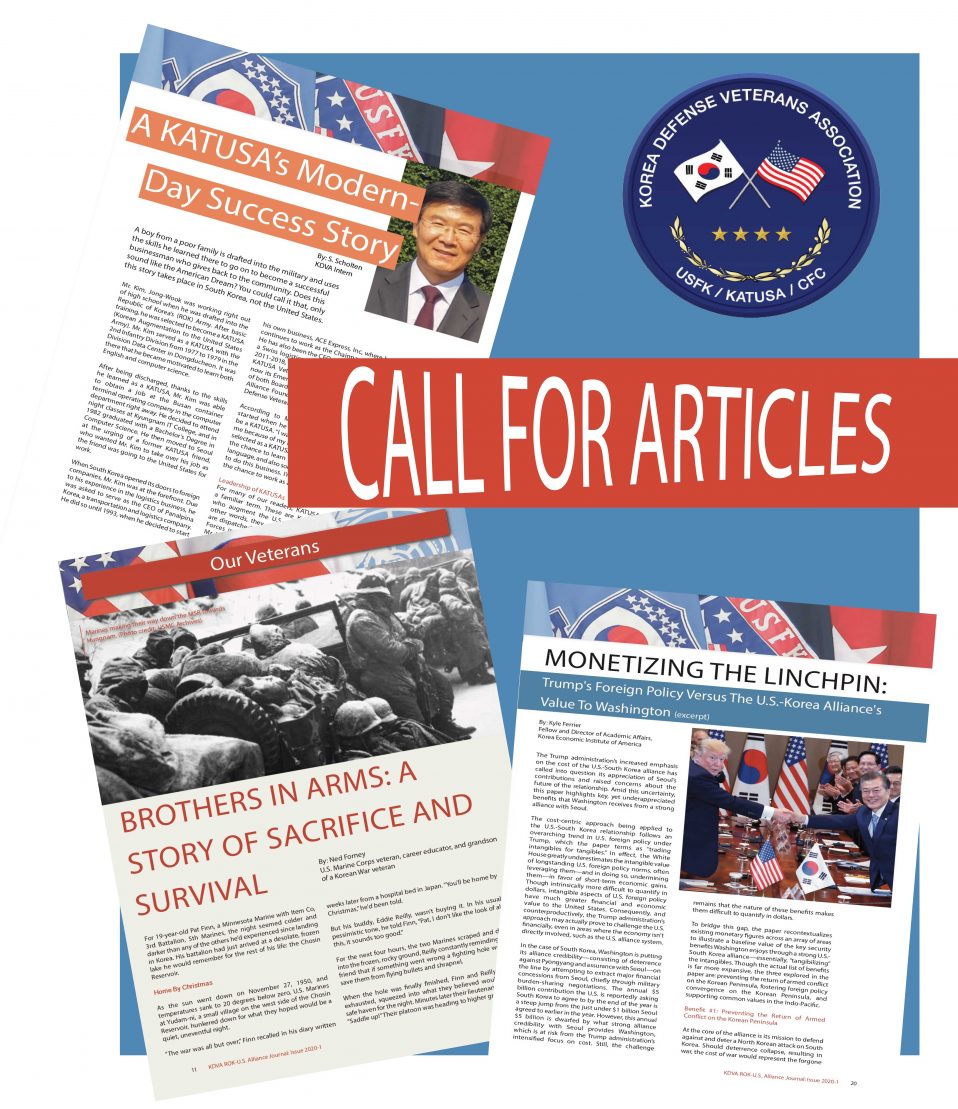
Call for Articles!

Submit your articles for KDVA’s 2020 3rd Quarter ROK-U.S. Alliance Journal by June 5. The Journal will be published in early July. 

The digital journal features stories and articles by KDVA members and supporters of the ROK-U.S. Alliance. It allows our members and supporters a way to voice their expertise and opinions that add to discussions about the Alliance.

The journal will go to our members, our partner organizations, potential sponsors, Alliance experts in the ROK and U.S. governments, and U.S. and ROK think tanks.

Submission Guidelines: 

  • Articles must be submitted in English.
  • Topic areas are: 
    • Veterans
    • Security and Strategy
    • Korean and American Culture
    • Serving in Korea
  • Articles should be less than 1,500 words, 1,000 words if submitting photos for your article.
  • If your article is longer, please indicate what parts you would like us to publish and provide a link or contact info where our readers can get the full article or story.
  • If providing photos, please provide photo captions and photo credits. Photos should be sent in separate attachments and be in jpg. or png. format. 


Please send any questions or articles to kdva.journal@gmail.com by June 5. If your articles are selected for publication, we will contact you for further steps.


Check out KDVA’s 1st Quarter ROK – U.S. Alliance Journal. – Click here.
Read more

KDVA is Hiring! Position: Executive Assistant

The Korea Defense Veterans Association, a nonprofit organization based in northern Virginia, is looking for an experienced, reliable, and task-oriented part-time Executive Assistant. The Executive Assistant will work directly with senior executives and will be responsible for performing a number of administrative duties.  The ideal candidate is highly self-motivated, professional, and capable of managing their work load and prioritizing tasks.  This position is 100% remote with flexible four-hour workdays, Monday-Friday.  This is an excellent opportunity to join a growing organization with competitive compensation.

Main Duties and Responsibilities.

  • Support KDVA executives with administrative support.
  • Manage tasks and deadlines to ensure leaders know important tasks and meet deadlines; provide reminders and follow-up.
  • Coordinate executive communications, including taking calls, responding to emails, drafting letters, and working with KDVA members, partners, supporters, and donors.
  • Prepare internal and external organizational documents.
  • Schedule meetings and appointments.
  • Coordinate and manage travel itineraries.
  • Coordinate and support KDVA events in the Washington, DC area that take place outside of the work place, such as social and professional networking events, fund-raising events, banquets, and professional conference events.
  • Coordinate with the KDVA staff in South Korea to support their activities.
  • Maintain an organized filing system of paper and electronic documents.
  • Attend board meetings and other meetings, and prepare executive summaries and minutes.
  • Coordinate with external vendors (lawyers, accountants, website and social media manager, etc.).
  • Implement processes and policies for efficiency, quality control, and compliance.
  • Maintain a high level of confidentiality.
  • Take on special projects.

Required Skills.

  • Experience as an Executive Assistant reporting directly to senior leaders.
  • Have a support mindset. Understand the work expectations of KDVA’s executives and be committed to making their work more effective.
  • Resourcefulness and adaptability. Find creative solutions; find information and solutions with little direction; and adapt to changing priorities.
  • High work standards. Have good attention to detail and be highly organized.
  • Excellent communication. Have clear, concise, and professional written and verbal communication skills.
  • Initiative and motivation. Be a self-starter; highly responsive with excellent follow-through and follow-up; and work independently.
  • Planning and deadline driven. Plan strategically, prioritize, and organize tasks to achieve objectives.
  • Team-minded. Be friendly, professional, and respectful in working with KDVA teammates.
  • Advanced Microsoft Office skills, with an ability to become familiar with Member365 programs and software.
  • Have your own reliable computer with web camera and antivirus software, high-speed wireless internet, and smart phone.

Preferred Skills and Experiences.

  • Interest in the ROK-U.S. Alliance and the KDVA mission.
  • Working knowledge of the ROK and U.S. military, foreign policy, corporate, and government or academic communities.
  • Worked or lived in South Korea is desirable but not required.
  • A bachelor’s degree is great but not required if you do amazing work.
  • Accounting skills would be great.
  • Korean speaker is a plus.
  • Department of Defense or Military spouses are encouraged to apply.

Work Hours.

  • Work is 100% remote in a four-hour workday, during core business hours, 8:00 am to 5:00 pm, Monday-Friday. KDVA prefers 9:30 am to 2:00 pm, but it is negotiable.
  • There is some flexibility in work hours as long as deadlines are met.
  • Be available to support occasional special events outside of the work place, such as social and professional networking events, fund-raising events, banquets, and professional conference events.

Location Requirement.

  • Must reside in the Washington, DC metro area – there is no relocation expense.

Compensation Range.

  • The total compensation is $35,000.
  • Fifteen vacation days.
  • KDVA observes all U.S. federal holidays.
  • No other compensation or benefits.

Resumes accepted until 4:00 p.m. EST on January 9, 2020 at:  eaposition.kdva@gmail.com.

The employer does not discriminate against any candidate on the basis of age, race, color, religion, disability, sex, national origin, or veteran status.

Read more

Quarterly Journal Beginning in January 2020

Voice Your Expertise & Opinions

New KDVA Quarterly Journal Beginning in January 2020

The digital journal will allow our members another volunteer opportunity to voice their expertise and opinions that add to discussions about the Alliance.  The journal will go to our members, our partner organizations, potential sponsors, Alliance experts in the ROK and U.S. governments, and U.S. and ROK think tanks.
 
Your articles in English about the ROK-U.S. Alliance are welcome until 29 November 2019.  Please send any questions or articles to kdva.journal@gmail.com.  If your article is selected for publication, we will contact you for further steps.
 

We would also like to hear what you would like to call the journal – just as a member suggested “Unsung Heroes” for our new monthly newsletter.
 
Thank you and “Together for the ROK-U.S. Alliance!”

Read more