From My Service in Korea

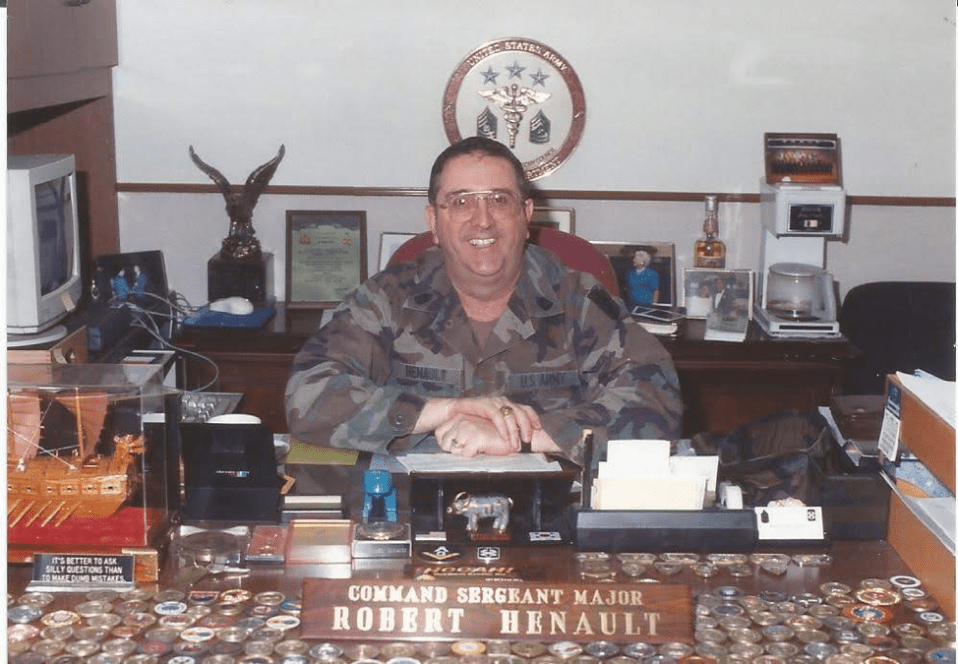
Bob Henault – From My Service in Korea, I learned…

From My Service in Korea, I learned…

Bob Henault

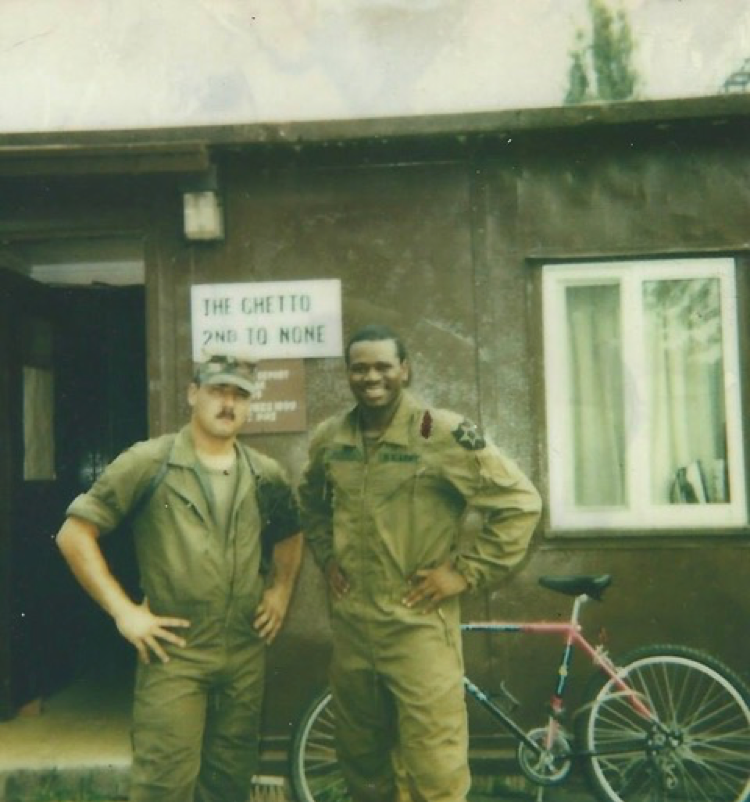
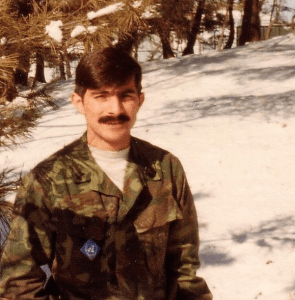
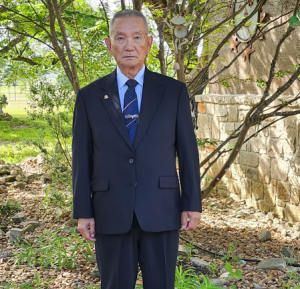
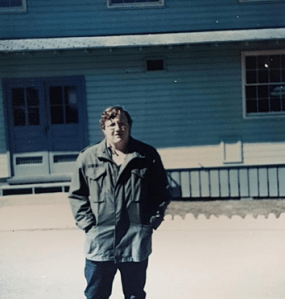
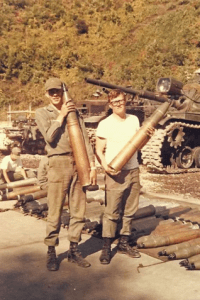
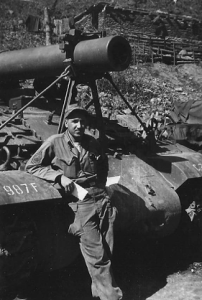
I arrived in Korea in April 1974 at Osan AFB and was transported to Camp Coiner and was further assigned to the Military Mail Terminal at Kimpo Airfield. Our barracks were near the passenger terminal and Korean Airlines would park their 2 leased NWA 747s on the corner of our barracks. I walked out the gate a few days later and met an elder Korean gentleman, who owned the small corner grocery and spoke English, as he lived in the USA for many prior to retirement and moving back to Korea. He taught me so much about Korea and the Korean people, that I felt at home from that day on.

After 3 months at Kimpo, our unit moved to Camp Humphreys and on weekends I would travel to different places around the area, but realized quickly that I needed a translator. After 2 months, I was told that I would be moving again, this time to Camp Ames, near Daejeon as the NCOIC of the Post Office on base. Second day there I met a KATUSA MP who asked to play tennis with me, and that day my life changed. I would ask his NCOIC if it would be possible for him to show me places in Korea on weekends that he was off, and he agreed, so several times a month we would visit places with Korean history and I started loving Korea even more.

At Christmas in 1974 he asked me to visit his family with him and I agreed when I met his parents and 5 beautiful sisters, I knew I was in heaven. The family had a Peace Corps volunteer living with them from 1964 to 1972 and they taught the family English, so all were able to speak a little English I started falling in love with one of his sisters, and even told my best friend I met my future wife. In February I asked their father if I could take his daughter to a movie and he said yes, and my courtship of his daughter began. At the end of March, I reenlisted and because I would have to leave for school, I asked permission to marry his daughter and was told if she agreed I had his permission. In April she said yes, so we made arrangements for her to travel to the USA on a fiancé visa when my school was completed and we married in November of 1975 (48 years). And stayed a Walter Reed for 10 ½ years.

In 1986 I was again stationed in Korea as 1SG with the Veterinary Service of 18th MEDCOM in Seoul and since we were responsible for all Veterinary support on all US bases in Korea I traveled to all areas in Korea from the Sea to the DMZ and became an expert on roads and trains system throughout Korea. In 3 years, I saw more of Korea than 85% of the population of Korea. We spent 3 wonderful years in Korea but again had to leave for a school.

In 1993 we arrived back in Korea again as CSM of a Medical Battalion responsible for all Medical clinics on Army bases, from the Sea to the DMZ, and again drove, trained, or flew all over Korea. This time in Daegu for 2 years, before being transferred to a Dental Battalion in Seoul in 1995, responsible for all Dental Clinics at Army bases from the Sea to the DMZ. In 1997 I was selected as the 18th MEDCOM CSM and now had all Army Medical, Dental, and Veterinary responsibilities in Korea.

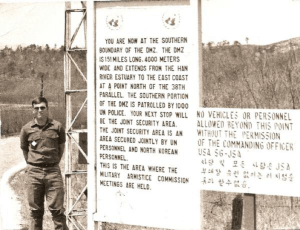
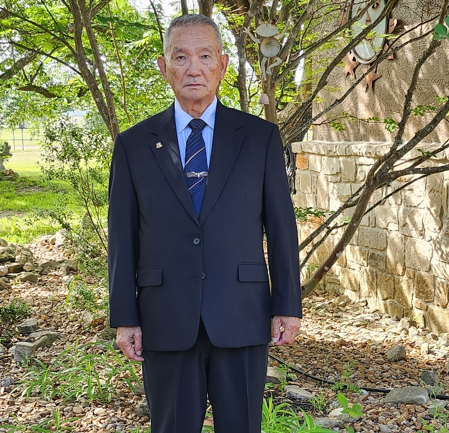
In 1999 I retired from the Army and was fortunate enough to be selected for a Department of the Army position with the United Nations Command Military Armistice Commission (UNCMAC) and for the next 15 years was able to enjoy the greatest job I ever had. Allowing me a total of 26 years in Korea and learning how wonderful the people, history, and the country are.

Naneum Hangup-in-ida

What did you learn from serving in Korea? Let us know –

Sharing your experiences from serving in Korea can be a powerful way to connect with others who have had similar experiences. By sharing your story, you may be able to help others who are currently serving in Korea or who are preparing to do so. You can share insights about the culture, the people, and the challenges you faced while serving. Your story can also help to shed light on the sacrifices that service members and their families make in order to protect our freedoms. So, if you have a story to share, we encourage you to take the time to put it down in writing and send it to KDVA.MyServiceInKorea@gmail.com along with any photos that help to tell your story.


READ MORE STORIES HERE.
Read more

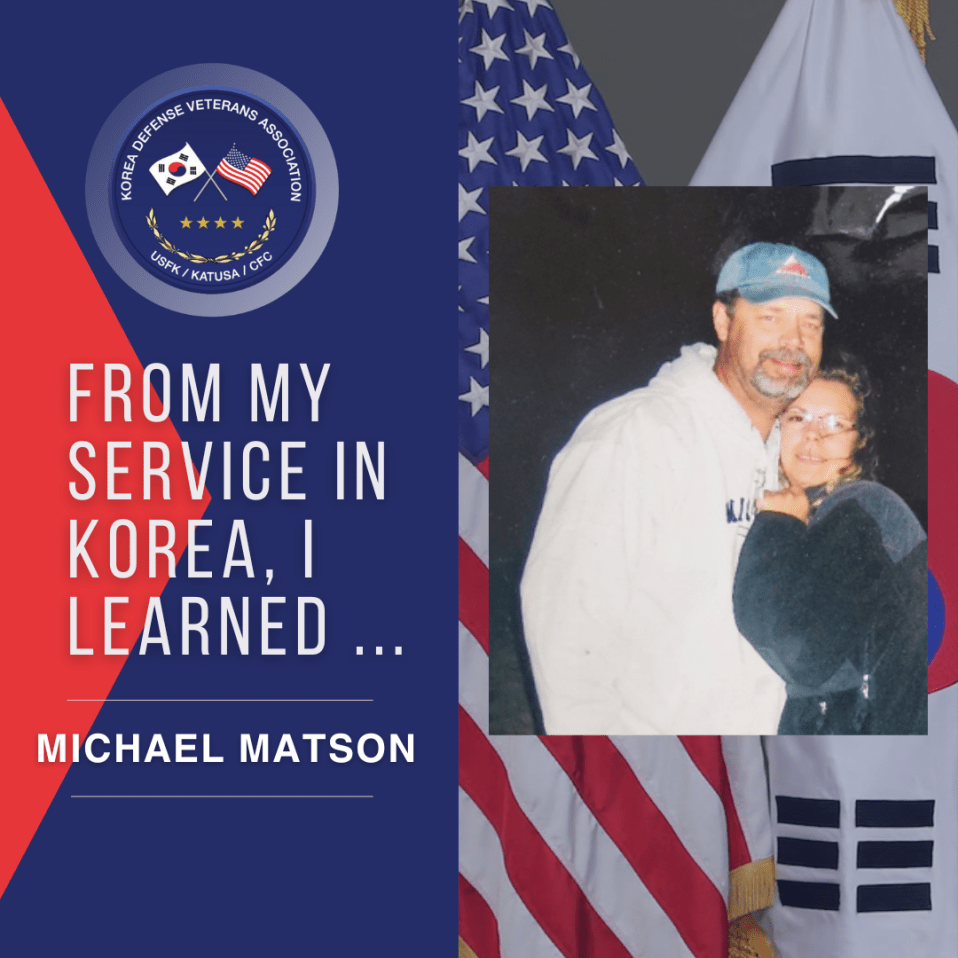
Michael Matson – From My Service in Korea, I learned…

From My Service in Korea, I learned…

Michael Matson

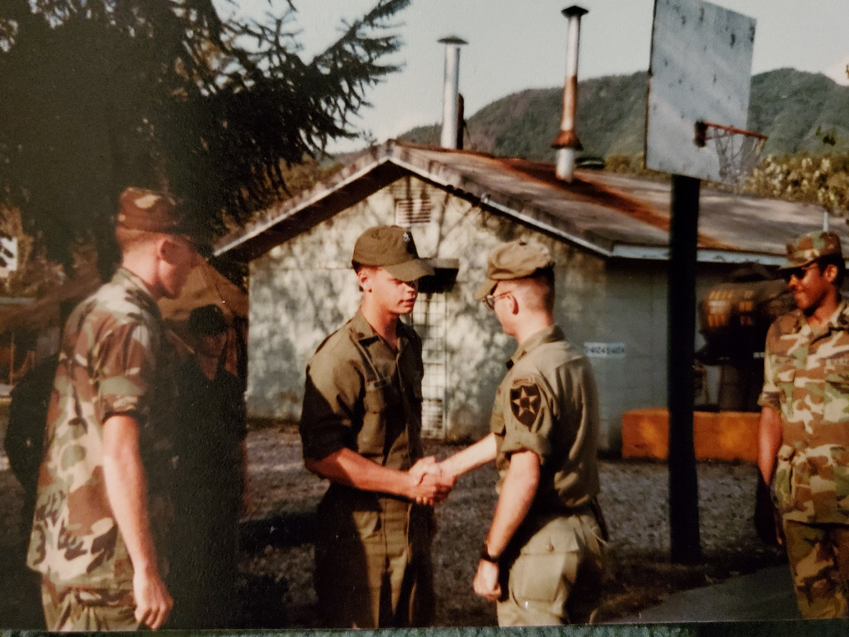
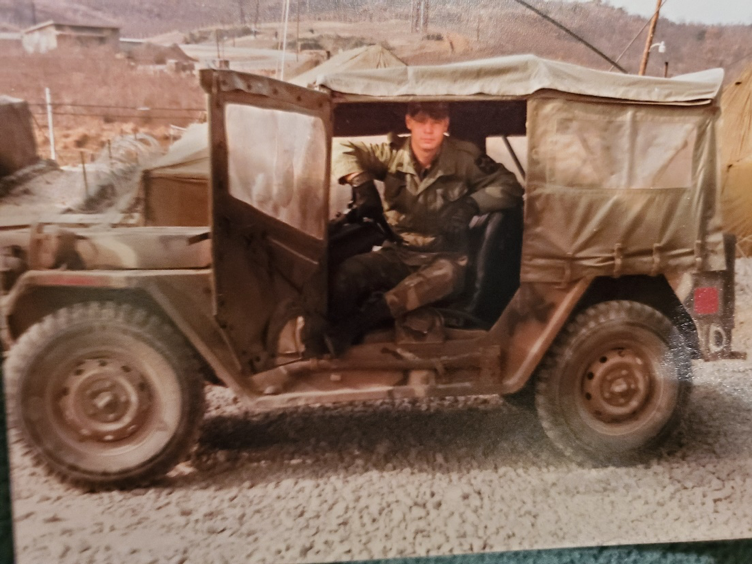
My time in Korea started in Dec 82 when I was sent from CSC 2/39th Inf Ft Lewis, Washington to CSC  1/38th Inf Camp Hovey, 2nd Inf Division. Being in a front-line Infantry unit during the cold Korea winter had a lot of challenges. We trained year-round but winters were spent pretty much in the field.

In Sept 83, our unit deployed North to defend the DMZ, manning the guard posts and conducting ambush patrols within the sector the U.S. was responsible for. I spent the majority of my time on GP Collier doing my job as a tow gunner using our gun sights, observing and documenting North Korean movements and activities both day and night.

Serving in such a hostile environment as a 21-year-old was exciting, stressful, and rewarding, knowing were keeping the South Korean people safe. Having served with Korean Augmentation soldiers (KATUSA) was an incredibly rewarding experience. I befriended many KATUSAs and traveled throughout the country with them. I learned and was very appreciative of the Korean culture, which I still hold dear to this day.

I was in attendance when President Reagan gave the speech at Camp Liberty Bell in November. My squad and I were tasked to escort him down to Camp Liberty Bell from GP collier in front of his motorcade. We can be seen in the video of that day, over his right shoulder as he gave that historical speech.

My time in South Korea came to an end on Feb 25th, 1984, as I flew back to Oakland Army base and exited the service shortly thereafter. My time in South Korea was a very special time in my life and I was honored to support the mission of defending this wonderful country I grew to love.

Thank you for allowing me to share my story.

(SP 4) MICHAEL A MATSON


What did you learn from serving in Korea? Let us know –

Sharing your experiences from serving in Korea can be a powerful way to connect with others who have had similar experiences. By sharing your story, you may be able to help others who are currently serving in Korea or who are preparing to do so. You can share insights about the culture, the people, and the challenges you faced while serving. Your story can also help to shed light on the sacrifices that service members and their families make in order to protect our freedoms. So, if you have a story to share, we encourage you to take the time to put it down in writing and send it to KDVA.MyServiceInKorea@gmail.com along with any photos that help to tell your story.


READ MORE STORIES HERE.

Read more

Stan Fisher – From My Service in Korea, I learned…

From My Service in Korea, I learned…

Stan Fisher

I have been to Korea three times. The first was as a surprised and reluctant U.S. Army enlistee.

I left 18 months later frustrated by my Eurocentric education, determined to fill some of my knowledge gaps, and filled with admiration for the resilience and perseverance of the Korean people. Soon afterward, I enrolled in a master’s program with an emphasis on U.S. foreign relations with East Asia. The scarcity of reliable source materials in English on Korean history meant that China and Japan got the primary emphasis. I’ve worked over the past 61 years to fill in some of the gaps as more materials on Korea have become available in English.

My second trip was almost 50 years to the day from my departure in 1963. This time I was accompanied by my adult son adopted from Korea. My emphasis was mainly on revisiting some of my old haunts and doing some exploring with the help of the parents of some Korean children I had mentored in the U.S. The Korea I left was mostly gone. The traditional-style house we rented had become so rare that we were awakened one morning by chattering schoolchildren touring the area to see how their grandparents lived. Little of my remembered quaintness of Myeongdong’s alleys remained. I don’t recall a single working traffic signal in Seoul when I left. Now there were wide streets, wide pedestrian crosswalks, and enough cars to make pedestrians wary. Not a single jam-packed made-over Jeep was in sight, made redundant by an integrated and efficient bus and subway system heavily used by a well-dressed clientele. A road trip from Daegu to historic Gyeongju was in a Korean-built Hyundai sedan traveling on modern expressways across a countryside that lacked the laborers and thatched roofs of a half-century earlier. Hillsides and mountains that were bare when I was there are now heavily wooded.

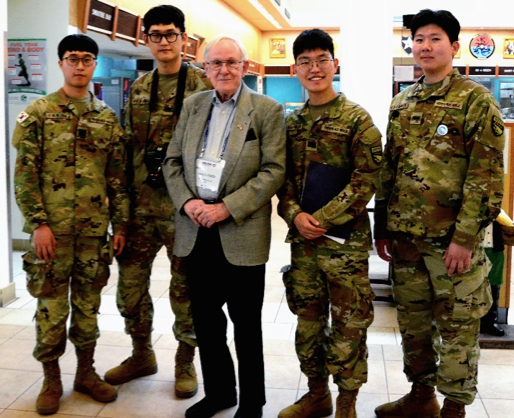
In 2023, a decade later, I was fortunate to be selected for the 2023 Revisit Program of the Republic of Korea’s Ministry of Patriots and Veterans Affairs. The six-day program (two are mostly spent on arrival and departure logistics) is open to veterans and a companion from the UN countries as a “thank you” for service in wartime and in peacetime. The program emphasizes the close collaboration between the armed forces of the Republic of Korea and the UN member nations. It included visits to Osan Air Base, Camp Humphreys, the Korean Military Academy, Seoul National Cemetery, and the DMZ, which is the bleakest place I’ve ever been. I came away with a strong impression of close collaboration and cooperation between the ROK and U.S. armed forces and a sense of partnership instead of the Big Brother-Little Brother relationship that prevailed during my first visit. The accommodations for our group of about 90 persons—veterans and companions—were first class in Gangnam, the upscale section of Seoul. The food in the hotel was outstanding, with a stupefying number of selections. Some of the dinner meals on the road were mostly Korean, but I think anyone could find something tasty with advice from the tour guides. All meals were cafeteria style except for one box lunch on the road. (There’s an International House of Pancakes on a lower level of the hotel we used and a Burger King is a couple of blocks away.) Forget about currency exchange rates. My American Express was accepted everywhere with no additional fees. And this particular hotel, through some magic, made converters unnecessary for phone chargers.

We were divided into three groups and each group assigned to one of three buses that were bedecked with banners identifying us a revisit participants and driven by drivers who apparently can back the buses through a keyhole. Each bus had a tour guide fluent in English and knowledgeable of Korean history and current affairs. For example, we learned that modern Korea has a problem filling its “3D jobs”—difficult, dangerous, and dirty. And then there were the volunteers—mostly actors between gigs, we were told—who attended to our needs and watched out for our safety, from ubiquitous hand sanitizers to water bottles to checking that all seat belts were fastened.

I was accompanied again by my son because all the family, including my wife, agreed that my wife’s back problems with chronic pain and limited mobility made the trip risky for her, especially the long flights back and forth. As a result of her decision, I was particularly attentive to the obstacles that might confront persons in my age group. (Oh, to be even 75 again!) My guess is that none of the veterans was younger than 40, and a few appeared to be in their 80s. One veteran in my group used a wheelchair when off the bus. His companion or one of the volunteers pushed him at each of the outings, and he seemed to fare just fine. A nurse also accompanied the group. She needed her skills when one member of the group injured his hand. My verdict on accessibility is this: If you do not have chronic pain, have a companion who can assist you with your personal needs in the hotel, and you can cope with the airport before and after the trip, fill out the application, and pray to be selected. Every veteran deserves at least five days of being pampered and catered to.

As for me, I obviously long ago embraced the catch phrase we heard everywhere from the U.S.

military in Korea: 같이 갑시다! “We go together”


What did you learn from serving in Korea? Let us know –

Sharing your experiences from serving in Korea can be a powerful way to connect with others who have had similar experiences. By sharing your story, you may be able to help others who are currently serving in Korea or who are preparing to do so. You can share insights about the culture, the people, and the challenges you faced while serving. Your story can also help to shed light on the sacrifices that service members and their families make in order to protect our freedoms. So, if you have a story to share, we encourage you to take the time to put it down in writing and send it to KDVA.MyServiceInKorea@gmail.com along with any photos that help to tell your story.


READ MORE STORIES HERE.
Read more

Oscar Russell – From My Service in Korea, I learned…

From My Service in Korea, I learned…

Oscar Russell

(1991-1992)

Before deploying to Korea

During 1991, I was with the 3rd ACR. We were deployed to Kuwait in support of Operation Desert Shield/Desert Storm. In one action my Squadron was attacking the Ar Rumayia Airfield. I quickly used direct fire to engage and destroy an Iraqi Republican Guard D-30 Artillery Piece and captured 4 Republican Guards making them my prisoners. I was awarded an ARCOM with V device for Valor for this action. In June of 1991, I was awarded the “Order of the Spur”.


After performing combat duty in the Gulf War

I was reassigned to Camp Casey in Korea. My unit was Co. D, 2nd Battalion, 72nd Armor. One evening I left the local watering hole and was on my way back to the barracks. On the way I noticed this little girl. She was black, and I thought it odd for her to be on the streets this late. I approached her and asked her if she lived nearby. The child responded in Korean language, and this is when I realized she was Amerasian. She spoke little broken English. I decided to follow her to make sure she would be safe.

She entered an orphanage. Once inside and safe, I continued to my barracks. The thought of that little girl haunted me. I was determined to see if I could help. The next opportunity I went to the orphanage to offer whatever help I could.

My offer was initially met with caution but as time went by, they (people running the orphanage) became increasingly trusting in me to the point where I would read the kids bedtime stories and help tuck them away. The kids really looked forward to my visits, and I was tackled every time I walked in the door.


Thanksgiving

At Thanksgiving I marched the entire troop of orphans to the Battalion’s Dining Facility. As we approached the gate, the guard hesitated for a split second then realized, my company were just kids. I had 4 holding tight to one arm, 4 holding tight to the other arm, and one on the back of my neck. They had never been on base before, and I was determined to get them a meal and I had extra money.


The Mess Hall

When we walked into the hall all eyes were on us, it got quiet.

I expected to pay for each meal out of my own pocket. Then as I was taking out my wallet, one by one, the soldiers in the Battalion came up to the head count and paid for their meal. They came by our table and started interacting with the children.

I noticed some of the soldiers tearing up only to be followed by an outburst of fun and laughter. They wanted to know everything about the kids and how they could help. Shortly after, they started trickling into the orphanage.


Christmas

With Christmas coming, I wrote home asking friends and family to send clothes, books, crayons, and anything they could spare. The outpouring was magnificent. I brought the kids to the Base for Christmas dinner. This time, three on one arm, three on the other arm, and one straddled around my neck. The mess Sergeant said, “these kids do not pay” and then a repeat of our visit from Thanksgiving transpired.

Going back to the world

I was soon coming up on my return to the U.S. I could not force myself to tell the kids good-bye. I only asked my fellow soldiers to keep with the tradition and to help the children the best they could.

My chain of command became aware of my kindness and generosity.

I was awarded a Certificate of Appreciation from the Board of Governors of the USO, and $200 which I spent every penny on the kids. I received my third ARCOM for Meritorious Service and Volunteer work while assigned to the unit.

As I transitioned to go back stateside, I noticed soldiers that I had informed of the Orphanage were spending more time with the kids, so I slowly disengaged without saying goodbye.

I was also picked to spend time with a host family.

My tour of Korea was a learning experience, it was priceless.

If I could do it all over again,  I would have held my kids one last time and said goodbye.


What did you learn from serving in Korea? Let us know –

Sharing your experiences from serving in Korea can be a powerful way to connect with others who have had similar experiences. By sharing your story, you may be able to help others who are currently serving in Korea or who are preparing to do so. You can share insights about the culture, the people, and the challenges you faced while serving. Your story can also help to shed light on the sacrifices that service members and their families make in order to protect our freedoms. So, if you have a story to share, we encourage you to take the time to put it down in writing and send it to KDVA.MyServiceInKorea@gmail.com along with any photos that help to tell your story.


READ MORE STORIES HERE.
Read more

Enoch Ibarra – From My Service in Korea, I learned…

From My Service in Korea, I learned…

Enoch Ibarra

US Navy

(1976 – 1978)

My first visit to Korea came shortly after my twenty first birthday, on assignment as an US Navy hospital Corpsman.

Having never been to Korea, I didn’t know what to expect and knew very little about the country at the time.

As a member of a very small US Marine unit, attached to a much larger Amphibious Ready Group, it gave me the opportunity to see quite a bit of the country during that first visit.

I was privileged to travel from Pusan to Seoul, and on to Imjingak with a fellow platoon member, and had the privilege of experiencing Korea at my own pace.

After that, my unit reported to the Korean Marine Base at Pohang where we trained side by side with some of the Republic of Korea’s elite Marines.

At Pohang I learned cold weather survival, amphibious raiding, and mountain warfare tactics.  I was immediately impressed by the discipline and dedication of the ROK Marines.

During my time off duty, I had the privilege of being invited into the homes of local people who were immediately welcoming and friendly.  It was through the influence and example of these friends that I gained a deep love for Korea as a nation, and for its people.

Through many of those people who became my friends, I was able to learn much about the culture of the Republic of Korea and some of its traditions and customs.

Nearly a year later, I returned to my unit’s home base in Okinawa and prepared to be sent to a unit in Hawaii, never expecting to have an opportunity of being able to return to Korea.

Almost exactly a year later, an opportunity presented itself to be able to return to Korea.  And, through some difficult negotiations I was able to convince my commanding officer to authorize my return to the Republic of Korea for my last military deployment.

At the time, I knew very little about the actual location or nature of the duties involved.  But I looked forward to this assignment with excitement and great expectations because it would allow me the opportunity of returning to Korea.

Within a couple of weeks of reporting to the headquarters of the Commander of Naval Forces Korea, I found myself assigned to the demilitarized zone, working alongside Army medics of the Joint Security Area at Pan Mun Jom.

There I got a first-hand look at some of the military and political challenges facing the nation of Korea.  It also gave me the privilege of working with young soldiers of the ROK Army who were serving with the United Nations Command.

Through my service in Korea, I learned of its rich history, and the dedication and loyalty of the Korean people to their great nation.  It gave me a deep and abiding respect and love for the Republic of Korea and its people.

From my time spent with Korean community members, military and world leaders I gained a deep appreciation, love and respect for the Republic of Korea and the Korean people.


What did you learn from serving in Korea? Let us know –

Sharing your experiences from serving in Korea can be a powerful way to connect with others who have had similar experiences. By sharing your story, you may be able to help others who are currently serving in Korea or who are preparing to do so. You can share insights about the culture, the people, and the challenges you faced while serving. Your story can also help to shed light on the sacrifices that service members and their families make in order to protect our freedoms. So, if you have a story to share, we encourage you to take the time to put it down in writing and send it to KDVA.MyServiceInKorea@gmail.com along with any photos that help to tell your story.


READ MORE STORIES HERE.

Read more

Richard Hayward – From My Service in Korea, I learned…

From My Service in Korea, I learned…

Richard Hayward

1974 to 1976

I enlisted in the US Army and served my entire enlistment assigned to Camp Kitty Hawk, JSA, Joint Security Area. The JSA is the furthest North to the DMZ and our motto is, ‘In Front of Them All’. I was assigned to the escort unit and became the personal driver for the Commander of JSA. As the Commanders driver I would drive the Commander and a Major General assigned to the United Nations Command to the MAC meetings (Military Armistice Commission) that were held in Panmunjom. There are three blue United Nations buildings that sit right on the MDL, Military Demarcation Line which divides North Korea & South Korea. At the meeting site there would be KPA, Korean People’s Army soldiers, United Nations soldiers to include US Army and the news media. Inside the center blue building is where the North Korean representative, a KPA General with his Chinese ally meet with the United Nations representative a US Major General. At the time of these meetings, you can expect the North Korean soldiers to try and start some type of provocation. On June 30, 1975, Major William D. Henderson our Deputy Commander for JSA was viciously attacked by the KPA and the North Korean media. I saw the KPA and US Army soldiers scuffling in between two of the buildings. The KPA had their hands on their holstered pistols as they were running up to what became an all-out fist fight. One of the platoon sergeants had me bring my vehicle around to evacuate the General. As I pulled up with the vehicle the area was packed with people. The fighting had stopped but there was huge tension between both sides as I slowly pulled up. Our guys formed a secure line to my vehicle to evacuate the General and my Commander.  Once in the vehicle I drove them back to the helipad. Major Henderson was medevac to Seoul and later to Walter Reed with a crushed larynx.

My driving would lead me all over South Korea with many trips to Seoul driving US Senators, diplomats and many other dignitaries. This opened many opportunities to meet the South Korean people who I found to be extremely friendly and grateful for our presence. I drove other officers from our unit from time to time and one was Captain Arthur Bonifas, my company commander. Capt. Bonifas was the most personable person I had the pleasure of driving. Shortly after I left Korea and the service, Captain Bonifas was axed to death by the KPA along with Lt. Mark Barrett. The Army renamed Camp Kitty Hawk to Camp Bonifas.  I share this to honor the incredible sacrifices made by Captain Arthur Bonifas, Lt. Mark Barrett. And on November 20, 1974, US Navy Commander Robert M. Ballinger who was killed while checking out a booby-trapped spy tunnel and seriously wounding US Marine Major Nastase. Keeping their memory alive is important for all of us. Witnessing the differences between the North and South is striking and a reminder on the cost of keeping a free society free.

In Front of Them All,

Richard Hayward

Me with KPA checking me out.

Escort Crew for JSA.

Me next to my vehicle.


What did you learn from serving in Korea? Let us know –

Sharing your experiences from serving in Korea can be a powerful way to connect with others who have had similar experiences. By sharing your story, you may be able to help others who are currently serving in Korea or who are preparing to do so. You can share insights about the culture, the people, and the challenges you faced while serving. Your story can also help to shed light on the sacrifices that service members and their families make in order to protect our freedoms. So, if you have a story to share, we encourage you to take the time to put it down in writing and send it to KDVA.MyServiceInKorea@gmail.com along with any photos that help to tell your story.


READ MORE STORIES HERE.
Read more

Eiji Teragouchi – From My Service in Korea, I learned…

From My Service in Korea, I learned…

Eiji Teragouchi

1965 – 1966

During my time stationed at Fort Carson, Colorado, in January 1965, I received orders to relocate to South Korea for a 13-month tour of duty. In February of the same year, I found myself enroute to Kempo Air Force Base, where I would begin my assignment. Upon arrival, we were directed to a military bus where we received our individual assignments for the next 13 months. I was assigned to the 5th CAV/1st CAV Division and 2nd Infantry Division mid 1965, near Paju, South Korea.

Leaving behind the cold of Colorado, I soon discovered that the winter chill near the DMZ was far more intense. As I acclimated to the cold temperatures, I also experienced the onset of the monsoon season. Despite these seasonal challenges, our duties often involved late-night searches for North Korean infiltrators crossing the frozen Imjin River, especially during the winter months. We, American soldiers and KATUSA (Korean Augmentation to the United State Army) conducted night foot patrols along the south side of the Imjin River’s dirt path, braving the elements.

During the warmer months, both American soldiers and KATUSA troops collaborated to construct concrete bunkers atop the mountains. It was during this time that I immersed myself in Korean culture, learning over 100 Korean words and the traditional song “ARIRANG” from my KATUSA counterparts.

One afternoon, while exploring a local village, I had the opportunity to observe elderly women making winter kimchi. With their permission, I sat and watched as they prepared the spicy dish, realizing that its heat came from the addition of copious amounts of crushed hot peppers. Throughout my time in South Korea, I forged many friendships with the local community.

Upon returning to the United States, I found myself working in Pittsburgh, Pennsylvania, where I had the pleasure of meeting a Korean gentleman who was a former two-time Korean Judo Champion, Mr. Kim. Our friendship blossomed as we shared stories and bonded over our shared experiences. It was during these gatherings that I would often use Korean words and join Mr. Kim in singing “ARIRANG.” Despite moving on to different projects, our friendship endured for over 50 years.

I have included pictures of me, Eiji – sp4, in the pictures with fellow soldiers, American and KATUSA.


What did you learn from serving in Korea? Let us know –

Sharing your experiences from serving in Korea can be a powerful way to connect with others who have had similar experiences. By sharing your story, you may be able to help others who are currently serving in Korea or who are preparing to do so. You can share insights about the culture, the people, and the challenges you faced while serving. Your story can also help to shed light on the sacrifices that service members and their families make in order to protect our freedoms. So, if you have a story to share, we encourage you to take the time to put it down in writing and send it to KDVA.MyServiceInKorea@gmail.com along with any photos that help to tell your story.


READ MORE STORIES HERE.
Read more

Dave Nutter – From My Service in Korea, I learned…

From My Service in Korea, I learned…

Dave Nutter

1970’s & 1980’s

My Name is Dave Nutter, I retired from the Army in 1993 as a SFC with 20 years of service. I quit high school the summer before beginning my senior year and enlisted in the Army in September of 1973, one day after my 17th birthday. My father a Command Sergeant Major who had only been back from Vietnam a little over a year only asked if I was sure that was what I wanted to do. I arrived in Korea in April of 1974. I was assigned to C Company 1/72 armor and began as the driver on the platoon sergeants’ tank; going to the field for a month for gunnery/tank crew qualifications a few days after I reported in. When my high school class was graduating, my unit was on Chipori range firing tank table VIII.

17 is an interesting age, not quite a boy and not quite yet a man. During my 18 months in the 2d Infantry, I learned a lot about myself, structure, self-discipline, and teamwork. Many of those lessons, that took a while to take, and my experiences during my military service have served me quite well in life and the corporate world.

Quite honestly, the Army immediately post-Vietnam was quite a mess and the leadership had quite a challenge on their hands and 2d ID was no different except that we had General Emerson (Gunfighter) as the division commander. Who excelled in meeting those challenges. We spent an awful lot of time training, and I would guess that between us and 2/72 armor, we expended all the 105mm, 7.62mm and 50 cal ammo in the ammo dump at Tobong Son and kept the folks there quite busy with incoming shipments. The physical training was quite challenging as well, especially during the winter as PT was not canceled unless the temperature went below zero. For a period in the summer of 74 during the fuel shortage, we were also trained as infantry.

7 years later I was serving with the 38th ADA Bde on an isolated missile site applying those lessons. Much of military service is learning how to deal with sleep deprivation and that tour was no exception to the rule. In the last couple of months of that tour, my maintenance section was down to three people with a requirement to have 2 of us on the missile site 24/7. During the Cold War air defense units pulled their wartime missions. Hawk missile systems were in various stages of alert all over the world. Systems were up, and running, and manned 24/7, 365 days a year unless in a maintenance state. Maintaining that state of readiness is quite challenging for everyone in the unit from the clerks to the tactical control officers.

During both tours, I learned to love Korea and have said many times I would have been quite happy if I could have spent all my service there. Both times it was obvious that Korea was still recovering from the war. In 1981 progress was evident. I observed how resilient and resourceful the Korean people are. There is an old saying about slaughtering a pig and using everything but the oink. I am convinced they found ways to use the oink as well. Nothing went to waste that I saw. From the less fortunate souls we had out on our ranges trying to collect what metal they could from napalm casings to shrapnel and shell casings to the street merchants using discarded paper from the base as containers for the street food they sold. Things we should be doing in today’s throwaway world. All the people I met were exceptionally nice. There were many times when we traded our c-rations with the locals for Korean food. In 1981-1982 my friends and I made it a point to try and go off the beaten path where most Americans would not.

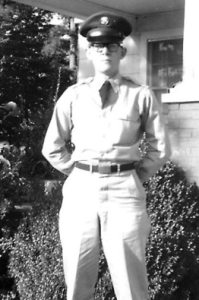
Interestingly many members of my family served in Korea. One of my father’s brothers was assigned to Korea in 1948. Dad spent almost the entire war in Korea arriving in the late summer of 1950, his unit was attached to the 2d ID and they were up north when the Chinese entered the war, he was with the units that had to run the gauntlet to get back south. His brother was a Marine WWII veteran who was in the reserves and was called up and arrived in Korea before my father, he was at the Chosin Reservoir, and I know that haunted him for the rest of his life. The picture below is of my father at age 22 just before the armistice.

When I was in Korea the 2d time, 81-82 my older stepbrother was assigned to 2d Aviation and stationed at Camp Casey, we did manage to spend one weekend together.

Having recently visited Korea in October, it is quite evident that the alliance between in U.S and Korea has revolved exponentially, growing stronger over the years. The changes I saw in Korea make me wish I could bring my father and his brothers to Seoul so they could see what they have been a part of.


What did you learn from serving in Korea? Let us know –

Sharing your experiences from serving in Korea can be a powerful way to connect with others who have had similar experiences. By sharing your story, you may be able to help others who are currently serving in Korea or who are preparing to do so. You can share insights about the culture, the people, and the challenges you faced while serving. Your story can also help to shed light on the sacrifices that service members and their families make in order to protect our freedoms. So, if you have a story to share, we encourage you to take the time to put it down in writing and send it to KDVA.MyServiceInKorea@gmail.com along with any photos that help to tell your story.


READ MORE STORIES HERE.
Read more

Robert Jenkins – From My Service in Korea, I learned…

From My Service in Korea, I learned…

Robert E. Jenkins

March 1953 – December 1956

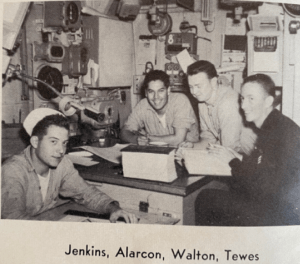
My name is Robert E. Jenkins.  I served in the U.S. Navy in the Korean War from March 1953 till December 1956.  I was in the waters around Korea on two different ships (USS Fechteler DDR870 and USS Isherwood DD520).  I was a radarman 3rd class.   It was the job of the radar crew to keep track of all the boats and planes in the area and to protect the aircraft carriers.  I learned a lot of responsibility and how to meet challenges.

I never set foot on the ground until this Revisit Korea program. So what an honor and opportunity for me to visit South Korea, especially since I have a grandson that lives in Seoul and teaches English.   I learned how much the Korean people honor our service to their country.  There were young people and their parents that wanted to shake my hand.  I was very impressed with how clean, beautiful and modern the country of South Korea is today. This trip was a dream of a lifetime and something I will always cherish.  I was treated with such honor.


What did you learn from serving in Korea? Let us know –

Sharing your experiences from serving in Korea can be a powerful way to connect with others who have had similar experiences. By sharing your story, you may be able to help others who are currently serving in Korea or who are preparing to do so. You can share insights about the culture, the people, and the challenges you faced while serving. Your story can also help to shed light on the sacrifices that service members and their families make in order to protect our freedoms. So, if you have a story to share, we encourage you to take the time to put it down in writing and send it to KDVA.MyServiceInKorea@gmail.com along with any photos that help to tell your story.


READ MORE STORIES HERE.

Read more

Bill Castro – From My Service in Korea, I learned…

From My Service in Korea, I learned…

Bill Castro

From my service in Korea, I quickly learned how to become a man of Men. Let me explain, I was 18 years old when I volunteered for service in the Far East Command, the government’s fancy name for service in the “Korean Police Action”. After 16 weeks of Basic Combat Training at Schofield Barracks Hawaii, graduating “Bravo 940” “Cum Laude”, I found myself landing at Haneda Airport, Tokyo, Japan where we were bussed to Camp Drake, the Main Replacement Depot for all assignments in the “Far East Command” and after a few days of loading us with Pile Jackets, Snow Boots, Winter Sleeping Bags and Oh yeah, Rifles with no Ammo, we were loaded unto a train to Sasebo, the southernmost Japan port and gateway to Pusan, Korea. The date was around the first week of January 1951.

After landing in Pusan, we were immediately, again, boarded onto Train Cars and sat all day without moving because, we were told, that the route we were supposed to travel on was in repairs after an attack on the train traveling before us. We all were disturbed the biggest part of the night with a Train that arrived late into the night and unloaded what seemed to us as bags of trash since they were throwing it from the top of train cars onto the platforms below. The next morning as we were heading out to breakfast with our mess kits and canteen cups, we saw that the contents in the bags were not trash but human bodies they were just unloaded and left there on the platforms and most were well on the way to decay where the stench was unbearable. We all turned around and headed to the other end of the train, most declaring, “So much for breakfast”. 3-4 days later we were in Suwan and the 3rd Infantry Division Replacement Center where we were further assigned and I went to Co. C, 1st Bn., 15th Regiment. My platoon, like the others, was extremely short-manned since they had just regrouped from being over-run and in re-treat (ops, I mean withdrawn) from the Chosin Reservoir in the North.

I was assigned as assistant B.A.R. man and carried the ammo for the B.A.R. Man. We were on a hill and the next day marched over heavy snow hills and lowland rice patties for 3 or 4 days with only the food we carried which ran out after 3 days. We had no contact that I could see with other allied units.

March 1951 with a B.A.R.

On the very early morning of the 4th day around 2 am, we were attacked and after 15 to 20 minutes under constant rifle and machine gun fire the B.A.R. man jumped out of the foxhole and left saying, we’re down here alone and can’t hold, let’s go up to the next higher position. I got so excited that when trying to put my rifle on lock, I accidentally removed the trigger housing and my rifle fell in two parts on the snow. I shouted to my partner to wait but he just kept moving on. By the time I finally dug up the two parts of the Rifle and trigger housing and put them all together the Enemy was all around my position firing all around so wildly that one of them fell into my hole with me, looked at me with a Burp gun in hand and jumped out yelling in Chinese, what, I don’t know. After that little incident, I got my wit together and stayed in the hole just firing all around, sometimes at shadows, sometimes at their white uniforms shown clearly with the help of a lighted flare from time to time. Daylight came all of a sudden, I was all alone with what seemed like dead bodies all over the place. My platoon Leader came up to me and said, “How come you didn’t follow your Gunner’s orders and moved your position” and I replied, “I thought we were supposed to remain and cover from this position you assigned us, Sir.”  He smiled and said, “Yes, you’re right.. and by the way, pick up the B.A.R. from my CP (CommandPost), you are now the B.A.R. Man for 2nd Squad. Two or three days later on, the offense attacked a hill around Uijeongbu I was bringing up the left rear of the point when Johnson, a young new replacement fresh from the States, started retreating on his own and upon passing me dropped and left the rifle. I picked it up and ordered my assistant, also fresh from the States but he followed orders to cover Johnson’s position. About a couple of hours or so later reaching the top of the hill and seeing our enemy now on the retreat I saw Johnson approaching my position and I handed him his rifle, which I was carrying along with my heavier B.A.R. The Squad Leader looked back at us and asked, “What happened?” and Johnson replied, “Well I was scared and was going back to the vehicles down the road when this guy yelled at me, “Hey you there, get your ass back up that hill to your outfit or so help me I’ll shoot you myself.”  The Man was not young or wearing a helmet instead he had this pile hat with Stars all around it and he looked like a huge giant. He scared me even more so I turned and hurried back.”

The next morning after successfully defending our position from a counterattack, at breakfast the squad Leader says, “Castro you now Assistant Squad Leader so give your BAR stuff to Johnson”….. Johnson became a pretty good B.A.R. Man, and wondered who that giant man was with the star-studded pile cap?

Several days later going through a village I heard the men shouting our Leader got hit and fell into this crater. I ordered Johnson to cover the rear field of fire I had and hurried up front to our fallen Leader, and he lays there, right arm slit open bone showing and bleeding profusely. I immediately applied a tourniquet and held it until the medics arrived. Our Platoon Lt. also arrived and told me, “You’re Squad Leader now, so get your men in order and stand by.” I always never get asked, just told and in less than 45 days in Combat, I am a Squad Leader, no longer a boy I am now responsible for the lives and actions of 9 men and our achieving success in all our combat missions. That my friend is the Mark of a Man. 1951-1952.

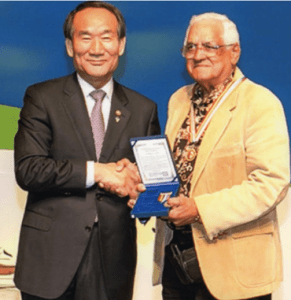
The Secretary of Veterans Affairs for South Korea

Then Gov. of Hawaii.


What did you learn from serving in Korea? Let us know –

Sharing your experiences from serving in Korea can be a powerful way to connect with others who have had similar experiences. By sharing your story, you may be able to help others who are currently serving in Korea or who are preparing to do so. You can share insights about the culture, the people, and the challenges you faced while serving. Your story can also help to shed light on the sacrifices that service members and their families make in order to protect our freedoms. So, if you have a story to share, we encourage you to take the time to put it down in writing and send it to KDVA.MyServiceInKorea@gmail.com along with any photos that help to tell your story.


READ MORE STORIES HERE.
Read more