From My Service in Korea, I learned…
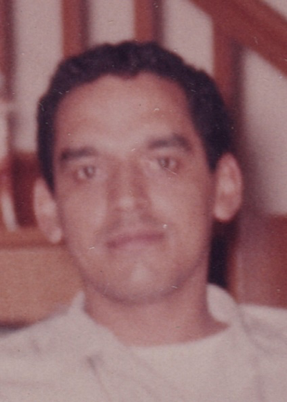
Bill Castro

From my service in Korea, I quickly learned how to become a man of Men. Let me explain, I was 18 years old when I volunteered for service in the Far East Command, the government’s fancy name for service in the “Korean Police Action”. After 16 weeks of Basic Combat Training at Schofield Barracks Hawaii, graduating “Bravo 940” “Cum Laude”, I found myself landing at Haneda Airport, Tokyo, Japan where we were bussed to Camp Drake, the Main Replacement Depot for all assignments in the “Far East Command” and after a few days of loading us with Pile Jackets, Snow Boots, Winter Sleeping Bags and Oh yeah, Rifles with no Ammo, we were loaded unto a train to Sasebo, the southernmost Japan port and gateway to Pusan, Korea. The date was around the first week of January 1951.
After landing in Pusan, we were immediately, again, boarded onto Train Cars and sat all day without moving because, we were told, that the route we were supposed to travel on was in repairs after an attack on the train traveling before us. We all were disturbed the biggest part of the night with a Train that arrived late into the night and unloaded what seemed to us as bags of trash since they were throwing it from the top of train cars onto the platforms below. The next morning as we were heading out to breakfast with our mess kits and canteen cups, we saw that the contents in the bags were not trash but human bodies they were just unloaded and left there on the platforms and most were well on the way to decay where the stench was unbearable. We all turned around and headed to the other end of the train, most declaring, “So much for breakfast”. 3-4 days later we were in Suwan and the 3rd Infantry Division Replacement Center where we were further assigned and I went to Co. C, 1st Bn., 15th Regiment. My platoon, like the others, was extremely short-manned since they had just regrouped from being over-run and in re-treat (ops, I mean withdrawn) from the Chosin Reservoir in the North.
I was assigned as assistant B.A.R. man and carried the ammo for the B.A.R. Man. We were on a hill and the next day marched over heavy snow hills and lowland rice patties for 3 or 4 days with only the food we carried which ran out after 3 days. We had no contact that I could see with other allied units.

March 1951 with a B.A.R.
On the very early morning of the 4th day around 2 am, we were attacked and after 15 to 20 minutes under constant rifle and machine gun fire the B.A.R. man jumped out of the foxhole and left saying, we’re down here alone and can’t hold, let’s go up to the next higher position. I got so excited that when trying to put my rifle on lock, I accidentally removed the trigger housing and my rifle fell in two parts on the snow. I shouted to my partner to wait but he just kept moving on. By the time I finally dug up the two parts of the Rifle and trigger housing and put them all together the Enemy was all around my position firing all around so wildly that one of them fell into my hole with me, looked at me with a Burp gun in hand and jumped out yelling in Chinese, what, I don’t know. After that little incident, I got my wit together and stayed in the hole just firing all around, sometimes at shadows, sometimes at their white uniforms shown clearly with the help of a lighted flare from time to time. Daylight came all of a sudden, I was all alone with what seemed like dead bodies all over the place. My platoon Leader came up to me and said, “How come you didn’t follow your Gunner’s orders and moved your position” and I replied, “I thought we were supposed to remain and cover from this position you assigned us, Sir.” He smiled and said, “Yes, you’re right.. and by the way, pick up the B.A.R. from my CP (CommandPost), you are now the B.A.R. Man for 2nd Squad. Two or three days later on, the offense attacked a hill around Uijeongbu I was bringing up the left rear of the point when Johnson, a young new replacement fresh from the States, started retreating on his own and upon passing me dropped and left the rifle. I picked it up and ordered my assistant, also fresh from the States but he followed orders to cover Johnson’s position. About a couple of hours or so later reaching the top of the hill and seeing our enemy now on the retreat I saw Johnson approaching my position and I handed him his rifle, which I was carrying along with my heavier B.A.R. The Squad Leader looked back at us and asked, “What happened?” and Johnson replied, “Well I was scared and was going back to the vehicles down the road when this guy yelled at me, “Hey you there, get your ass back up that hill to your outfit or so help me I’ll shoot you myself.” The Man was not young or wearing a helmet instead he had this pile hat with Stars all around it and he looked like a huge giant. He scared me even more so I turned and hurried back.”
The next morning after successfully defending our position from a counterattack, at breakfast the squad Leader says, “Castro you now Assistant Squad Leader so give your BAR stuff to Johnson”….. Johnson became a pretty good B.A.R. Man, and wondered who that giant man was with the star-studded pile cap?
Several days later going through a village I heard the men shouting our Leader got hit and fell into this crater. I ordered Johnson to cover the rear field of fire I had and hurried up front to our fallen Leader, and he lays there, right arm slit open bone showing and bleeding profusely. I immediately applied a tourniquet and held it until the medics arrived. Our Platoon Lt. also arrived and told me, “You’re Squad Leader now, so get your men in order and stand by.” I always never get asked, just told and in less than 45 days in Combat, I am a Squad Leader, no longer a boy I am now responsible for the lives and actions of 9 men and our achieving success in all our combat missions. That my friend is the Mark of a Man. 1951-1952.
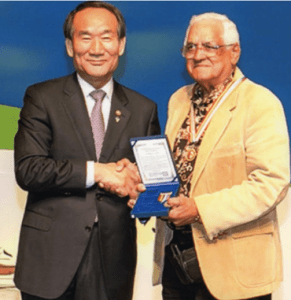
The Secretary of Veterans Affairs for South Korea

Then Gov. of Hawaii.
 What did you learn from serving in Korea? Let us know –
Sharing your experiences from serving in Korea can be a powerful way to connect with others who have had similar experiences. By sharing your story, you may be able to help others who are currently serving in Korea or who are preparing to do so. You can share insights about the culture, the people, and the challenges you faced while serving. Your story can also help to shed light on the sacrifices that service members and their families make in order to protect our freedoms. So, if you have a story to share, we encourage you to take the time to put it down in writing and send it to KDVA.MyServiceInKorea@gmail.com along with any photos that help to tell your story.
READ MORE STORIES HERE.

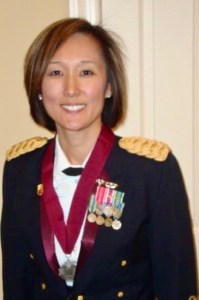
 My unit, the 568th Med Co, was a very unique in a sense it was a multi comp TOE unit consisted of US Army active duty personnel, Korean Service Corps (KSCs) and Korean Nationals (KNs). We didn’t have any KATUSAs assigned to 568th, however, our sister company, the 560th Medical Company did. I was assigned as one of the three Platoon Leaders at the 568th and within my platoon, I was in charge of about 30 KSCs, along with my platoon sergeant. The KSCs were unique in their skill sets as medics and civilian service members, fluent in both Korean and English. They were also senior in grade and time in service. They were well trained and skilled in various medical treatment and evacuation operations. I quickly gained a tremendous respect for them as I was a brand new Lieutenant who was their new leader. But I also faced some unique cultural challenges.
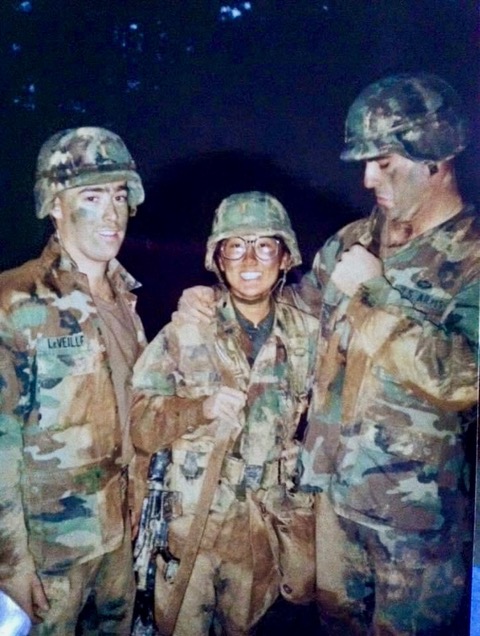 I was a 22 year old, Korean American, a female US Army Officer in charge of a group of very seasoned KSCs and this was their very first experience working for a woman, someone who was half their age, without much time and grade and very “green.” They didn’t really know what to expect from me, never mind taking orders from me. I quickly realized this was a very difficult situation for the KSCs, who have traditionally reported to male leaders in a male dominant society and culture. I also realized that respect is not simply given but earned and this was a two way street. I had to first prove to them that I respected their contributions and commitment to the unit’s mission. We were able to do this through various field training exercises, team building and leadership training. Over time and collaborations, we were able to build mutual trust, respect and acceptance of each other. We accomplished many missions and tasks throughout the 12 months we spent together at Camp Humphreys. I can honestly say that by the end of my tour in Korea, we became family.
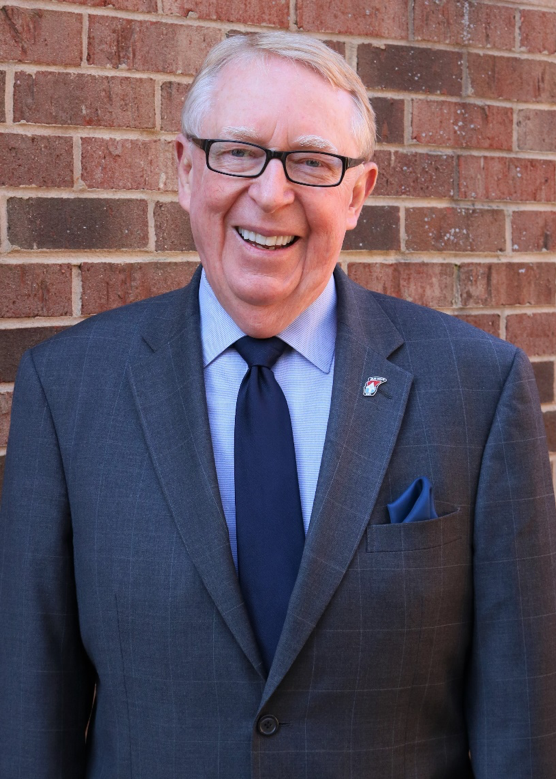
 Army Signalman, Mike Reynolds, who was killed in my company area of the DMZ while stringing wire to our Guardpost Gladys, September 27, 1968 and new 2LT James Weeks, killed on his first patrol into the DMZ on July 20, 1968, both had family members reach out to me and we have become friends. I found Michael Rymarczuk’s mother, brother and daughter in Philadelphia and we became friends. I told Michael’s daughter, Micki, that her father was my DMZ Brother. She calls me and several of her father’s other Charlie Company, 3rd platoon buddies, her “uncles”, because her father, who was killed before he could hold his baby girl, was our brother. Earl Jeffery, WIA July 30, 1968 , also in my 3rd platoon, was flown home after being wounded and we never heard from him again. I found his daughter several months ago in Dennison, Texas. She told me, her father had just died last year and that even though he had survived his multiple wounds from that long night, he had limped all his life and had nightmares. I wish I had been able to find Earl before he died. I carry my DMZ brothers’ memories with me every day. I am proud we helped defend the people of the Republic of Korea from North Korean aggression. Whenever I have to make a public speech, or try a jury case in court, or have a serious doctor’s appointment, I carry my Imjin Scout patch, which I removed from my fatigue shirt, in my pocket. I would not trade that 55 year old faded green cloth patch for any other medal or military award. It says that I served in dangerous situations with some of the best men I have ever met. David Benbow, Statesville, NC (formerly Sgt (E-5) David Benbow, Charlie Company, 3/23rd Infantry, 2nd Infantry Division.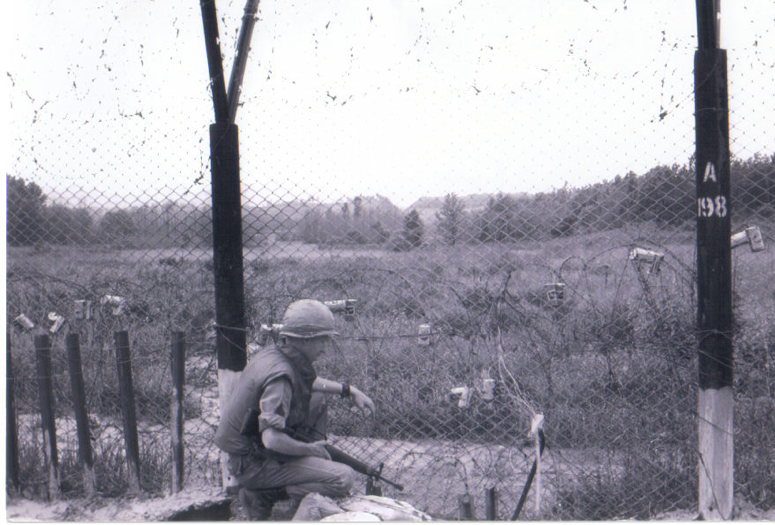


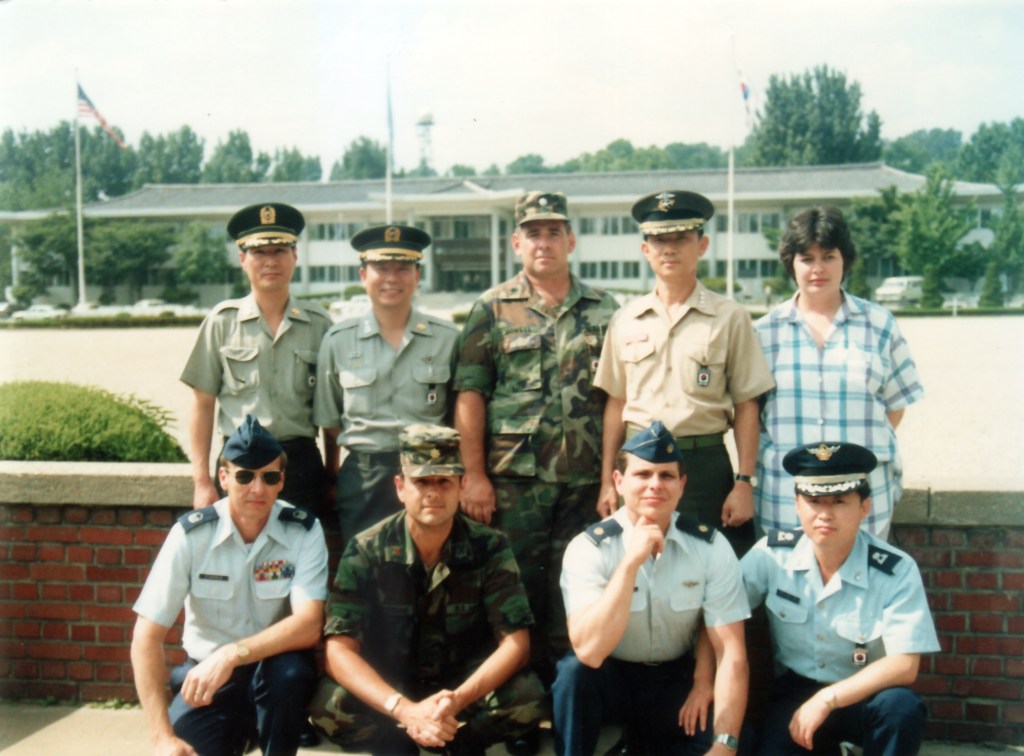


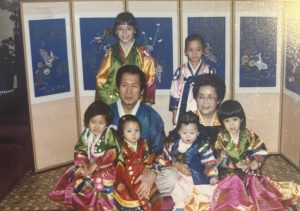 The first time I had the privilege to move to Korea was from 1984-1986, during my elementary school years. This was the first time I was near immediate family members, and I learned from my Grandparents and Uncles the hardships of the war itself. Having fun navigating through Korea, playing with cousins and spending lots of time running up and down Mount Apsan in Camp Walker, Taegu, Korea was my true focus. I didn’t realize the impact of the threat of the Cold War and what was just 8 hours drive north of us in North Korea. The second time we moved back was just after the 1988 Olympics in Seoul. I spent my 8, and 9th grade years in Seoul, Korea at Seoul American High School. This time I was much more aware of the impact of. communism and dictatorship upon societies. We saw the Iron Curtain fall in 1989 while I was in History Class in Seoul. We visited the DMZ and saw the last bit of staunch Russian Red Umbrellas just across the border in North Korea. We drove through the South Korean College student riots proclaiming “Americans Leave Our Soil.”
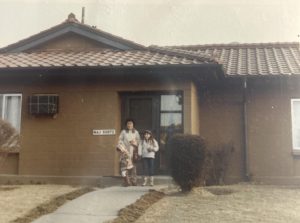 I came back to the US with a renewed sense of preservation for continuing this story, the Forgotten War. Being more and more removed from the actual physical fighting, I delved into anything I could learn about North Korea and the tactics they take to oppress their people.


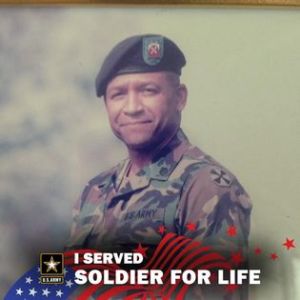
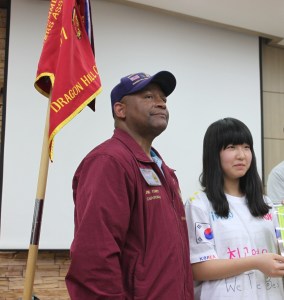 There were programs within Eight Army and United States Forces Korea that amplified our relationships. Our NCOA Chapter as well as other organizations both US and Korean had programs that fostered goodwill and built on these strong relationships. As an example, our chapter sponsored the Young Nak Orphanage, and the Bosung Girls Middle and High Schools. There were two unique programs our Chapter implemented. One was an English Camp with the Korean Girls School, and the other was a Military Introduction Program. In the latter program, our NCOA Chapter members and other Volunteers along with US service members, ROK and KATUSA service members. In a nutshell, the students were shown what it was like to be a military service member and how we worked together as an Alliance. This included an introduction to Physical Fitness Training, Drill and Ceremonies, samples of Meals Ready to Eat for lunch etc. The program was very well received by all. We also had Holiday introduction programs, American and Korean Christmas Programs, and information about Thanksgiving in the US and Chuseok in South Korea.
 That lasted only a day or two and on the ride up to Uijongbu Camp Red Cloud, I noticed Koreans bent over in their rice paddies working hard. I was assigned to the I Corps newspaper, The Bullseye, as a photojournalist, one of the best jobs I could imagine.