From My Service in Korea, I learned… Richard Hernandez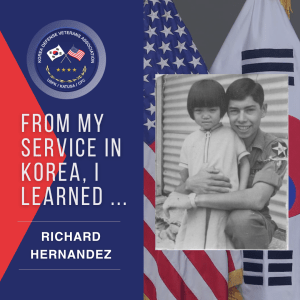
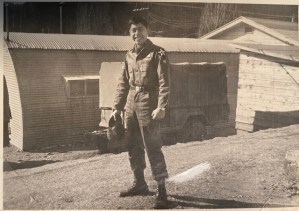
I deployed to Korea as an 18 year old Army medic and was assigned to 2/72 Armor, 2nd Infantry Division, August 1967 to September 1968. I received my orders to Korea right out of medic training at Fort Sam Houston TX. It was a surprise. We all thought we were going to Vietnam. I didn’t even know we still had troops in Korea.
I thought I had been given a reprieve from combat. On the day I arrived in Korea, 12 Aug 1967, the Stars and Stripes headline was “N. Koreans kill 3 GI’s.” That was a wake-up call. I remember an old, grizzled SGT at the reception center informing us to be very careful during our 13 month tour, because “you can get killed just as dead in Korea as in Vietnam.”
When I arrived in Korea I was young and inexperienced in the ways of the world, the knowledge and skills needed to be a soldier, and the responsibility that was to be placed on me as a medic. I quickly learned that my fellow soldiers expected me to be there when they were sick, injured, or wounded. They expected me to be knowledgeable and skillful at all times. It was an enormous responsibility, and taught me that I had the strength of character to meet any challenge. Those 13 months in Korea turned out to be the most important and defining months of my life. People laugh when I say this, but I arrived in Korea an 18 year old boy, and left Korea a 19 year old man.
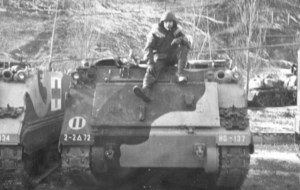
In the field, I was assigned as the company medic for A Company. My “ambulance” was an M113 Armored Personnel Carrier. It was painted camouflage, but had big red crosses on a white background on both sides. The first time I saw that I thought, “boy…what a great target.” I had an antenna flag made that said, “REMEMBER THE GENEVA CONVENTION, THOU SHALL NOT KILL.” It was a tongue-in-cheek reminder to the North Koreans to not fire on the medics. In garrison, I was the battalion pharmacy tech. I managed and dispensed the medications that our battalion surgeon would prescribe during sick call. I also had the combination to the safe where we kept our morphine and extra ammo.
We had two KATUSA medics in my unit, CPL Kim and CPL OH. They were not only excellent medics, they also were personable and were always available to help us GI’s understand their culture. In the field, I was often paired with one of our KATUSAs and that helped lower my anxiety and stress levels, especially on combat ops. We also supported a local orphanage and CPL Kim and CPL OH were instrumental helping us provide the best medical care.
Those of us who have served in Korea know how volatile the border can be. January 1968 was a particularly challenging time for South Korean and US forces. The attempted assassination of President Park Chung Hee at the Blue House, followed by the capture of the USS Pueblo, brought us close to full out war. The Blue House Raid failed, but the raiding party, composed of 31 North Korean infiltrators, attempted to escape back to North Korea. They met a coordinated response by South Korean and US military. My unit was used as a blocking force and on 26 Jan 1968, engaged in a firefight with at least one of the infiltrators. One of our troopers was KIA in the action. I was the closest medic, but by the time I could get to him he had died. All I could do was pronounce him dead and evac his remains to 2nd Medical Bn. His name was PVT Salvador Mojica. He had been in-country no more than 1 week. Like me, he was Hispanic and from Los Angeles. He was 18 years old. I had turned 19 four days before. His death on that day 56 years ago, has stayed with me. I had not met him because I was in the field. However, I truly believe that based on our similar backgrounds, we would have been buddies. I remember him every January 26.
Starting April 1968 the area north of the Imjin River became a Hostile Fire Area and Hostile Fire Pay was authorized. My unit was at Camp Beard which was south of the Imjin, but our area of operation included north of the river. I made hostile fire pay several times before the end of my tour. My next duty station was Letterman Army Hospital, Presidio of San Francisco. When I reported to Personnel, the Personnel Specialist sat me down and went through my 201 file. At one point he stopped, looked up at me, and said, “You’re one lucky SOB.” He explained that since I had made Hostile Fire Pay in Korea, that counted as a combat tour. I wouldn’t be sent to Vietnam unless I volunteered. It was a tough decision. I could spend my last 16 months in the Army in San Francisco, or volunteer for Vietnam. Took me a split second to decide.
After the Army I spent 20 years in the Navy Reserve. Summer 1988 I was assigned as the Navy’s representative to the Joint Medical Regulating Office Korea (JMRO-K) at Osan Air Base for Ulchi Focus Lens. I was again assigned to JMRO-K March 1989 for Team Spirit. On 20 March 1989 a US Marine Corps helicopter crashed near Pohang killing 22 Marines and injuring 15. Most of the injured Marines were sent to the 121st Evac in Seoul. At the time, my civilian profession was registered respiratory therapist and so I was sent TDY from Osan to the 121st Evac to help care for the Marines in the Intensive Care Unit. I stayed for 3 days until the Army Burn Specialist Team arrived from Fort Sam Houston and relieved us. I was honored to be in a position to help. It was a humbling experience.
Last year (2023) I was selected for the Return to Korea Program. It was an eye-opening experience seeing modern Korea compared to my past visits in the 1960’s and 1980’s. The visit culminated for me the last day when I was in the hotel elevator on my way to breakfast. A couple got on with a young child. The gentleman looked at my name badge and looked me in the eye and said, “you are hero.” He went on to say that because of me he and his family could live in freedom. I almost lost it. It helped me realize that the time and effort I contributed to the defense of South Korea will be one of my life’s greatest accomplishments.
 What did you learn from serving in Korea? Let us know –
Sharing your experiences from serving in Korea can be a powerful way to connect with others who have had similar experiences. By sharing your story, you may be able to help others who are currently serving in Korea or who are preparing to do so. You can share insights about the culture, the people, and the challenges you faced while serving. Your story can also help to shed light on the sacrifices that service members and their families make in order to protect our freedoms. So, if you have a story to share, we encourage you to take the time to put it down in writing and send it to KDVA.MyServiceInKorea@gmail.com along with any photos that help to tell your story.
READ MORE STORIES HERE.


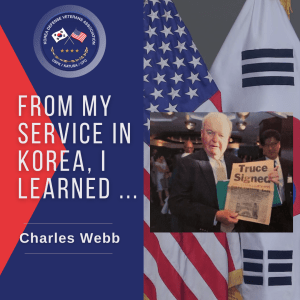 My service record in the Air Force was from September 1950 to May 20 1954 during that period of time, I was stationed at Ellington Air Force Base and was starting my navigational training during that period of time, my father passed away, and I withdrew from navigational training because I no longer wish to remain in the service. The reason for my wanting to leave was because my goal had always been to attend law school when I left the service, the cadet training and furtherance of that would have committed me to a far longer term than the four years. Accordingly, the moment I withdrew from cadet training, I was sent to Korea. As soon as I was assigned duties in Korea, based upon my background college and training, I was immediately given the duty of maintaining fifth Air Force headquarter buildings in 61/54 airbase group soul Korea. As part of those duties I was in charge of the billiting For all officers stationed for headquarters. Additionally, my duties included supervision of all Korean employees at headquarters. My reporting officer was colonel Raymond C Boyd. I served in that capacity for seven months and one Zen asked to assume the same position at Osan. That was K 55. I agreed to that position but only, if I was willing to extend my service another six months in Korea. I agreed to that and was ultimately discharged after that service which meant I was released from the Air Force four months early if you need any additional information.
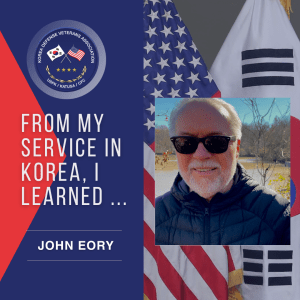

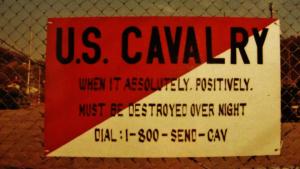
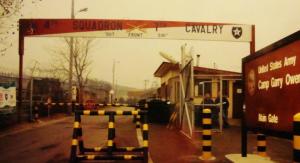
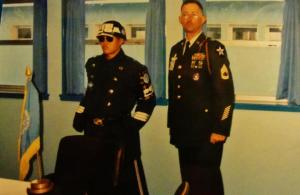

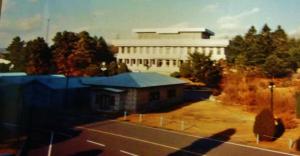
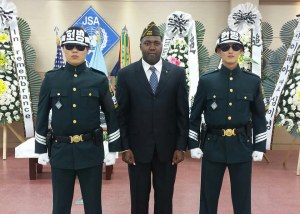
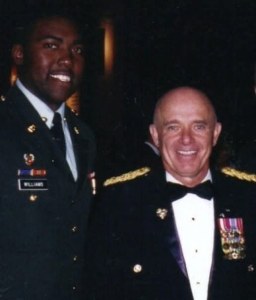
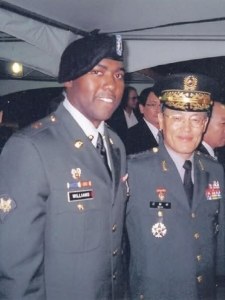
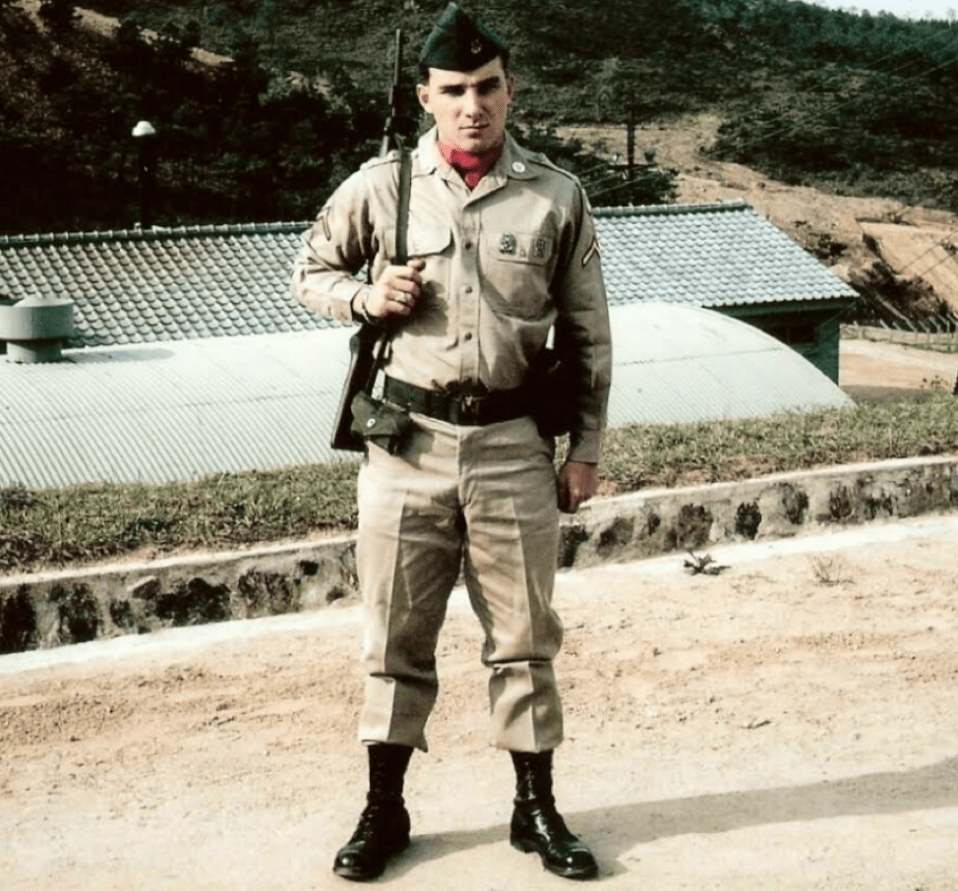
 I walked into the Recruiting Office in Bismarck, ND, and signed up for a 3-year enlistment from 12 June 1962 to 11 June 1965 and then Standby Reserve to the final 11 June 1968. My Army Enlistment started June 12, 1962, and I took Basic Training at Ft Leonard Wood MO until August 17, 1962. I came home on leave and then proceeded to FT Bliss Texas on August 31, 1962-October 26, 1962.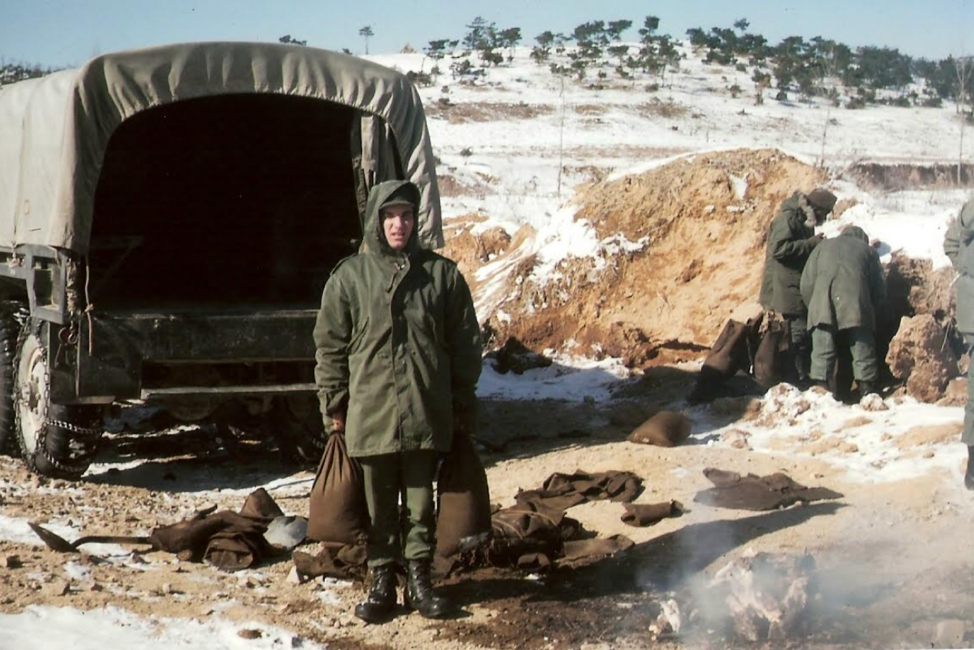


 I served in Korea from December 2002 to January 2004. What I learned from serving my country on the Korean peninsula was adaptability and how to work in a high-stakes, fast-paced environment.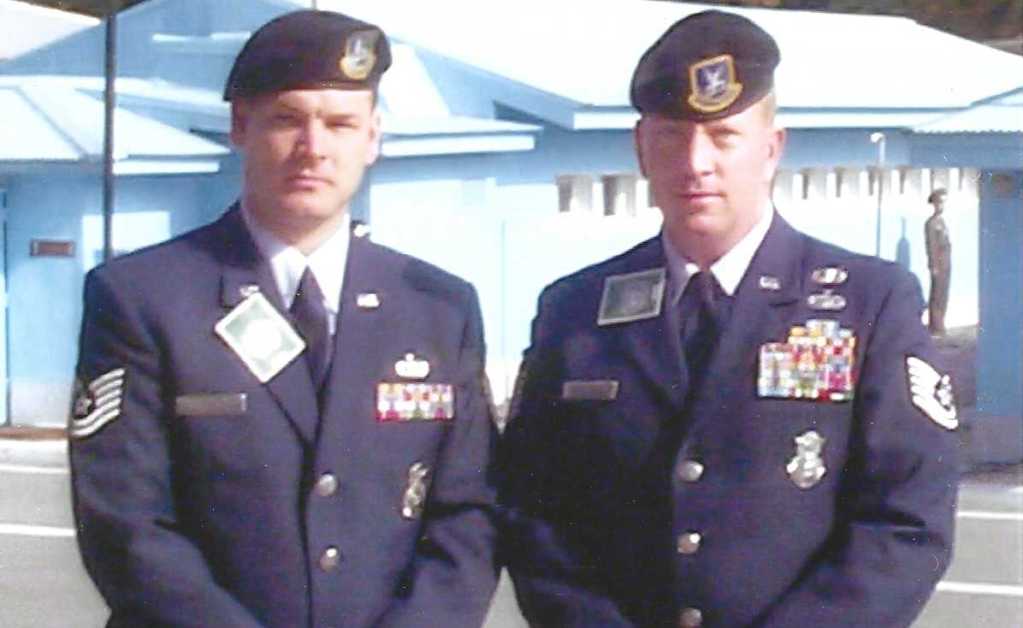


 I was born and raised in California, in the Bay Area. My family moved to Oregon during my freshman year of high school after my father retired from AT&T. I enlisted in the U.S. Army infantry on August 29, 1989. At that time, Ft. Benning was the place to be for basic training as an infantry soldier, it was the home of the infantry. After graduating from basic training and advanced infantry training (AIT) in December of 1989, I took one month of leave. I flew from Portland, Oregon to Seattle, Washington, then to Seoul, Korea on January 14th, 1990.
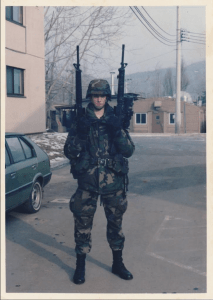 During my time in Korea, I visited many temples and had the opportunity to witness several traditional Korean weddings. These ceremonies were fascinating, showcasing the deep-rooted culture and pride of the Korean people. It was clear to me that they held a strong respect for their heritage. One of the most striking experiences was seeing the older generation still working in the rice paddies. I watched as elderly men and women carried their farming tools and equipment on their backs, yet they walked just as swiftly as we soldiers did while carrying 50 or 60 pounds of gear. I also had the privilege of speaking with many older Koreans who expressed their gratitude for the U.S. military’s role in keeping their country safe. When I was in Korea in 1990, many of them still remembered the war—some had fought in it, while others had lived through it as children. I often sat in restaurants just outside the base, listening to their stories. I believe they appreciated that a young soldier like me took an interest in their experiences and the history of their country. I found it all truly fascinating.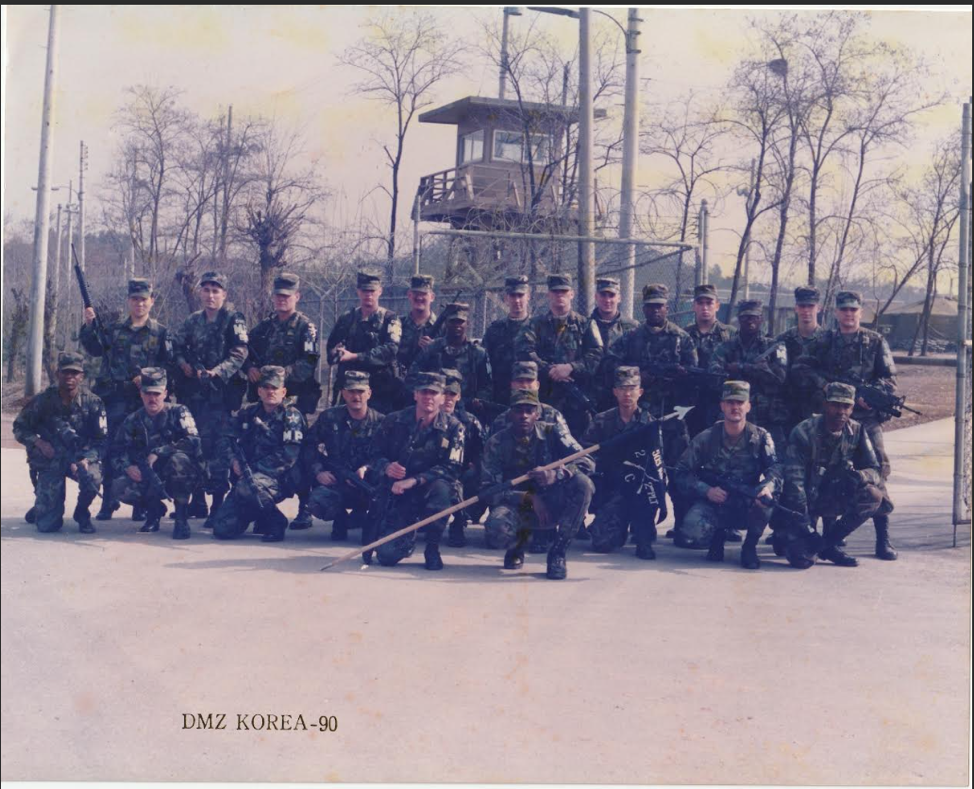

 I enlisted in the Army in April 1958 and did basic training at Fort Dix, NJ. After basic training, I spent 8 weeks at Fort Gordon, GA, attending MP school. At the end of this training, all but one man was sent to Korea. We flew from Augusta, GA, to Seattle, WA, where we spent most of a week waiting for a troop ship to take us to Korea. The ship stopped in Kodiak, AK, to drop off some families and then on to Yokohama, Japan to drop off more passengers and give us a few hours of shore time. Then it was on to the port of Inchon and debarkation. We were trucked up to ASCOM city to await assignment. After a few days about 24 of us were sent to Hq & Hq Company, US Army Port Inchon. This facility was based on Wolmido Island which is off the coast of Inchon harbor.
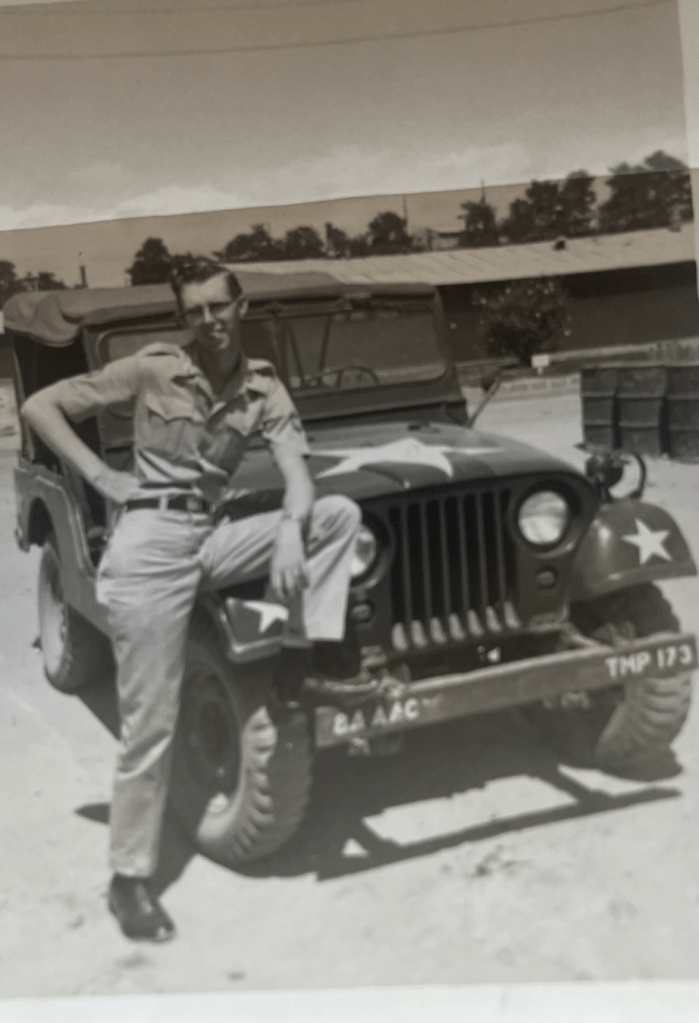 I would put on my M1911 45 caliber pistol, the commander would get the money bag with the cash, and off we would go. After a stop at the officer’s club for lunch, we would go to the exchange. The money that would fill a small satchel on the way up would fill two duffel bags on the way back. In 1958 and 1959 Korea was a proud country but it had seen the ravages of war. Many people had little or nothing. The roads, what few of them there were, were still torn up from war. There were no private automobiles, and the only businesses were small shops selling necessities. I had the opportunity to return to Korea in 1983, just 24 years after I had left. I was amazed to see the transformation. There were superhighways filled with cars. Beautiful buildings and hotels filled the city, and it was obvious the people were prospering. I was taken aback to be thanked as a representative of a country that had assisted them in creating a modern, prosperous society. My service in Korea is a part of my life that I am most proud of.