From My Service in Korea

From My Service in Korea, I Learned – John Eory

From My Service in Korea, I Learned – John Eory

Yobo seo. I arrived in Korea in October 1970 as a new 2LT and became an infantry platoon leader at North Camp Custer. Despite my graduation from Officer Infantry School at Fort Benning, I was rather unprepared for the reality of this position. I quickly realized that I needed a lot to learn and was in debt to some great NCOs who did the heavy lifting.

All went well until I was suddenly told that in the absence of a more senior officer for the job, I was now the Brigade Adjutant which meant moving to Camp Hovey (a distinct upgrade in living quarters).

What an adjustment. In any event, I performed as well as I knew how while receiving OJT along the way.

I met several military and civilian Koreans during my tour and in so doing learned that our cultural differences and personal stereotypes (which were mutual) broke down as we got to know each other. I realized we were all part of a much larger family, an idea I brought home and have tried to live by.

You never know where you will learn such lessons as I did far away and long ago. Thanks for reading and “Keep Up the Fire.”


What did you learn from serving in Korea? Let us know –

Sharing your experiences from serving in Korea can be a powerful way to connect with others who have had similar experiences. By sharing your story, you may be able to help others who are currently serving in Korea or who are preparing to do so. You can share insights about the culture, the people, and the challenges you faced while serving. Your story can also help to shed light on the sacrifices that service members and their families make in order to protect our freedoms. So, if you have a story to share, we encourage you to take the time to put it down in writing and send it to KDVA.MyServiceInKorea@gmail.com along with any photos that help to tell your story.

Your contribution may be just what someone needs to hear in order to feel connected and supported.

Read more

From My Service in Korea, I Learned – Garry Owen

What I learned from my service in Korea.

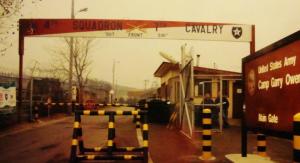
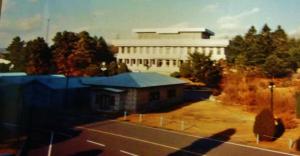
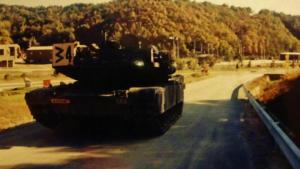
From November 2002 to April 2004, I was assigned as an M1A1 Abrams Tank Platoon Sergeant in Blackfoot Troop 4th Squadron 7th Cavalry at Camp Garry Owen near Munsan, Korea. Assigned to Camp Garry Owen, along the Imjin River, we were the most forward-deployed Cavalry squadron in the US Army.

On Christmas Eve night, 2002, we were visited by Ms. Soon Ok Lee. A very soft-spoken, dignified, and appreciative woman. She thanked us for our service on Christmas while far from our homes and families. In 1986, Soon Ok Lee, a supervisor of the material distribution center, was summoned outside to speak to the bureau chief but was quickly whisked away to the train station. She did not return to her family that night. Instead, she was taken to prison, where she endured six years of inhumane treatment.

While in prison, she witnessed the horrendous tortures and mass killings of Christians and could not understand why they stubbornly refused to bend to the government’s demands that they deny their faith. She authored the book “Eyes of Tailless Animals,” which documented her story, and spoke to the US Congress about her experience.

Listening to her harrowing story, I immediately understood why my fellow troopers and I were there on Christmas Eve. Not far from the gymnasium where she spoke was the border where a totalitarian regime had done that to her and countless others. Our now declassified combat mission was to enter the UN Joint Security Area and directly evacuate the UN negotiators as the rest of the 2d Division fell back toward the Hahn River.

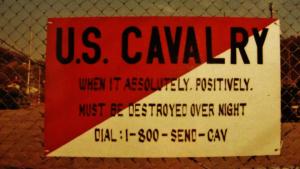
Every doorway in the camp was painted with the question, ‘Are you ready to fight tonight?’ We understood that being assigned this close to the DMZ and with this unique mission made our time there not, nor would it ever be a pleasure tour.

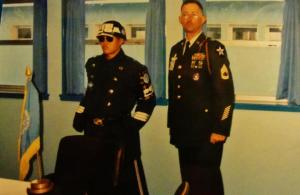
The Troop leadership and I regularly attended secret briefings inside the Joint Security Area, where we coordinated and briefed our efforts with the leaders from the R.O.K. Army and US troops assigned to Camp Boniface.

Thankfully, we never had to activate the plan we discussed regularly and prepared for constantly. Had we had to do so, the eyes of the entire world would have been on us. Our life expectancy was short.

The mission was long and arduous, but at its conclusion, I knew what we had accomplished over my 16 months there truly mattered.

South Korea was free.

Cecil H. Greenwell III

(SFC, US Army. ret)

Read more

From My Service in Korea, I Learned – Tony Williams

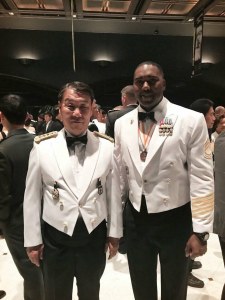
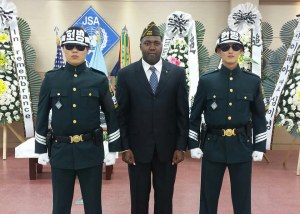
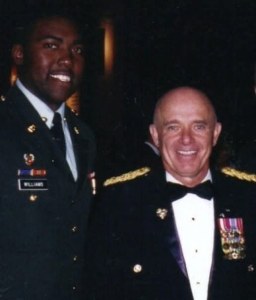
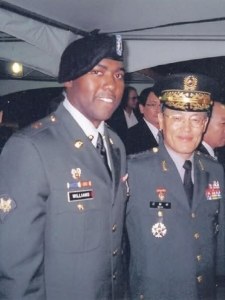
FROM MY SERVICE IN KOREA, I LEARNED… Tony Williams

March 2002-08 (1-43 ADA & 35TH ADA)

January 2014-18 ( 8TH Army G6)

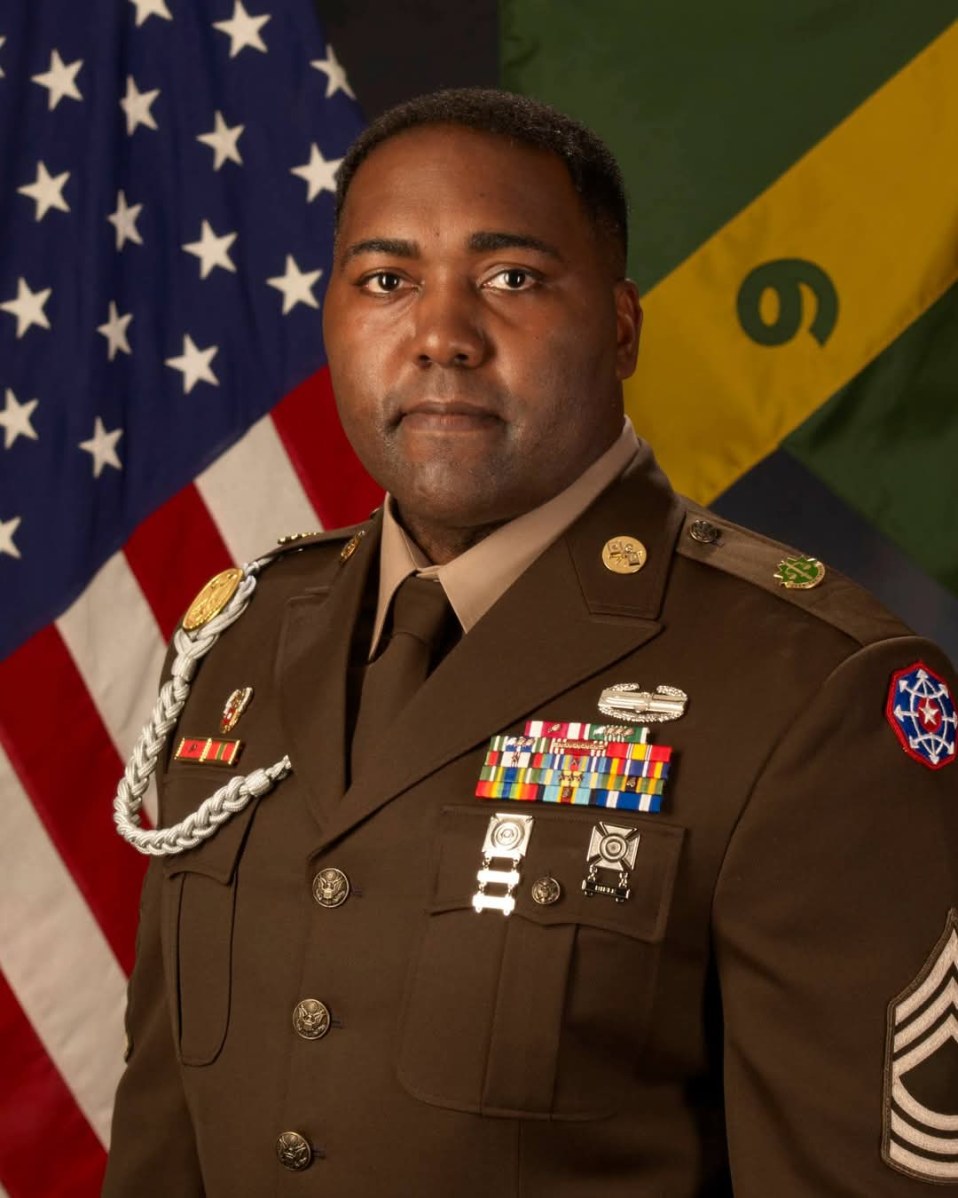
I served in the active US Army for over 22 years. Over 9 of these years were in the Republic of Korea. I learned leadership lessons at all echelon. I arrived as a PFC and left as a SSG during my first tour and served as a SFC during my second tour.

My first tour introduced me to Korean culture and all of its beauty. I fell in love with the food and extensive history of the nation. I visited many national landmarks, learned to make a few dishes, and began to understand how each soldier has a role to play in how America is perceived. Making friends, as I taught English and emersed into the Korean social life, allowed me to change negative stereotypes by demonstrating Army values in action.

My second tour was at a more senior level. For the first year and a half, I served as the VTC Team NCOIC for the CG and as the NETOPS NCOIC, overseeing the security and infrastructure stability of our network nationwide for the second year and a half. This gave me the opportunity to work with KATUSAs more and interact with the ROKA more. This type of leadership requires the development of people skills and diplomacy.

The scene of teamwork developed over these years has placed Korea in a special place in my heart. There were several events that occurred during my tours to test the resolve of the US-Korea relationship. We always came out of the situations closer than we entered. I have very beautiful memories of Korea and have visited a few times between my tours and plan to return in the future.

Tony T. Williams,  Ed.S., MHA, BA
CW2, LASG
Team Member, Region 7
4th Area Command

[MSG (R), U.S. Army]


What did you learn from serving in Korea? Let us know –

Sharing your experiences from serving in Korea can be a powerful way to connect with others who have had similar experiences. By sharing your story, you may be able to help others who are currently serving in Korea or who are preparing to do so. You can share insights about the culture, the people, and the challenges you faced while serving. Your story can also help to shed light on the sacrifices that service members and their families make in order to protect our freedoms. So, if you have a story to share, we encourage you to take the time to put it down in writing and send it to KDVA.MyServiceInKorea@gmail.com along with any photos that help to tell your story.

READ MORE STORIES HERE.

Read more

From My Service in Korea, I Learned – David Erbstoesser

FROM MY SERVICE IN KOREA, I LEARNED… PFC David Erbstoesser

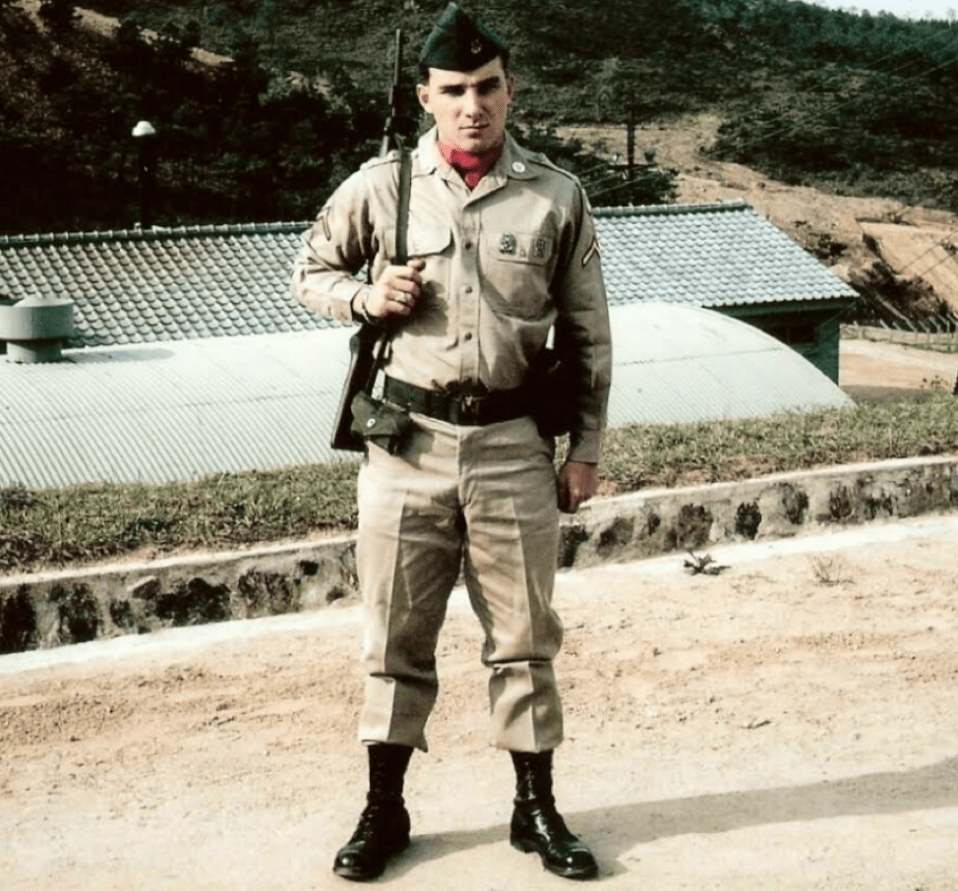
I walked into the Recruiting Office in Bismarck, ND, and signed up for a 3-year enlistment from 12 June 1962 to 11 June 1965 and then Standby Reserve to the final 11 June 1968. My Army Enlistment started June 12, 1962, and I took Basic Training at Ft Leonard Wood MO until August 17, 1962. I came home on leave and then proceeded to FT Bliss Texas on August 31, 1962-October 26, 1962.

I had orders for Germany, left for Ft Dix, NJ, and arrived there on October 29, 1962. I stayed at Ft Dix, NJ for about 2 weeks and got my orders changed to Korea. I flew to Oakland Army Terminal in California, after a few days to Travis AFB, and on to Hawaii, Wake Island, and Japan. I landed in Korea on November 28, 1962, and was assigned to Battery C, 7th Msl, Bn, 2nd Artillery Air Defense “Hawk Missile Site West of Suwon near the Yellow Sea.

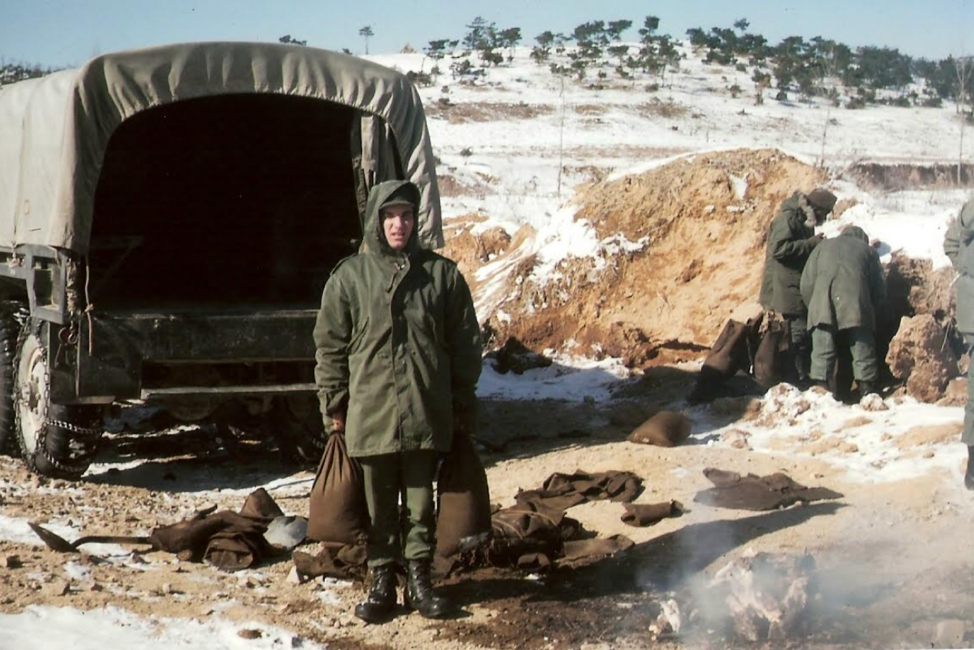
My MOS was 176 Hawk Missile and while there I walked A lot of guards inside the Perimeter Fence as we and infiltrators tried to enter. I did Short Patrols when not on the tactical site and filled sandbags for the MG Emplacement. I Spent 13 Months in Korea. On August 31, 1963, IO was on a short routine patrol, when a land mine was tripped and landed on by another GI, I severely injured my left Ankle. I was forced to march on this foot for about 1 mile in terrible pain, as the Lt in charge said you “SOB there is nothing wrong with you, get up and move”.  I did as ordered. I was 19 years old.

The next day, I was at the 121st Evac Hospital where I got a walking cast. When it was time to take it off, I reported back to the 121st and was turned down as I was 1 day early for my Appointment. Remember I got a ride that was possible and that was at least an hour or more trip, so I went. Well, I did get the cast off after 5 to 6 weeks after I told an SP4 that I wanted to talk to someone with rank other than you or I would go back to the motor pool and cut the cast off myself!!!

I did my duty there and on December 7, 1963, I boarded the USS General William Mitchell for a 17-day trip to San Francisco, CA.

I went back to Ft Bliss, Texas for the rest of my enlistment and was assigned to Battery B, 6th Msl BN 56th Artillery. To Discharge, June 11, 1965.

As an SP-4, I volunteered for Vietnam, and I had the option not to go, but I have the orders in my file on hand today which confirm that I would accompany my unit if deployed. They placed me in a unit from Korea.

I learned a lot in Korea and did my duty under some stressful times. I learned to take orders and respect the service and all those who served and are now serving.

Today the VA takes care of me I am 100% DAV now and enjoying retirement in my 15th year. I am a life Member of these Veterans Organizations: DAV, Amvets, VFW, Vietnam Veterans of America.

I have held office as Commander for the Amvets DAV and VFW. I will be married to my wife for 59 years on June 18, 2025, I have two children, a son and Daughter, 3 grandkids, and 2 great-grandkids.


What did you learn from serving in Korea? Let us know –

Sharing your experiences from serving in Korea can be a powerful way to connect with others who have had similar experiences. By sharing your story, you may be able to help others who are currently serving in Korea or who are preparing to do so. You can share insights about the culture, the people, and the challenges you faced while serving. Your story can also help to shed light on the sacrifices that service members and their families make in order to protect our freedoms. So, if you have a story to share, we encourage you to take the time to put it down in writing and send it to KDVA.MyServiceInKorea@gmail.com along with any photos that help to tell your story.

READ MORE STORIES HERE.

Read more

From My Service in Korea, I Learned – Tracey Huff

From My Service in Korea, I learned… Tracey Huff

I served in Korea from December 2002 to January 2004.  What I learned from serving my country on the Korean peninsula was adaptability and how to work in a high-stakes, fast-paced environment.

I was the Noncommissioned Officer in Charge of Operations at the Pacific Air Force Security Forces Air Base Defense Regional Training Center, better known as “Commando Warrior” at Osan Air Base. I was so happy to have been able to secure a position there and I looked forward to what it entailed.  Cultural awareness and adaptability was something that struck me first off!  Living and working in Korea exposed me to a different culture, customs, and even some language barriers. Of course, working within the security arena of Korea, strategic readiness was a part of my daily job. Korea is a unique duty station due to its proximity to North Korea. I was able to train in high-alert scenarios, reinforcing the importance of being always mission-ready. During theater wide exercises I learned how to understand global military strategy while working in the Headquarters, 7th Air Force Intelligence Cell. My time in Korea gave me a deeper understanding of the U.S. military’s role in global security and the importance of allied cooperation in maintaining stability.

Working with a team of instructors continued to show me that teamwork and camaraderie was instrumental to success. Further instructing Pacific Air Force Security Forces personnel was something I wanted to continue, after my time as an Instructor Supervisor at the U.S. Air Force Security Forces Academy. Serving in Korea meant working closely with both U.S. and Korean forces. I formed strong bonds with fellow Defenders and learned how to operate in a multinational setting. While in Korea, I was also able to volunteer at a local orphanage and myself, and my team, deployed to support potato farmers after a hurricane struck the peninsula.

All in all, I learned so much from my time in Korea. For my one year of service there, I was awarded the Meritorious Service Medal, showcasing my team’s volunteerism and dedication to duty to help protect the people of the Republic of Korea. I owe them everything during this special time in my life and I feel so proud of my service to the people of Korea.


What did you learn from serving in Korea? Let us know –

Sharing your experiences from serving in Korea can be a powerful way to connect with others who have had similar experiences. By sharing your story, you may be able to help others who are currently serving in Korea or who are preparing to do so. You can share insights about the culture, the people, and the challenges you faced while serving. Your story can also help to shed light on the sacrifices that service members and their families make in order to protect our freedoms. So, if you have a story to share, we encourage you to take the time to put it down in writing and send it to KDVA.MyServiceInKorea@gmail.com along with any photos that help to tell your story.


READ MORE STORIES HERE.

Read more

From My Service in Korea, I Learned – Eric Rodley

From My Service in Korea, I learned… Eric Rodley

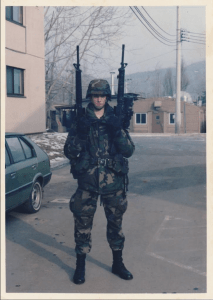
I was born and raised in California, in the Bay Area. My family moved to Oregon during my freshman year of high school after my father retired from AT&T. I enlisted in the U.S. Army infantry on August 29, 1989. At that time, Ft. Benning was the place to be for basic training as an infantry soldier, it was the home of the infantry. After graduating from basic training and advanced infantry training (AIT) in December of 1989, I took one month of leave. I flew from Portland, Oregon to Seattle, Washington, then to Seoul, Korea on January 14th, 1990.

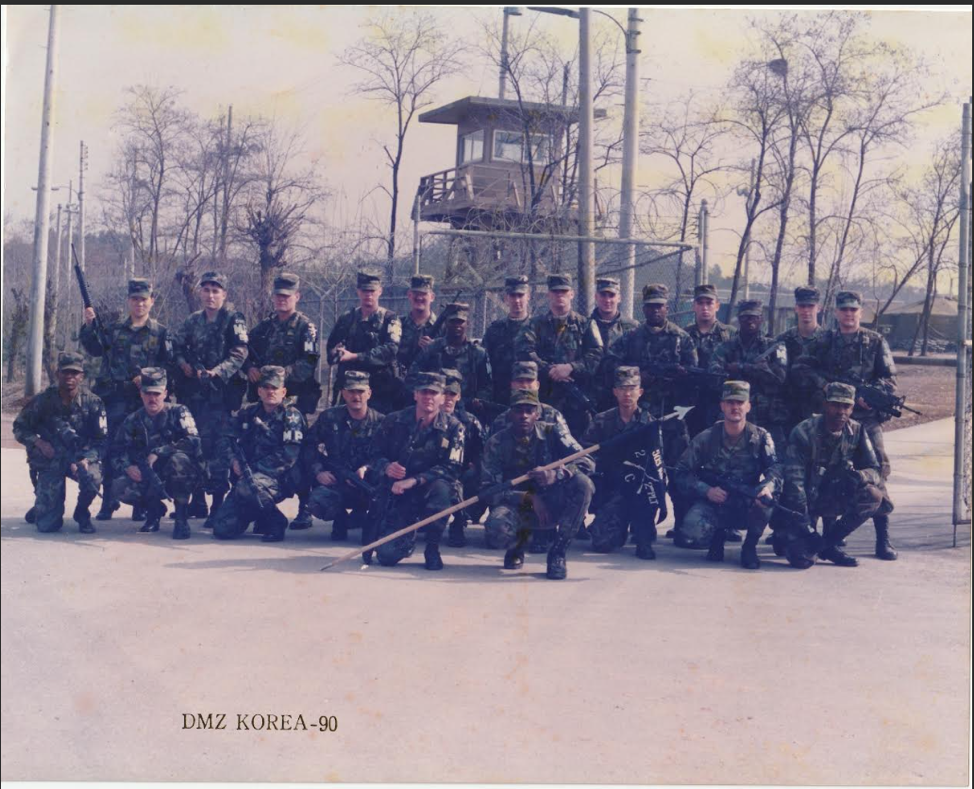
About one week after arriving in Seoul, I can’t remember how many of us, but about a bus load of us were sent up north to Camp Casey. I was at the “turtle farm” for about two weeks when I was assigned to Charlie Company, 2/503 Infantry, 2nd platoon, Camp Hovey. Camp Hovey was a smaller Army base behind Camp Casey. When I arrived at my assigned unit, the unit was preparing for its rotation on the DMZ, I had arrived at just the right time. Our unit prepared by conducting mock combat patrols during the day and night. One particular night we had to lie in a mock ambush for two hours as if we were on the DMZ, it was so cold. I remember thinking to myself how exciting it was, but how miserable it was at the same time. Once on the DMZ, our platoon’s first phase was the patrol phase. We spent 30 days conducting day recon patrols, then night ambush patrols. One memory I have is the constant sound of North Korean and South Korean propaganda. At that time, the DMZ had very large speakers spread out all over different areas from both the North and South. The speakers were used for each side the blast their propaganda towards each other. I remember one day patrol where we were taking a patrol break, and the North Koreans played their national anthem 75 times in a row. This was driving us crazy but that was the point, the propaganda was meant to annoy and harass each other. The South Koreans played a lot of American music, this too was meant to annoy the North Koreans. Funny story is when I came back to the United States, if I heard a radio playing in the background somewhere, I would always think it was propaganda music, kind of funny.

My time spent in Korea was sort of unique. With 2/503 I did my three-month DMZ rotation from February 1990 to May 1990. At that time, the U.S Army started a reduction in force in Korea. The 2/503 was deactivated around June of 1990 so about a handful of us were sent to 5/20 Infantry (Mechanized) who relieved 2/503 on the DMZ. I was assigned to Charlie Company, 5/20 Infantry when 5/20 was starting their guard post phase. Each unit rotates through three assignments on the DMZ. Each phase on the DMZ is one month, patrol phase, guard post phase, and quick reaction force (QRF) phase. After my rotation with 5/20 on the DMZ we returned to Camp Casey in August. In December of 1990, I was given orders for Ft. Carson, Colorado, but the orders were rescinded due to the first Gulf War in August of 1990. Everyone stationed in Korea after January 1990 was involuntarily extended for an additional year due to the first Gulf war. I stayed with 5/20 Infantry until August 1991 when 5/20 Infantry received the Bradley fighting vehicles. Due to this restructuring, a group of us were given new orders for Alpha Company 1/503 Infantry on Camp Howze.

During my time in Korea, I visited many temples and had the opportunity to witness several traditional Korean weddings. These ceremonies were fascinating, showcasing the deep-rooted culture and pride of the Korean people. It was clear to me that they held a strong respect for their heritage. One of the most striking experiences was seeing the older generation still working in the rice paddies. I watched as elderly men and women carried their farming tools and equipment on their backs, yet they walked just as swiftly as we soldiers did while carrying 50 or 60 pounds of gear. I also had the privilege of speaking with many older Koreans who expressed their gratitude for the U.S. military’s role in keeping their country safe. When I was in Korea in 1990, many of them still remembered the war—some had fought in it, while others had lived through it as children. I often sat in restaurants just outside the base, listening to their stories. I believe they appreciated that a young soldier like me took an interest in their experiences and the history of their country. I found it all truly fascinating.

I have so many memories of Korea, and I wish I could write them all down. I spent eight years in the Army, but out of all the places I was stationed, Korea was my favorite assignment. My time there wasn’t perfect, but it was the best experience I had as a young soldier. I’ve told my family many times that if my only military service had been the two years I spent in Korea, I would have been completely satisfied. I had always wanted to experience an overseas assignment, and choosing Korea was one of the best decisions I made. The U.S. Army no longer patrols the DMZ; after the Cold War ended in 1993, we handed that responsibility over to the South Korean Army. Still, I feel honored to have been part of such a historic mission. In all, my time in Korea was from January 1990 to January 1992. I was honored to take part in a historic assignment at the DMZ, protecting freedom’s frontier along the southern boundary of the Korean Peninsula.


What did you learn from serving in Korea? Let us know –

Sharing your experiences from serving in Korea can be a powerful way to connect with others who have had similar experiences. By sharing your story, you may be able to help others who are currently serving in Korea or who are preparing to do so. You can share insights about the culture, the people, and the challenges you faced while serving. Your story can also help to shed light on the sacrifices that service members and their families make in order to protect our freedoms. So, if you have a story to share, we encourage you to take the time to put it down in writing and send it to KDVA.MyServiceInKorea@gmail.com along with any photos that help to tell your story.


READ MORE STORIES HERE.

Read more

From My Service in Korea, I Learned – Peter Thompson

From My Service in Korea, I learned… Peter Thompson

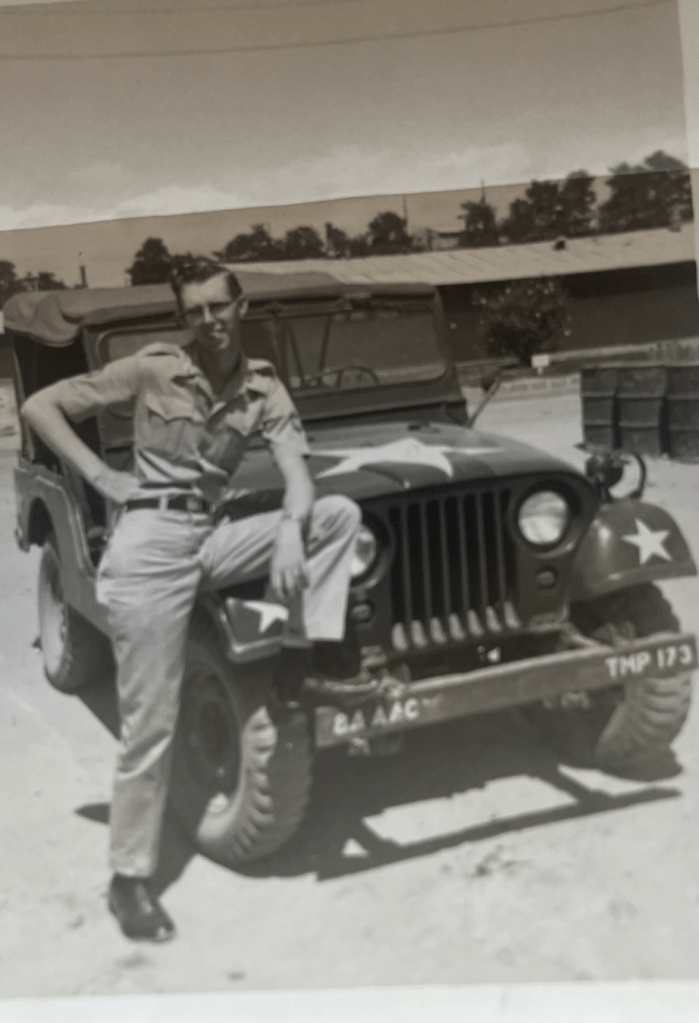
I enlisted in the Army in April 1958 and did basic training at Fort Dix, NJ. After basic training, I spent 8 weeks at Fort Gordon, GA, attending MP school. At the end of this training, all but one man was sent to Korea. We flew from Augusta, GA, to Seattle, WA, where we spent most of a week waiting for a troop ship to take us to Korea. The ship stopped in Kodiak, AK, to drop off some families and then on to Yokohama, Japan to drop off more passengers and give us a few hours of shore time. Then it was on to the port of Inchon and debarkation. We were trucked up to ASCOM city to await assignment. After a few days about 24 of us were sent to Hq & Hq Company, US Army Port Inchon. This facility was based on Wolmido Island which is off the coast of Inchon harbor.

I enlisted in the Army in April 1958 and did basic training at Fort Dix, NJ. After basic training, I spent 8 weeks at Fort Gordon, GA, attending MP school. At the end of this training, all but one man was sent to Korea. We flew from Augusta, GA, to Seattle, WA, where we spent most of a week waiting for a troop ship to take us to Korea. The ship stopped in Kodiak, AK, to drop off some families and then on to Yokohama, Japan to drop off more passengers and give us a few hours of shore time. Then it was on to the port of Inchon and debarkation. We were trucked up to ASCOM city to await assignment. After a few days about 24 of us were sent to Hq & Hq Company, US Army Port Inchon. This facility was based on Wolmido Island which is off the coast of Inchon harbor.

At that time this facility was responsible for moving all the troops and material in and out of the country. Since, at that time, the Inchon harbor was undeveloped and tidal elevation changes could reach 30 feet, all troop and material movement was handled by various watercraft and barges operated by members of this company. Military Police assigned to this unit would be doing guard duty at various locations around the port. Since this island is offshore and the predominant weather in the winter comes down from the north, the temperatures get very cold. Doing duty outside in this weather just standing around was not something to look forward to.

When we arrived on the island the personnel sergeant called me in and asked if I would be willing to take the job of the post mail clerk. Since this would be an inside job I jumped at the chance. This job consisted of going to the main post office on shore twice a day, collecting the bags of mail for our units, and returning to the island to sort and distribute it at mail call. In addition to this, I also had other duties which included

assisting the training sergeant during Saturday training sessions. The company commander had a specially prepared Jeep for his transportation, and I had the job of driving him to his various duties. One of these was to go to Seoul on payday to exchange script dollars for Korean won to pay the indigenous help on the base.

 I would put on my M1911 45 caliber pistol, the commander would get the money bag with the cash, and off we would go. After a stop at the officer’s club for lunch, we would go to the exchange. The money that would fill a small satchel on the way up would fill two duffel bags on the way back. In 1958 and 1959 Korea was a proud country but it had seen the ravages of war. Many people had little or nothing. The roads, what few of them there were, were still torn up from war. There were no private automobiles, and the only businesses were small shops selling necessities. I had the opportunity to return to Korea in 1983, just 24 years after I had left. I was amazed to see the transformation. There were superhighways filled with cars. Beautiful buildings and hotels filled the city, and it was obvious the people were prospering. I was taken aback to be thanked as a representative of a country that had assisted them in creating a modern, prosperous society. My service in Korea is a part of my life that I am most proud of.


What did you learn from serving in Korea? Let us know –

Sharing your experiences from serving in Korea can be a powerful way to connect with others who have had similar experiences. By sharing your story, you may be able to help others who are currently serving in Korea or who are preparing to do so. You can share insights about the culture, the people, and the challenges you faced while serving. Your story can also help to shed light on the sacrifices that service members and their families make in order to protect our freedoms. So, if you have a story to share, we encourage you to take the time to put it down in writing and send it to KDVA.MyServiceInKorea@gmail.com along with any photos that help to tell your story.


READ MORE STORIES HERE.

Read more

From My Service in Korea, I Learned – Sawvel Family

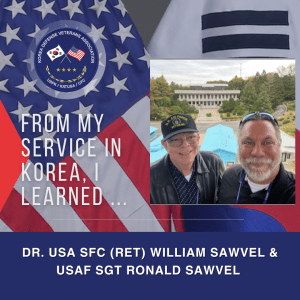
From My Service in Korea, I learned… Dr. USA SFC (Ret) William Sawvel & USAF Sgt Ronald Sawvel

Walking down the dark hallway towards the TA50 storage room, I felt like I was in an episode of The Twilight Zone as a homogenously bouncing glow peeked out from under the door crack of every other soldier’s room. From the nearly synchronous noise of reporter dialogue, I realized we were all watching the same thing – two commercial jets had just crashed into the World Trade Center buildings within twenty minutes of each other. In South Korea, it was 11 pm on September 11th, 2001, and half of our soldiers were still enjoying the night out in town while the other half of us stayed in. The purpose for gathering my equipment while I had no idea what would happen next. I knew it wasn’t good when the first aircraft hit, I briefly wondered, “Now, what idiot was flying that plane?” It was as I watched the second plane collide on live television that I instantaneously knew… we were going to war.

Serving in the Second Infantry Division under the command of Major General Russel L. Honoré (aka “The Ragin’ Cajun”) – a famously animated leader who seemed to enjoy torturing us with regular 3 AM sirens to respond to an imaginary Democratic People’s Republic of Korea (DPRK) surprise invasion – I was thoroughly convinced staff duty would be beating on our doors at any moment. Except, this time, the threat would be real. While that alarm never came, the last several months of my time in South Korea included my unit moving up along the Imjin River and pulling guard alongside our Republic of Korea (ROK) Army counterparts, in the event North Korean leader Kim Jong Il decided he would take advantage of our distraction. I realized that even developing conflicts thousands of miles away had a global impact on, not just the United States, but our partner nations. I also realized just how much of a dedicated ally South Korea was.

I remember hearing stories as a child about how my grandfather, already a WWII veteran and then a flight engineer for a major airline, helped to transport ROK Army soldiers (and their family members) from South Korea into Vietnam to fight alongside American counterparts. At 320,000 the Republic of Korea sent the largest contingent of any U.S. ally in the war. While deployed to Afghanistan in 2013, I often walked past a tiny ROK compound situated along the outer perimeter of Bagram Airfield – near what later became the site of an intense firefight against breaching Taliban fighters. We recently heard that ten thousand soldiers of the number one enemy of South Korea joined in the fight in Ukraine alongside one of our own largest opponents, the Russian Federation.

In 2021, Admiral Philip S. Davidson, commander of the U.S. Indo-Pacific Command (INDOPACOM), testified before the U.S. Senate Armed Services Committee that the People’s Republic of China (PRC) intended to invade Taiwan by 2027. If ADM (Ret) Davidson’s testimony was accurate, the threat to South Korea is irrefutable. In vicinity alone, North Korea, an ally of China, is the only country by land separating the PRC from ROK. During the 20th century, DPRK assisted the Chinese Communist Party (CCP) in the Chinese Civil War; and China reciprocated by sending 260,000 of its own soldiers in to reinforce the North Koreans in the Korean War.

From a U.S. perspective, South Korea (and Japan) sit close enough to the Bering Sea and Arctic, an extremely important strategic region, that Chinese and Russian vessels heading towards or leaving the Northern Sea Route are likely to come near the peninsula, if not stop at  Busan  (South Korea’s largest port and a major global logistics hub). Chinese military and commercial vessels (who regularly impede on sovereign territorial waters) leaving ports in Dalian, Shandong, and even Shanghai are likely to be seen by South Korea before leaving the Yellow and East China Seas.

As far as the largest elephant in the room, China and North Korea both pose a nuclear threat to the United States, as well as South Korea and Japan. Should China invade Taiwan, and should the U.S. and its allies become involved, both South Korea and Japan would be perfectly positioned to give early warning and rapid logistical support. However, there must always be give and take.

During the 2024 ROK-US Alliance Conference, I listened with intense concentration as General (Ret) Leem, Ho-Young eloquently and accurately mentioned that the U.S. must realize that South Korea has needs and expectations of its own, which cannot go ignored. While rapidly developing technology has made it easier for mortal enemies to achieve global reach, there are just four kilometers of concertina wire and landmines that separate North and South Korea and, according to RAND Corporation’s Arroyo Center, there are nearly six thousand North Korean artillery systems within range of heavy population centers that could kill more than ten thousand civilians within an hour. The people of South Korea are in constant threat of attack with hardly any warning. Yet, they have never ceased to be a staunch ally of a nation over five thousand miles away (to the continental U.S.) on the other side of the Pacific.

Taking into consideration the Department of Defense’s model on the instruments of national power (Diplomatic, Information, Military, and Economic – DIME), we simply cannot afford to ignore the needs of South Korea, in addition to our own, and the extreme advantage of having them as an ally in realizing strategic effects against China.

Generally speaking, we are culturally dissimilar; we come from different backgrounds and experiences; our immediate needs and expectations may differ; and our ideas for achieving victory might be distinct. However, our reliance on each other is undeniable. With today’s adversaries simultaneously threatening our individual homelands, we must expand and reinforce the alliance and collaboration between our two nations.

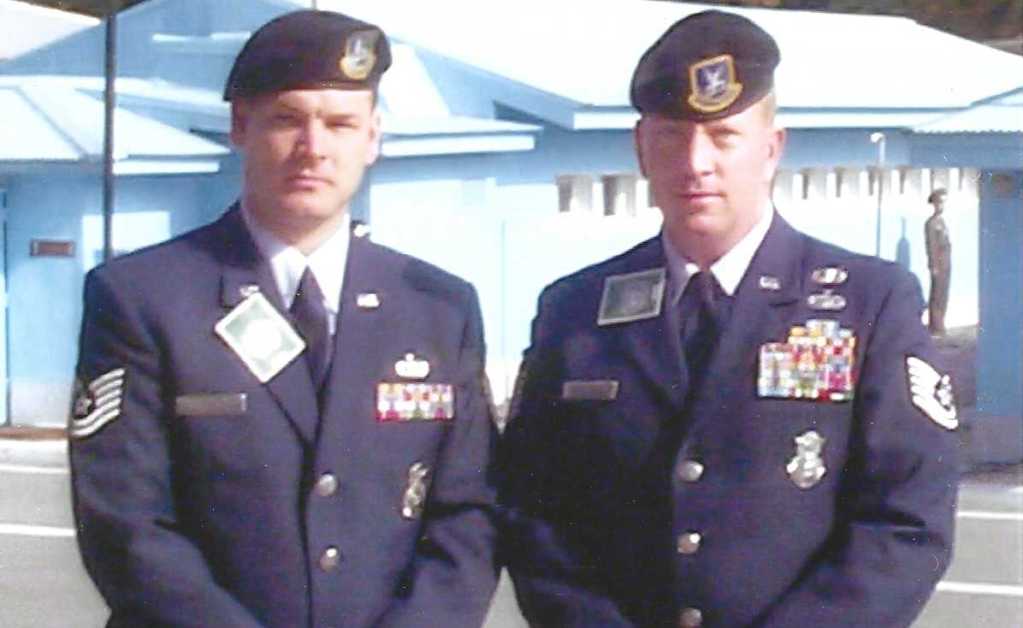
Dr. USA SFC (Ret) William Sawvel with His Father, USAF Sgt Ronald Sawvel (Panmunjom JSA, 2024)


What did you learn from serving in Korea? Let us know –

Sharing your experiences from serving in Korea can be a powerful way to connect with others who have had similar experiences. By sharing your story, you may be able to help others who are currently serving in Korea or who are preparing to do so. You can share insights about the culture, the people, and the challenges you faced while serving. Your story can also help to shed light on the sacrifices that service members and their families make in order to protect our freedoms. So, if you have a story to share, we encourage you to take the time to put it down in writing and send it to KDVA.MyServiceInKorea@gmail.com along with any photos that help to tell your story.


READ MORE STORIES HERE.

Read more

From My Service in Korea, I Learned – Richard Hernandez

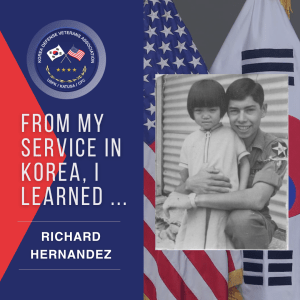
From My Service in Korea, I learned… Richard Hernandez

I deployed to Korea  as an 18 year old Army medic and was assigned to 2/72 Armor, 2nd Infantry Division, August 1967 to September 1968. I received my orders to Korea right out of medic training at Fort Sam Houston TX. It was a surprise. We all thought we were going to Vietnam.  I didn’t even know we still had troops in Korea.

I thought I had been given a reprieve from combat. On the day I arrived in Korea, 12 Aug 1967, the Stars and Stripes headline was “N. Koreans kill 3 GI’s.” That was a wake-up call. I remember an old, grizzled SGT at the reception center informing us to be very careful during our 13 month tour, because “you can get killed just as dead in Korea as in Vietnam.”

When I arrived in Korea I was young and inexperienced in the ways of the world, the knowledge and skills needed to be a soldier, and the responsibility that was to be placed on me as a medic. I quickly learned that my fellow soldiers expected me to be there when they were sick, injured, or wounded. They expected me to be knowledgeable and skillful at all times. It was an enormous responsibility, and taught me that I had the strength of character to meet any challenge. Those 13 months in Korea turned out to be the most important and defining months of my life. People laugh when I say this, but I arrived in Korea an 18 year old boy, and left Korea a 19 year old man.

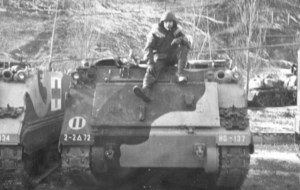
In the field, I was assigned as the company medic for A Company. My “ambulance” was an M113 Armored Personnel Carrier. It was painted camouflage, but had big red crosses on a white background on both sides. The first time I saw that I thought, “boy…what a great target.” I had an antenna flag made that said, “REMEMBER THE GENEVA CONVENTION, THOU SHALL NOT KILL.” It was a tongue-in-cheek reminder to the North Koreans to not fire on the medics. In garrison, I was the battalion pharmacy tech. I managed and dispensed the medications that our battalion surgeon would prescribe during sick call. I also had the combination to the safe where we kept our morphine and extra ammo.

We had two KATUSA medics in my unit, CPL Kim and CPL OH. They were not only excellent medics, they also were personable and were always available to help us GI’s understand their culture. In the field, I was often paired with one of our KATUSAs and that helped lower my anxiety and stress levels, especially on combat ops. We also supported a local orphanage and CPL Kim and CPL OH were instrumental helping us provide the best medical care.

Those of us who have served in Korea know how volatile the border can be. January 1968 was a particularly challenging time for South Korean and US forces. The attempted assassination of President Park Chung Hee at the Blue House, followed by the capture of the USS Pueblo, brought us close to full out war. The Blue House Raid failed, but the raiding party, composed of 31 North Korean infiltrators, attempted to escape back to North Korea. They met a coordinated response by South Korean and US military. My unit was used as a blocking force and on 26 Jan 1968, engaged in a firefight with at least one of the infiltrators. One of our troopers was KIA in the action. I was the closest medic, but by the time I could get to him he had died. All I could do was pronounce him dead and evac his remains to 2nd Medical Bn. His name was PVT Salvador Mojica. He had been in-country no more than 1 week. Like me, he was Hispanic and from Los Angeles.  He was 18 years old. I had turned 19 four days before. His death on that day 56 years ago, has stayed with me. I had not met him because I was in the field. However, I truly believe that based on our similar  backgrounds, we would have been buddies. I remember him every January 26.

Starting April 1968 the area north of the Imjin River became a Hostile Fire Area and Hostile Fire Pay was authorized. My unit was at Camp Beard which was south of the Imjin, but our area of operation included north of the river. I made hostile fire pay several times before the end of my tour.  My next duty station was Letterman Army Hospital, Presidio of San Francisco. When I reported to Personnel, the Personnel Specialist sat me down and went through my 201 file. At one point he stopped, looked up at me, and said, “You’re one lucky SOB.” He explained that since I had made Hostile Fire Pay in Korea, that counted as a combat tour. I wouldn’t be sent to Vietnam unless I volunteered. It was a tough decision. I could spend my last 16 months in the Army in San Francisco, or volunteer for Vietnam. Took me a split second to decide.

After the Army  I spent 20 years in the Navy Reserve. Summer 1988 I was assigned as the Navy’s representative to the Joint Medical Regulating Office Korea (JMRO-K) at Osan Air Base for Ulchi Focus Lens. I was again assigned to JMRO-K March 1989 for Team Spirit. On 20 March 1989 a US Marine Corps helicopter crashed near Pohang killing 22 Marines and injuring 15.  Most of the injured Marines were sent to the 121st Evac in Seoul. At the time, my civilian profession was registered respiratory therapist and so I was sent TDY from Osan to the 121st Evac to help care for the Marines in the Intensive Care Unit. I stayed for 3 days until the Army Burn Specialist Team arrived from Fort Sam Houston and relieved us. I was honored to be in a position to help. It was a humbling experience.

Last year (2023) I was selected for the Return to Korea Program. It was an eye-opening experience seeing modern Korea compared to my past visits in the 1960’s and 1980’s. The visit culminated for me the last day when I was in the hotel elevator on my way to breakfast. A couple got on with a young child. The gentleman looked at my name badge and looked me in the eye and said, “you are hero.” He went on to say that because of me he and his family could live in freedom. I almost lost it. It helped me realize that the time and effort I contributed to the defense of South Korea will be one of my life’s greatest accomplishments.


What did you learn from serving in Korea? Let us know –

Sharing your experiences from serving in Korea can be a powerful way to connect with others who have had similar experiences. By sharing your story, you may be able to help others who are currently serving in Korea or who are preparing to do so. You can share insights about the culture, the people, and the challenges you faced while serving. Your story can also help to shed light on the sacrifices that service members and their families make in order to protect our freedoms. So, if you have a story to share, we encourage you to take the time to put it down in writing and send it to KDVA.MyServiceInKorea@gmail.com along with any photos that help to tell your story.


READ MORE STORIES HERE.

Read more

From My Service in Korea, I Learned – Ray Butler

From My Service in Korea, I learned… Ray Butler
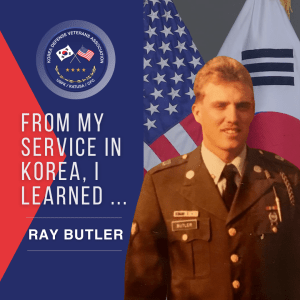
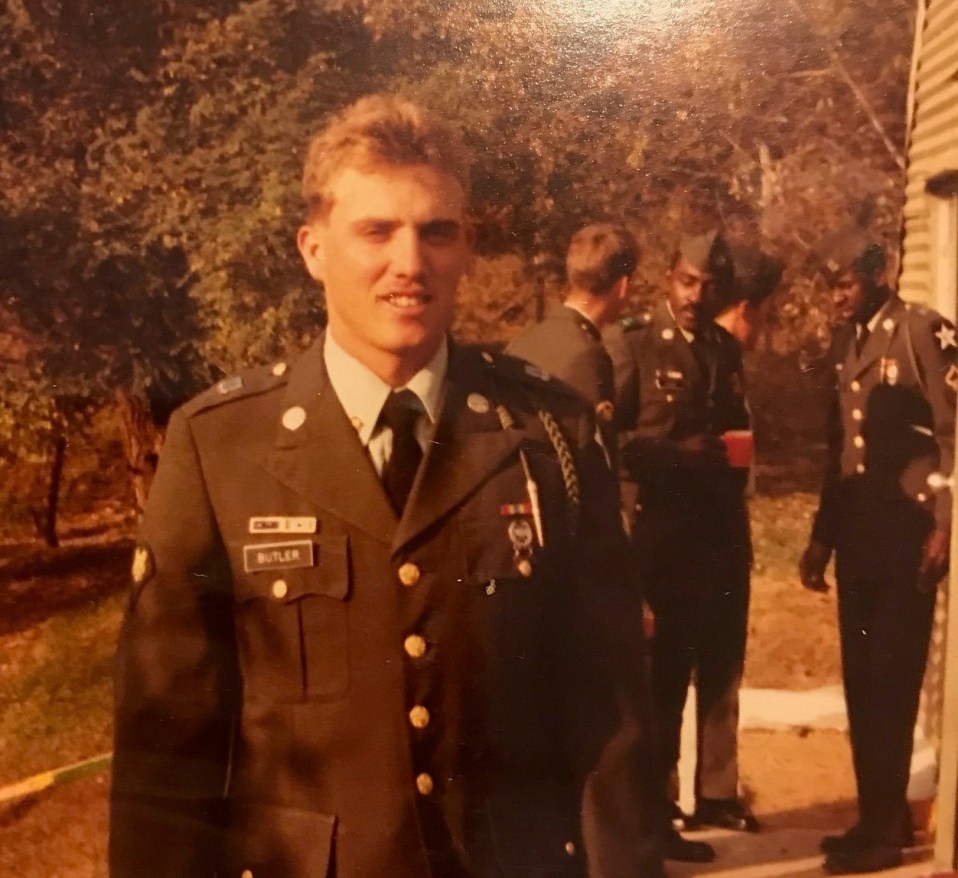
After graduating from OSUT at Fort Knox, Kentucky, I received orders to go to the 2nd Infantry Division, C Company, 2/72 Armor, with a reporting date of December 19, 1983. The only thing I knew about South Korea was from my high school history class and watching MASH* on TV. I thought I was going to Germany, like most of the tankers. I still remember that long flight, sitting in Anchorage, Alaska, watching them de-ice the plane and the giant polar bear on display. When we landed in Korea, the overwhelming smell hit me as I deboarded the plane. The crazy ride in the U.S. Army van took us to Camp Casey’s Turtle Farm.

I had only been in the country a few days when the first alarms (alerts) went off, and we scrambled to the motor pool. I was assigned to C-6-A in the loader’s position, which meant I had to grab my gas mask, my weapon (a .45 caliber 1911 pistol), the M-3 Grease Gun, and the extra barrel for the .50 caliber (M2). President Reagan was in the country and was going to Hill Top Corridor. Our First Sergeant asked for volunteers who were at least 6 feet tall for a detail to the DMZ. I was volunteered and reported to Battalion HQ. I had the honor of meeting the President along with a whole bunch of us.

That Christmas Eve, we went on alert and did the normal things we had done during past alerts, except this time we went to the AHHA and picked up small arms ammunition before moving out. Needless to say, I was pretty scared that we might be going to war, but we ended up standing down and returning to Camp Casey. I got to participate in Team Spirit, and during that time, I gained a deeper appreciation for being an American. I can still remember the children begging for food, and I would give them C-Rations, which highlighted the harsh living conditions.

Our captain took us to a bathhouse, and I remember watching a family: the wife undressed her children and then herself before washing all of them. Our commander told us to quit staring, reminding us that their culture is not like ours.

I was lucky to get assigned to special duty as a lifeguard at Camp Casey Pool. I still remember going to Camp Red Cloud for training, where the pool water temperature was in the forties (brr!). Several candidates fell out or just quit. That summer of 1984, we experienced severe monsoons that flooded Camp Casey, and the lifeguards went out on rescues.

I returned to my unit in early fall and started transitioning from M48A5 tanks to M60A5 with TTS. We went out to the range to get qualified, and they had us deplete the old ammunition. It seemed like we were out there for days, and it was a blast.

In early November, we had our Table 7 gunnery, and we convoyed out to the range. On November 11th, they were putting a range crew together, and they assigned my loader (who had just finished guard duty earlier). I volunteered to go instead. There were eight of us on the range detail that morning—five Army and two KOTUSA—heading out on the Dulce and Half.

On our second stop, I remember looking at the lineup as the tanks were pulling up when suddenly, a large explosion blew me off my feet, landing about 10 meters from where I was standing. There was dead quiet for a few seconds, and then screams erupted, with one person running downrange. One of my buddies, whom I was assigned to C-6-A with, was lying next to me, crying for his mom and saying, “I can’t breathe.” Frankie died shortly after his pleas. Six of us sustained injuries ranging from minor to critical, and that day, I witnessed true heroes running around trying to save lives while injured themselves. I was airlifted to the 8th Army Hospital, where I received great care. After three weeks, I was medivaced to Travis AFB.

I met some wonderful people during my time in Korea, had great experiences with my brothers, and got to see the beautiful land of Korea.

What did you learn from serving in Korea? Let us know –

Sharing your experiences from serving in Korea can be a powerful way to connect with others who have had similar experiences. By sharing your story, you may be able to help others who are currently serving in Korea or who are preparing to do so. You can share insights about the culture, the people, and the challenges you faced while serving. Your story can also help to shed light on the sacrifices that service members and their families make in order to protect our freedoms. So, if you have a story to share, we encourage you to take the time to put it down in writing and send it to KDVA.MyServiceInKorea@gmail.com along with any photos that help to tell your story.


READ MORE STORIES HERE.
Read more