

All in all, my experience underscored the significance of our mission in South Korea: upholding a strong alliance to maintain regional security, deter aggression from North Korea, and encourage economic and industrial cooperation. My participation in joint military exercises served not only to enhance operational capabilities but also to strengthen diplomatic relations and promote mutual prosperity and robust supply chain resilience.
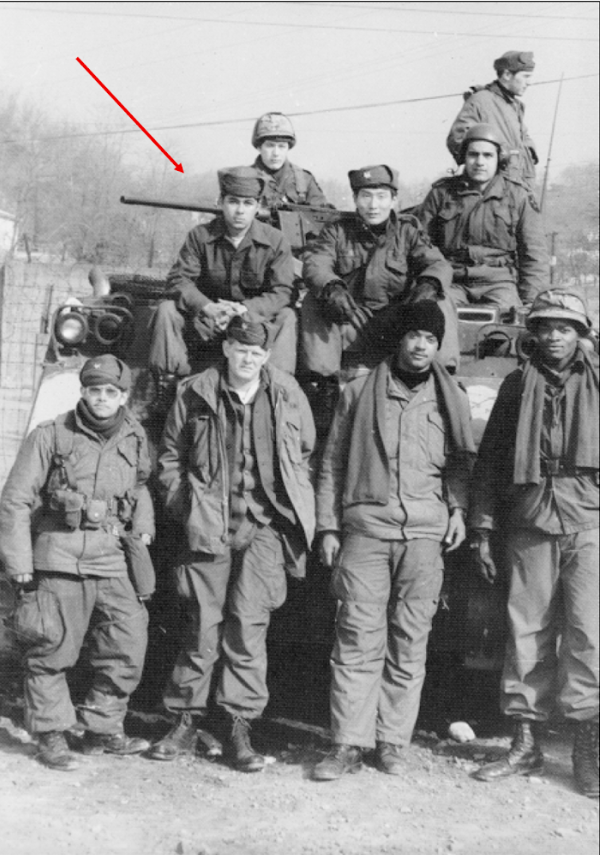
In October of 1975, I levied out of the 9th Infantry Division from Fort Lewis, Washington, to the Republic of South Korea, arriving at Osan Air Force Base, then finding myself en route to the 2nd Infantry Division via Camp Casey’s Replacement Center known as the Turtle Farm. Once there, assigned to Charlie Company, 1st Battalion (Mechanized), 17th Infantry at Camp Howze. The unit had been operating up on the 38th Parallel, the DMZ, the world’s most dangerous border.
Serving as an infantryman, my initial post was Guard Post Ouellette, providing a close vantage point—approximately 300 yards—from Communist North Korea. Our rotational living arrangements included underground bunkers fortified with sandbags above ground, interconnected by trenches and multiple firing positions. These structures offered both shelter and rapid movement routes within the perimeter, which was comprehensively secured by Claymore mines placed for complete coverage.
The outpost was located mere yards from the boundary dividing North and South Korea. Our platoon, consisting of 45 soldiers, remained highly aware of the immediate threat posed by pre-plotted artillery positions on both sides—enemy and friendly forces alike.
I rapidly familiarized myself with my duties, which primarily involved generating SALUTE reports regarding North Korean activities for intelligence purposes. Night guard duty was challenging, often requiring solitary vigilance in a bunker exposed to severe winds and sub-zero temperatures, with only sandbags for shelter and ammunition cans at my feet as I responded to any anomalies from the wood line.
At 20 years old and holding the rank of E-4 Corporal, I was regularly tasked with early morning responsibilities. This typically involved selecting two junior enlisted personnel to assist me in clearing the only access road into our outpost before sunrise. This was done while the remainder of the platoon performed a Stand-To, each soldier manning fortified positions with weapons ready to provide suppressive fire if necessary.
Our short patrols inspected the mile-long entry route for tripwires or suspicious objects, enabling the safe delivery of daily hot meals from a chow hall south of the Imjin River. Following this, I would inspect the outpost perimeter for breaches in fencing and ensure that defensive Claymore mines were correctly oriented and undisturbed.
I learned the responsibilities that came with the job. I earned the position as a team leader, leading a small team, ensuring the welfare of soldiers, and maintaining accountability for all equipment—training for direct tactical movements, leading by example, providing that crucial link between soldiers and squad leaders, and handling administrative and logistical needs for the team.
In addition to my duties, in 1976, I attended the very first 2nd Infantry Division’s PNOC-CA Course at Camp Casey (Primary Non-Commissioned Officers Course – Combat Arms).
In 1976, in a graduation ceremony, I was promoted to the rank of E-5 Sergeant by Lt. General John H. Cushman, who commanded the I Corps (ROK/US) Group, a Korean-American field army formation defending the Western Sector of Korea’s DMZ.
In 1976, I was present at Camp Casey during Operation Paul Bunyan.
I left the Army in 1977. With a break in service, I returned, serving with the 82nd Airborne Division from 1980–1983.
In 1985, I enlisted into the U.S. Air Force, retiring in 2012 as an E-9 Chief Master Sergeant.
What did you learn from serving in Korea? Let us know –
Sharing your experiences from serving in Korea can be a powerful way to connect with others who have had similar experiences. By sharing your story, you may be able to help others who are currently serving in Korea or who are preparing to do so. You can share insights about the culture, the people, and the challenges you faced while serving. Your story can also help to shed light on the sacrifices that service members and their families make in order to protect our freedoms. So, if you have a story to share, we encourage you to take the time to put it down in writing and send it to KDVA.MyServiceInKorea@gmail.com along with any photos that help to tell your story.
Your contribution may be just what someone needs to hear in order to feel connected and supported.


Leave a Reply